E-Commerce Logistics Cost Calculator
Estimate your monthly logistics costs based on key factors discussed in the article.
Estimated Monthly Logistics Costs
Based on UK market averages from the article: Small items £1.50-£4.00 per order, plus £0.50-£2.00 monthly storage.
Why this matters: Good logistics partners can reduce costs by 30% and improve delivery accuracy from 88% to 99%. A single bad delivery can cost you 5x more to fix than prevent.
Running an online store? You’ve got products, customers, and sales. But if your orders don’t get to buyers on time, or if they arrive damaged, broken, or not at all, your business won’t last. That’s where e-commerce logistics service comes in. It’s not just about sending a package. It’s the entire system that moves your products from your warehouse to your customer’s door - and back again if something goes wrong.
What exactly is e-commerce logistics?
E-commerce logistics is the behind-the-scenes engine that handles everything after a customer clicks ‘Buy’. It includes picking your item from a shelf, packing it safely, labeling it correctly, choosing the right carrier, tracking it across the country, and delivering it on time. It also handles returns, exchanges, and customer updates. Think of it as the invisible team that makes your online store feel reliable.
It’s different from regular shipping. Regular shipping might mean sending one box from your garage. E-commerce logistics is about doing that hundreds or thousands of times a day, with zero room for error. One missed delivery can mean a bad review. One wrong label can send a customer’s order to the wrong city. Good logistics keeps those mistakes rare.
How does it actually work?
Here’s how a typical order flows through an e-commerce logistics system:
- A customer buys a pair of shoes from your Shopify store.
- Your system automatically sends the order details to your warehouse or third-party fulfillment center.
- A worker picks the exact shoe size and color from the shelf.
- The item is packed in a box with cushioning, a return label, and an invoice.
- The package is scanned and assigned to a carrier - maybe DPD, Royal Mail, or a local courier.
- It moves through sorting hubs, trucks, and planes until it reaches the customer’s neighborhood.
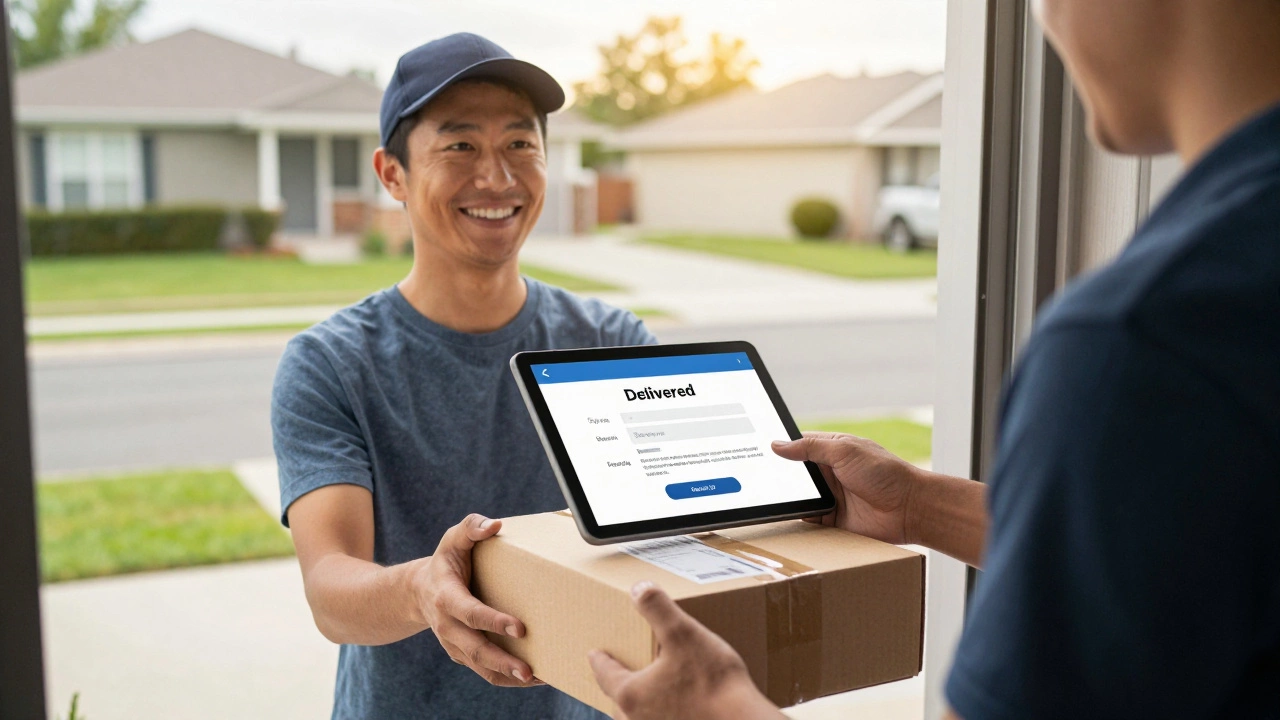
- The final delivery person drops it off, often with a photo proof or text update.
- If the customer doesn’t like it, the return is processed: picked up, inspected, restocked or refunded.
This whole process can take as little as 24 hours in big cities - or up to 7 days in rural areas. The speed and accuracy depend on the logistics partner you choose.
What are the main parts of e-commerce logistics?
There are five core components that make it work:
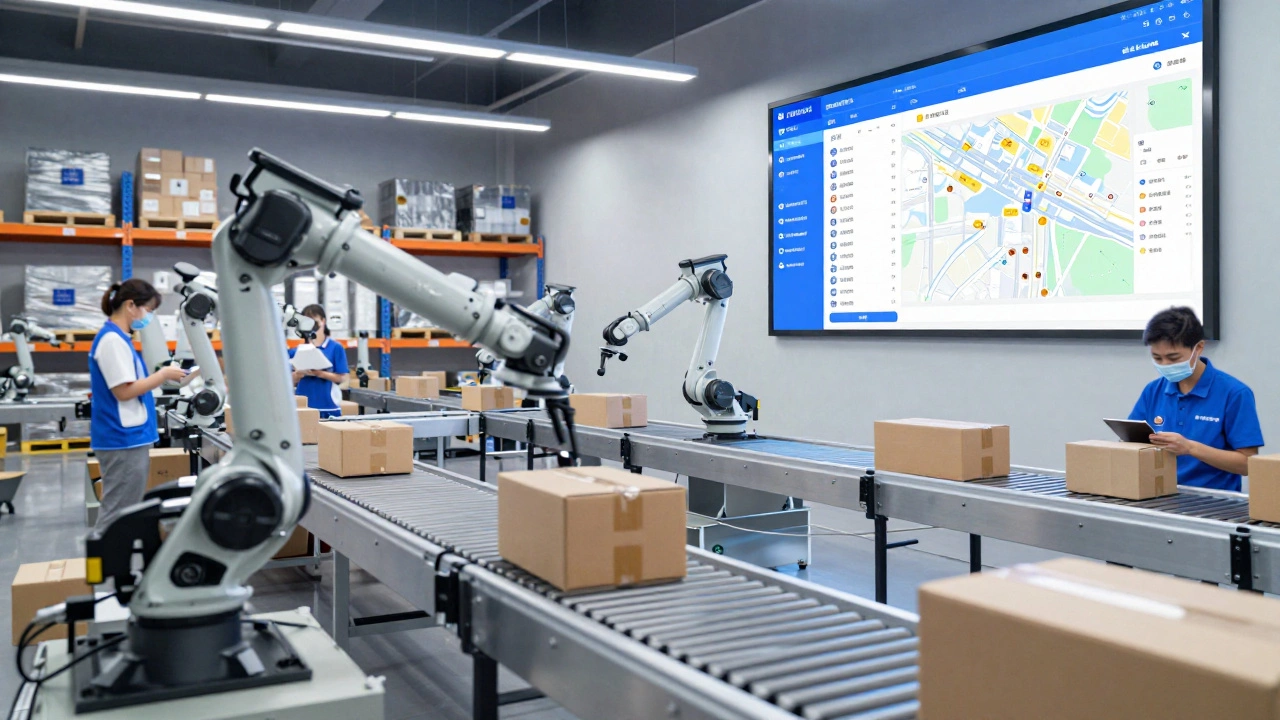
- Warehousing - Where your inventory lives. This could be your garage, a rented unit, or a full-scale fulfillment center with robots and conveyor belts.
- Order fulfillment - The actual process of picking, packing, and preparing each order for shipment.
- Transportation - Getting the package from point A to point B. This includes local couriers, national networks, and international freight.
- Tracking and visibility - Giving customers real-time updates. Nobody likes wondering where their order is. Tracking reduces support calls and builds trust.
- Returns management - Handling reverse logistics. About 30% of online purchases are returned. A good logistics service makes returns easy, fast, and cheap.
Missing any one of these? Your customers notice. Slow fulfillment means late deliveries. No tracking means angry emails. A messy return process means lost repeat buyers.
Why can’t I just use Royal Mail or DPD directly?
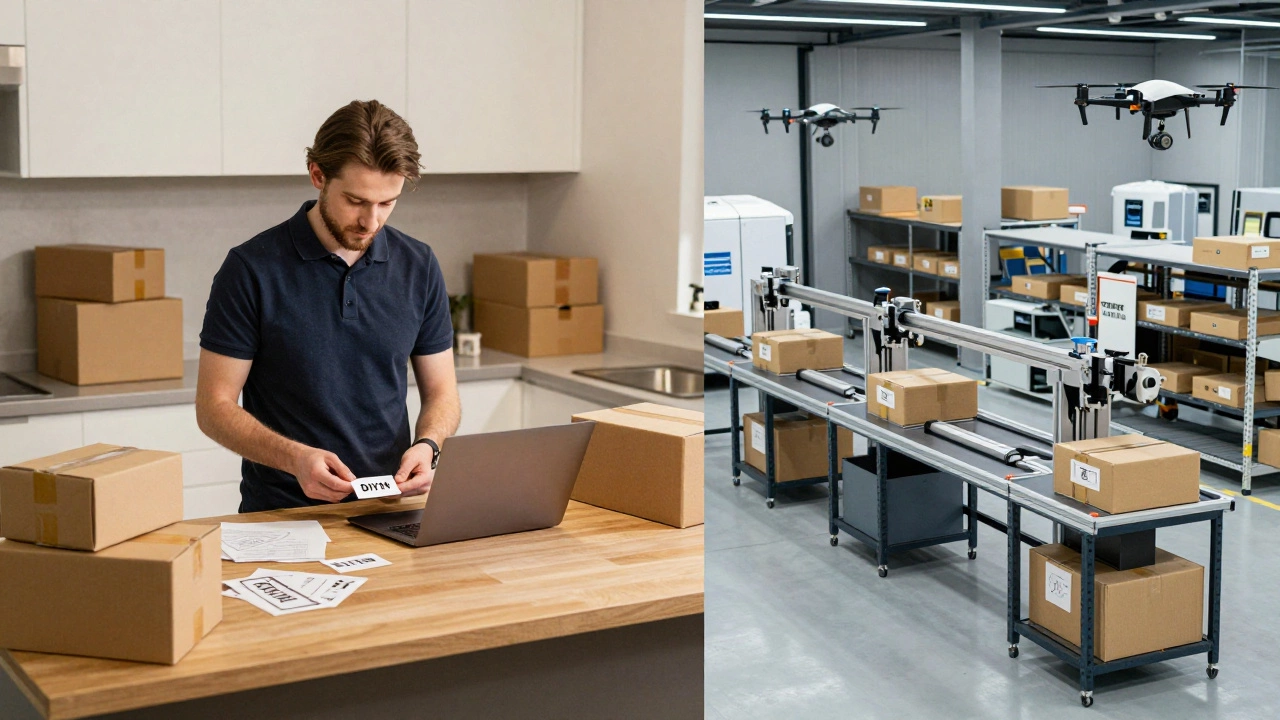
You can - but you’ll run into problems fast. If you’re shipping 50 orders a day, you’re spending hours printing labels, dropping off packages, chasing delays, and handling complaints. That’s time you could spend on marketing, product development, or customer service.
Most small online sellers don’t realize that carriers like Royal Mail or DPD don’t offer special e-commerce tools. They don’t integrate with your Shopify or WooCommerce store. They don’t automatically print return labels. They don’t give you bulk discounts unless you ship thousands a week.
E-commerce logistics providers - like ShipBob, Amazon FBA, or local UK-based firms like Parcel2Go or Evri’s business division - do all that for you. They connect to your store, automate labeling, give you real-time tracking, and offer discounted rates because they handle volume. You get a dashboard. You get support. You get peace of mind.
What should I look for in a logistics partner?
Not all services are the same. Here’s what matters most:
- Delivery speed - Can they guarantee 1-2 day delivery in your target areas? Most UK customers expect next-day or same-day delivery now.
- Integration - Does it connect to your e-commerce platform? Shopify, WooCommerce, BigCommerce? If not, you’re doing manual work.
- Cost - Look at the total cost: storage fees, per-order fees, fuel surcharges. Some companies charge £0.50 per order. Others charge £3.50. That adds up fast.
- Returns - Do they offer free return pickup? Can they process returns within 48 hours? Returns are part of your cost of sales.
- Scalability - Can they handle your busiest day? Black Friday? Christmas? If they crash under pressure, so will your reputation.
- Customer support - Can you call someone at 8 PM when a customer’s package is stuck? Or are you stuck with a chatbot?
One UK-based seller we talked to switched from a cheap carrier to a dedicated e-commerce logistics provider. Their delivery errors dropped from 12% to 1%. Their customer satisfaction scores jumped 40%. They didn’t raise prices. They just fixed the backend.
What’s the cost of bad logistics?
Bad logistics doesn’t just cost money - it costs trust.
Studies show that 89% of customers will buy again from a brand that delivers on time. But if a package is late? That number drops to 34%. If it arrives damaged? Only 17% will return.
And it’s not just about one sale. A single bad delivery can trigger a negative review on Trustpilot or Google. One review can kill your ranking. One bad experience can turn a loyal customer into a silent defector.
Meanwhile, the cost of fixing a mistake is 5x higher than preventing it. A missed delivery means a refund, a replacement, and a discount. A damaged item means a new product, new packaging, and new shipping. All while you’re answering angry messages.
What’s next for e-commerce logistics?
The bar keeps rising. In 2025, customers expect:
- Same-day delivery in major cities
- Carbon-neutral shipping options
- Real-time delivery windows (‘Your package will arrive between 2-4 PM’)
- One-click returns
- Transparent tracking with live maps
Some companies are testing drone deliveries in rural areas. Others use AI to predict which items will sell next and pre-position them in warehouses closer to customers. The goal? Cut delivery time from 3 days to 3 hours.
If you’re still using handwritten labels and a local post office, you’re already behind. The best online sellers treat logistics like a core part of their brand - not an afterthought.
Bottom line: Don’t outsource logistics - invest in it
E-commerce logistics isn’t a cost center. It’s a customer experience tool. The way you handle shipping says more about your brand than your logo does. Fast, accurate, friendly delivery builds loyalty. Slow, confusing, broken delivery kills it.
You don’t need to be Amazon to do this right. You just need a partner who understands that your customers aren’t just buying a product - they’re buying peace of mind. Choose your logistics provider like you’d choose your best employee: someone reliable, responsive, and ready to grow with you.
Is e-commerce logistics the same as regular shipping?
No. Regular shipping is one-off delivery - like sending a birthday gift. E-commerce logistics is a system designed to handle hundreds or thousands of orders daily with automation, tracking, returns, and integration into your online store. It’s built for scale, speed, and reliability - not convenience.
Can I handle e-commerce logistics myself?
You can, if you’re selling just a few items a week from your kitchen table. But once you hit 20+ orders a day, it becomes a full-time job. You’ll spend hours printing labels, driving to drop-off points, managing returns, and answering customer questions about delays. Most sellers find it’s cheaper and less stressful to outsource to a specialist provider.
What’s the average cost of e-commerce logistics in the UK?
It varies. For small items under 2kg, you’ll pay between £1.50 and £4 per order, including packing and shipping. Warehousing adds £0.50 to £2 per item per month. Larger items or express delivery can cost £8-£15. The key is bundling services - most providers offer packages that include storage, fulfillment, and shipping at a fixed rate per order.
Do I need a warehouse to use e-commerce logistics?
No. Many e-commerce logistics providers offer warehousing as part of their service. You ship your inventory to their warehouse in advance. Then they store it, pick, pack, and ship orders on your behalf. You don’t need your own space - just enough stock to keep them busy.
How do returns work with e-commerce logistics?
Good providers make returns simple. When a customer initiates a return, they get a pre-paid label emailed to them. They drop it off at a local parcel shop or arrange a pickup. The item comes back to the warehouse, is inspected, and then either restocked, repaired, or refunded. Some even offer automated refund processing once the return is received.
What’s the difference between FBA and third-party logistics?
Amazon FBA (Fulfillment by Amazon) means you send your stock to Amazon’s warehouses, and they handle everything - storage, packing, shipping, returns, and even customer service. Third-party logistics (3PL) providers are independent companies that do the same thing but aren’t tied to Amazon. 3PLs often offer better pricing, more control, and the ability to sell across multiple platforms like Shopify, eBay, and Etsy.
If you’re just starting out, test one logistics provider with a small batch of orders. Track your delivery times, return rates, and customer feedback. Then compare. You’ll quickly see which one turns your customers into repeat buyers - and which one turns them into angry reviewers.