Pallet Shipping Cost Calculator
Calculate Your Pallet Shipping Cost
Estimate costs for UK pallet deliveries based on weight, distance, and service preferences
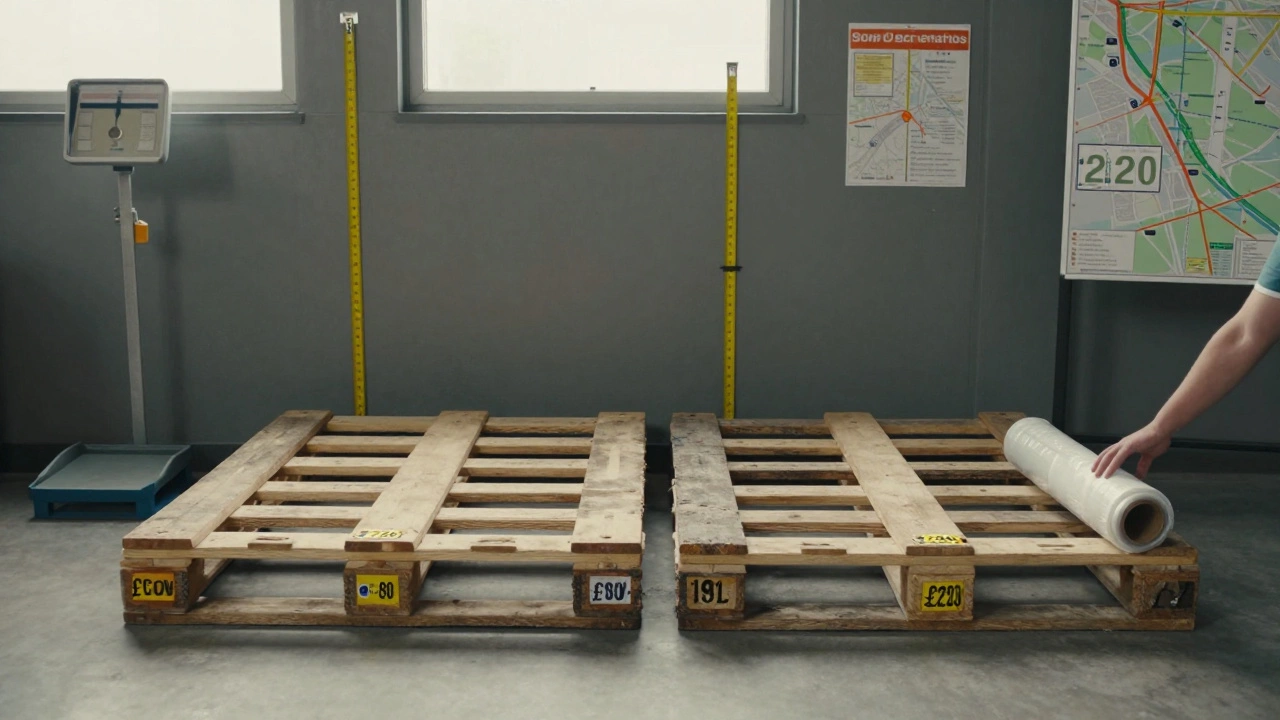
When you ship goods on a pallet, you’re not just paying for a box and a van. You’re paying for space, weight, handling, distance, and a whole system built to move heavy stuff efficiently. But what exactly goes into pallet pricing? And why does one pallet cost £80 while another one costs £220-even if they look the same?
What Is a Pallet? (And Why It Matters)
A pallet is a flat wooden or plastic platform, usually 80cm x 120cm in the UK, designed to hold goods for easy lifting by forklifts or pallet jacks. It’s not just a base-it’s a unit of measurement in logistics. Carriers don’t charge by the box or the crate. They charge by the pallet. That’s because pallets standardise how freight moves through warehouses, depots, and trucks.Most pallets you’ll ship are either standard UK pallets (1200mm x 1000mm) or Euro pallets (1200mm x 800mm). The size matters. A pallet that’s too big or too heavy might need special handling, which changes the price. And if your goods aren’t securely strapped or shrink-wrapped to the pallet, carriers will charge extra-or refuse to move it.
How Pallet Pricing Works: The 5 Key Factors
Pallet pricing isn’t set by a single rule. It’s a mix of five real-world variables that every carrier uses to calculate cost. Here’s what actually affects your bill.- Weight-Pallets are grouped into weight bands. A 500kg pallet costs less per kg than a 1,000kg pallet because heavier loads need stronger vehicles and more fuel. Most carriers use 3 bands: under 500kg, 500-1,000kg, and over 1,000kg.
- Dimensions-Height counts. A pallet stacked 1.8m high takes up more space in a trailer than one at 1.2m. Carriers charge more for tall pallets because they reduce how many you can fit in a single load.
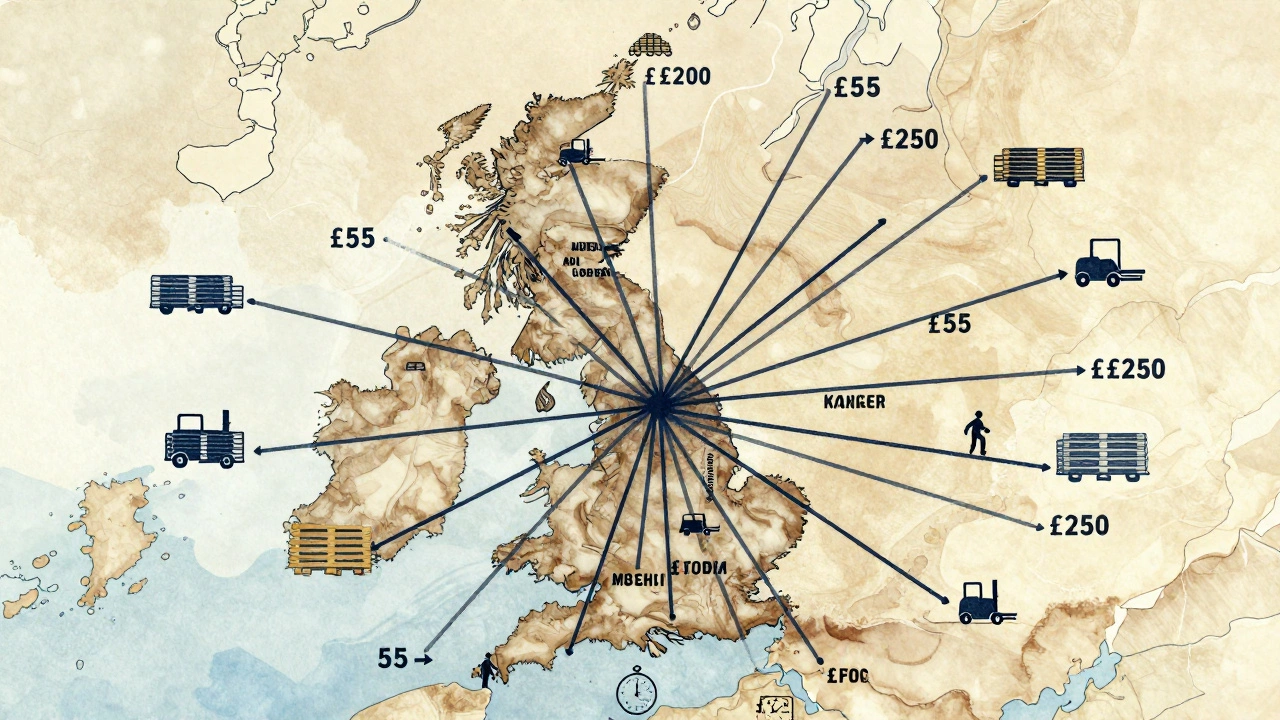
- Distance-Local deliveries (under 50 miles) cost less than cross-country trips. A pallet from Bristol to London might be £65. The same pallet to Aberdeen? £140+. Distance isn’t just about miles-it’s about route density. Rural drop-offs cost more than urban ones.
- Collection and Delivery Times-If you need a pallet picked up on a Saturday or delivered before 9am, expect to pay a premium. Standard service is Monday to Friday, 9am-5pm. Anything outside that adds 20-40% to the cost.
- Access Restrictions-No loading dock? No forklift? Delivery to a residential area with narrow lanes? These all trigger extra fees. Some carriers charge £25-£75 just for manual handling or using a tail-lift.
These factors combine into a pricing model that’s transparent if you know where to look. Most carriers give you a quote tool online. You enter the dimensions, weight, postcode, and delivery window-and it spits out a price. That’s not a guess. That’s calculated using their real-world cost data.
Typical Pallet Pricing in the UK (2026)
Here’s what you can realistically expect to pay for a standard UK pallet (1200x1000mm, under 500kg, on standard service) in early 2026:
| Distance | Standard Rate (1 Pallet) | Express Rate (Next Day) | Additional Fees (per pallet) |
|---|---|---|---|
| Local (0-50 miles) | £55-£75 | £95-£125 | £30 for tail-lift, £25 for residential delivery |
| Regional (50-200 miles) | £85-£110 | £140-£175 | £40 for evening delivery, £50 for Saturday pickup |
| National (200-500 miles) | £120-£160 | £190-£240 | £75 for non-standard access (e.g., upstairs flat) |
| Long Distance (500+ miles) | £180-£250 | £270-£350 | £100+ for remote areas (e.g., Scottish Highlands) |
These are real quotes from major UK pallet networks like DX Freight, Tuffnells, and Palletline. You won’t find £30 pallet deliveries unless you’re shipping 10+ pallets at once. And if you’re shipping just one, you’re paying for the convenience of a dedicated service.
Hidden Costs That Surprise People
Most businesses get burned once by hidden fees. Here’s what carriers won’t always tell you upfront:
- Delivery attempts-If no one’s there to sign, they’ll try again. Second and third attempts cost £20-£40 each.
- Repackaging-If your pallet isn’t stable, they’ll rewrap it. That’s £15-£30 extra.
- Insurance-Basic cover is often only £100 per pallet. If your goods are worth £2,000, you need to pay for additional cover. That’s £10-£25 extra per pallet.
- Documentation fees-Some carriers charge £10 for printing a waybill if you don’t email it in advance.
- Storage fees-If your pallet isn’t collected on time, they’ll store it. £5-£10 per day. After 5 days, they might charge you to return it.
One warehouse manager in Manchester told me she got hit with a £170 charge because her pallet was left outside in the rain and the carrier said it was “damaged and unsafe to handle.” She hadn’t covered it properly. That’s not a scam-it’s a rule. Always shrink-wrap your pallets. Always label them. Always check the carrier’s terms.
How to Save on Pallet Pricing
You don’t have to overpay. Here’s how smart businesses cut costs:
- Combine shipments-If you’re sending 3 pallets to the same place, you can often get a 20% discount. Carriers love full loads.
- Use standard sizes-Don’t build pallets taller than 1.5m. Don’t go over 1,000kg. Stick to the rules, and you’ll avoid premium charges.
- Schedule ahead-Book collection 48 hours in advance. Same-day bookings cost more.
- Use drop-off points-Some carriers let you drop pallets at depots. That cuts delivery cost by 30%. You just need to arrange the last mile yourself.
- Compare networks-Don’t just use the first quote. DX Freight might be cheaper for the South, while Tuffnells wins in the North. Use a comparison tool like PalletHub or Freightos to see real-time rates.
One small e-commerce business in Bristol saved £3,200 last year just by switching from a courier service to a pallet network and shipping 4 pallets per week instead of 12 individual boxes. The pallets were faster, cheaper, and more secure.

Pallet vs. Courier: When to Choose What
Not every shipment needs a pallet. Here’s the simple rule:
- Use pallets if you’re shipping 2+ boxes, over 30kg, or anything that needs to be moved with a forklift. Pallets are cheaper per kg and less likely to get damaged.
- Use courier services if you’re sending one small box, under 20kg, with high value or fragile contents. Couriers offer door-to-door tracking and insurance, but they’re expensive for heavy items.
Think of it this way: a pallet is for bulk. A courier is for speed and precision. Mixing them up costs money.
What Happens If Your Pallet Gets Damaged?
Damage claims are messy. Most carriers have a strict process:
- You must report damage within 24 hours of delivery.
- You need photos of the damaged pallet and goods.
- You must keep all packaging-even the broken bits.
- You need to prove the value of the goods (invoices or receipts).
If you didn’t insure the pallet, you’re lucky to get £100. If you did, and you followed the rules, you’ll likely get full replacement. Always take photos before you ship. Always write “FRAGILE” on the pallet. Always keep a copy of the waybill.
Is pallet pricing the same for everyone?
No. Pallet pricing varies by carrier, region, weight, and service level. A business in London might pay £110 for a pallet to Manchester, while a business in Birmingham pays £95 for the same route. Rates change based on how many pallets a carrier moves on a route each day. High-volume routes get lower prices. Low-volume routes cost more.
Can I negotiate pallet pricing?
Yes-if you ship regularly. If you send 5+ pallets per week, most carriers will offer a contract rate. That’s usually 15-30% lower than their standard rates. You’ll need to sign a 6-12 month agreement, but it’s worth it for consistent savings. One Bristol-based furniture maker saved £4,000 a year by locking in a contract rate.
Do I need insurance for pallet shipping?
It’s not mandatory, but it’s strongly recommended. Basic coverage is often £100 per pallet. If your goods are worth more than that, you’re at risk. Most carriers offer top-up insurance for £10-£25 per pallet. It’s cheaper than replacing damaged stock.
What’s the cheapest way to ship a pallet in the UK?
The cheapest way is to use a pallet network, ship during off-peak hours, combine pallets, and avoid extra services like Saturday delivery. For example, shipping two pallets together on a standard service from Bristol to Birmingham can cost as little as £110 total-£55 each. That’s far cheaper than two separate courier shipments.
Are pallet prices going up in 2026?
Yes. Fuel costs, labour shortages, and higher insurance premiums have pushed pallet prices up 8-12% since 2024. Carriers are also adding fees for environmental compliance and urban delivery restrictions. Expect rates to keep rising slowly through 2026, especially for express and non-standard deliveries.
Final Thoughts: Know Your Numbers
Pallet pricing isn’t magic. It’s math. And if you understand the variables-weight, size, distance, access, and timing-you can control your shipping costs instead of letting carriers control them. Track your pallet shipments. Compare quotes. Negotiate contracts. And never ship a pallet without wrapping it properly.
The difference between paying £140 and £90 for a delivery isn’t luck. It’s knowing how pallet pricing works.