Volumetric Weight Calculator
Enter your package measurements below. Couriers usually charge based on whichever number is larger: the physical weight or the calculated 'dimensional' (volumetric) weight.
Your Quote Analysis
-- kg
Calculated based on size-- kg
Scale measurementCarrier Billable Weight:
-- kg
Enter details to see calculation.
It often feels like magic when you get a quote online for a parcel and then watch the price jump right before you pay. One minute it says £4.99, and the next it is £12.50 because of something called 'volumetric weight'. You are not imagining things; there is a specific logic behind every digit, but carriers rarely explain the math clearly.
If you run a small shop in Bristol or ship gifts to family abroad, understanding this calculation saves money. You stop overpacking boxes. You choose the right service level. You know when a 'remote area' fee is being applied unfairly. Here is exactly how courier companies work out what they charge you.
The Battle of Actual Weight Versus Volumetric Weight
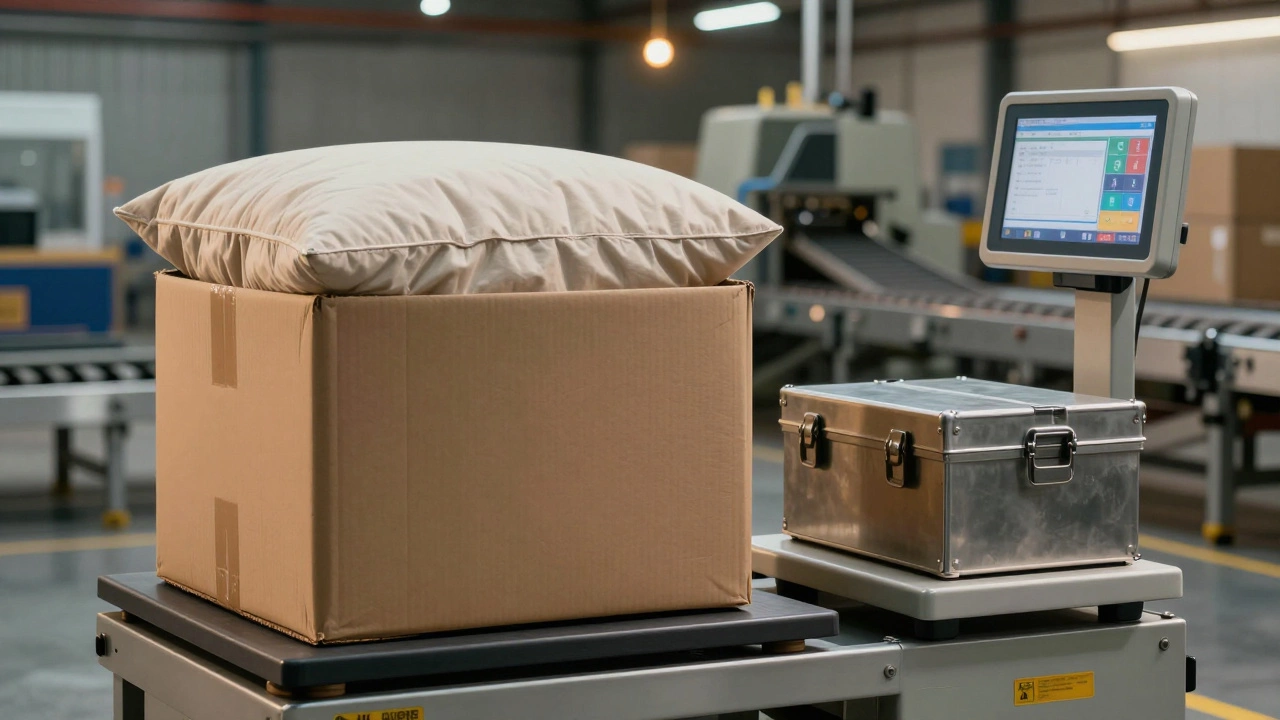
The biggest confusion stems from the idea that only mass matters. It does not. A large box filled with balloons takes up just as much space in a van as a box full of books, even though the balloons weigh nothing. Couriers care about space utilisation, which means they measure size just as closely as weight.
Actual weight is simply what you place on the scales. If your package weighs 2 kilograms, that is the actual weight. However, carriers also calculate volumetric weight. This represents how much space your package occupies on a vehicle relative to its density.
When the volumetric weight is higher than the actual weight, the courier charges based on the volumetric figure. Why do they do this? Because loading a truck with light, bulky items prevents them from filling their cargo hold efficiently. A single huge cardboard box might be heavy enough to carry another fifty identical boxes on top of it. That empty air above the box is paid-for space.
To prevent this, most major logistics providers apply a divisor. In the UK market, the standard metric for international and many domestic services is often length times width times height divided by a factor like 5000 or 4000. If the number produced is larger than your scale reading, that is the billable weight.
How to Calculate Dimensional Weight Yourself
You can do the maths at home before booking a service. This helps you avoid surprise fees at the collection point or upon scanning.
First, measure the longest side of your package, the widest side, and the tallest side in centimetres. Round these numbers up to the nearest whole number. For example, if a box is 50.3 cm long, use 51 cm.
- Multiply the Length x Width x Height together.
- Divide that result by the courier's divisor (usually 5000 for standard UK road freight, or 6000 for some international air).
- Compare this result to your physical weight on a scale.
Let us look at a real scenario. Imagine you are shipping a teddy bear. It measures 40cm x 30cm x 30cm. On the scale, it weighs 1 kilogram. But the volumetric calculation is: (40 * 30 * 30) / 5000. That equals 36,000 divided by 5000, which gives you 7.2 kilograms.
The courier sees this as a 7.2kg shipment, not a 1kg one. They will charge you for 7.2kg. To save money, re-pack the item using a vacuum bag or smaller box. Squeezing air out reduces the volumetric dimensions, which lowers the cost instantly.
The Role of Distance and Postcode Zones
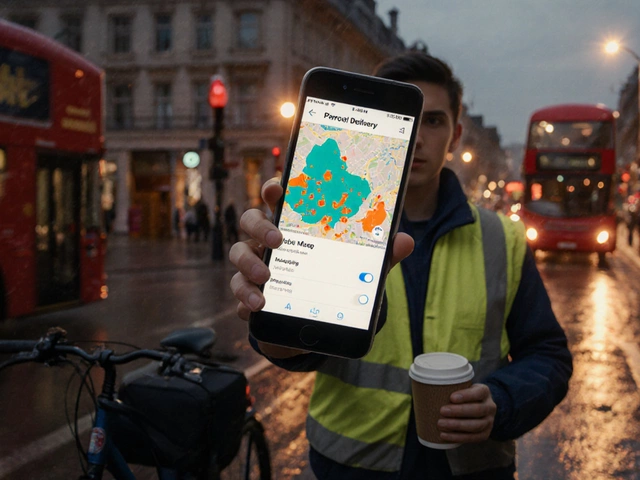
Weight is the foundation, but distance builds the roof. Most courier networks divide the map into shipping zones. These zones determine how far the driver needs to travel.
In the UK, this is often tied to postcode districts. A delivery from Bristol to London might fall into Zone 3, whereas a delivery from Bristol to Aberdeen falls into Zone 5. Zone 5 carries a higher price per kilogram because the fuel and time commitment are greater.
Some companies use a simple radius model. If you are shipping from a central hub, anywhere within 50 miles costs X, while anything outside that circle costs Y plus Z per extra mile. However, larger national carriers like DPD or Evri typically use fixed banding systems to keep quoting engines fast.
Remote areas complicate this further. There is no universal definition of 'remote', but generally, if a driver has to turn onto unmade roads or travel significant distances away from the main distribution centre to drop off one parcel, a surcharge applies. Highlands and islands in Scotland are common triggers for this fee. If you live in rural Devon or parts of the North West, check if your postcode qualifies for a remote area supplement.
| Factor | Impact on Price | Example |
|---|---|---|
| Volumetric Weight | Increases base rate if box is bulky | Empty chair frame charged as heavy load |
| Distance Zone | Determines fuel and labour cost | North to South is pricier than local |
| Fuel Surcharge | Adjusts for oil price volatility | Tied to RPI or HICP indices quarterly |
| Insurance Level | Covers value of goods inside | £500 cover adds £2 to £5 |
| Collection Method | Pickup fees vs Drop-off | Doorstep pickup usually free for accounts |

Extra Fees That Appear After Booking
Even after sorting out weight and distance, invoices sometimes contain line items you did not expect. These are mostly situational surcharges. The most frequent is the fuel surcharge.
Courier contracts often lock the base rate for a period, but fuel costs fluctuate weekly. Companies track diesel prices. When global energy markets spike, the surcharge percentage attached to your bill goes up. During stable years, like parts of 2024, this might hover around 5%, but volatile periods can see it climb higher. This is separate from VAT.
Another common addition is a signature confirmation fee. If you require proof of delivery for high-value electronics or legal documents, the driver stops to sign a manifest. This administrative task usually costs an extra pound or two.
Do not forget the deposit fees. If you do not have an account, you are likely paying cash rates, which are significantly higher than contract rates. Business customers who ship daily often negotiate tiered pricing based on volume. An individual buying a single label gets the 'retail' price, which includes a profit margin for the carrier because they assume lower volume efficiency.
Choosing Between Carriers Based on Cost Models
Not all carriers calculate the same way. Understanding their specific models helps you switch providers when one becomes expensive for your needs.
Royal Mail often uses strict weight bands (50g, 100g, up to 2kg). Their system is simpler but offers limited protection for oversized items. If your package exceeds the dimension limits slightly, it gets rejected or sent via a slower, cheaper channel which delays arrival.
Private couriers like DHL, UPS, and FedEx operate heavily on the volumetric model described earlier. They are better for dense, valuable freight but punishingly expensive for light, fluffy items unless you compress the packaging.
Newer competitors focus on speed tiers. A 'next day' option isn't just about getting there early; it changes the logistical priority. Express vans leave depots earlier and fill later. Economy options wait until trucks are full. Sometimes paying for economy saves 30% of the cost because the carrier consolidates shipments overnight.

Tips to Lower Your Invoice
You cannot change the destination, but you have control over the package itself. Always remove unnecessary padding. Bubble wrap takes up space without adding value to the product. If you are moving house or storing items, consider hiring a removal company rather than sending furniture via courier.
Check your box size. Using a standard courier satchel is often smarter than finding a random cardboard box. Satchels are pre-approved for specific weight ranges and avoid the measurement hassle entirely.
If you ship frequently, open a business account. The transition from paying per label to logging in and managing bulk rates is immediate. Even a small seller sending five parcels a week benefits from the negotiated rate.
Finally, be honest about contents. Declaring 'gift' on customs forms when shipping internationally can trigger inspections. If the inspector finds commercial goods marked as personal, the penalties can exceed the savings. Accurate declaration ensures smooth clearance and predictable pricing.
Frequently Asked Questions
Does courier cost depend on the contents of the box?
Generally, no. The price depends on weight, dimensions, and destination. However, high-risk contents (like batteries or hazardous liquids) attract special handling fees. Hazardous materials require specific packaging and transport regulations, increasing the cost significantly compared to standard non-dangerous goods.
What is the difference between drop-off and collection fees?
Drop-off means you take the parcel to a depot or shop. This is often cheaper or free because the courier does not waste a driver's trip coming to you. Collection requires a driver to visit your address, adding mileage and time to their route, so a premium is usually added to the quote.
How do fuel surcharges change monthly?
Most companies review fuel surcharges quarterly based on government petrol price indices. Some update them monthly. It is wise to check your invoice details each month, as a sudden rise in global oil prices will immediately reflect as a percentage increase on top of your base rate.
Can I insure my parcel after it has been posted?
Usually, no. Insurance must be selected and paid for at the time of booking. Once the parcel leaves your premises, the risk transfers to the carrier. Without declared value, the compensation limit is very low, typically covering only the cost of shipping or a standard minimum amount.
Why is shipping to rural postcodes more expensive?
Rural areas involve longer drives from the main sorting facility with fewer drops per mile. To compensate for the inefficiency, carriers add a remote area surcharge. This ensures drivers delivering to villages cover their fuel and time costs adequately.