Amazon Route Profit Calculator
Estimate Your Potential Profit
Calculate the financial viability of buying an Amazon delivery route business based on your specific inputs.
Estimated Annual Profit
Note: Amazon requires a performance score above 95% to maintain the route. Your net profit may decrease significantly if your performance falls below this threshold.
Buying an Amazon delivery route isn’t like buying a car or opening a coffee shop. It’s a business deal wrapped in logistics, contracts, and hidden expectations. If you’re wondering how much it costs, the short answer is: between $100,000 and $500,000. But that number means almost nothing without context. What you’re really buying isn’t just vans and routes-it’s access to Amazon’s massive delivery network, with all the rules, pressure, and rewards that come with it.
What Exactly Is an Amazon Delivery Route?
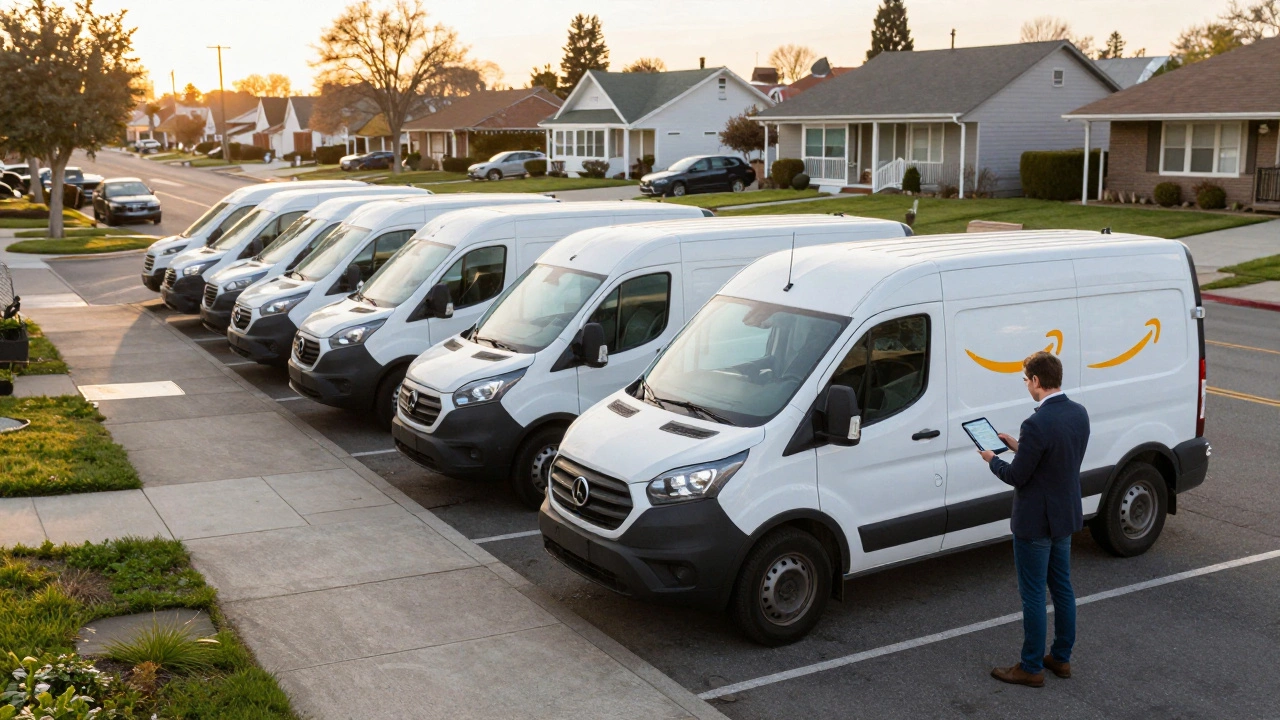
An Amazon delivery route isn’t a single street or zip code. It’s a territory-usually covering 50 to 150 square miles-assigned to an independent delivery service provider (DSP). These DSPs are small businesses that sign contracts with Amazon to handle last-mile delivery in their area. They hire drivers, maintain vehicles, manage schedules, and ensure packages get delivered on time. Amazon doesn’t own the vans or the drivers. They own the brand, the tech, and the customer expectation.
You don’t buy a route directly from Amazon. You buy it from an existing DSP owner who’s selling their business. These sales happen through brokers, online marketplaces, or word-of-mouth in logistics circles. The route includes the customer base, the delivery software access, the vehicle fleet, and the operational setup. But here’s the catch: Amazon doesn’t approve every buyer. You’ll need to pass their background check, financial review, and operational assessment.
Typical Costs Breakdown
Let’s say you’re looking at a mid-sized route in the Southeast U.S. or the UK. Here’s what you’re likely paying for:
- Route purchase price: $150,000-$350,000
- Delivery vans (5-10 vehicles): $120,000-$250,000 (new or used Ford Transit, Mercedes Sprinter)
- Insurance (commercial auto + liability): $15,000-$30,000/year
- Software access (Dynamo, Amazon’s delivery app): Included with route purchase
- Training and onboarding: $5,000-$10,000 (sometimes included)
- Working capital (fuel, maintenance, payroll): $30,000-$70,000
Total upfront investment? Typically $300,000-$500,000. That’s before taxes, legal fees, or unexpected repairs. Some routes in high-demand urban areas like London or Atlanta can cost over $600,000. Smaller rural routes might start around $80,000, but they often come with lower volume and harder margins.
How Do You Make Money?
Amazon doesn’t pay you per package. They pay you per stop. Each delivery stop earns you between $1.50 and $3.50, depending on location, package size, and time of day. You’re not paid for driving time, fuel, or waiting at doors. You’re paid for completing the stop.
A successful route handles 250-400 deliveries per day. That’s 60,000-100,000 stops per year. At $2.50 per stop, that’s $150,000-$250,000 in gross revenue. But here’s where it gets real: your net profit is what’s left after everything else.
Typical operating costs:
- Driver wages: $80,000-$120,000/year (for 3-5 drivers)
- Fuel: $20,000-$40,000/year
- Maintenance: $15,000-$25,000/year
- Insurance: $15,000-$30,000/year
- Software fees, permits, admin: $10,000/year
That leaves a net profit of $40,000-$90,000 per year on a mid-sized route. Not bad-but only if you run it like a business, not a side hustle. Many new owners underestimate how much time they’ll spend managing drivers, fixing breakdowns, and dealing with Amazon’s strict performance metrics.
Amazon’s Rules You Can’t Ignore
Amazon doesn’t hand you the keys and say, “Good luck.” They watch you. Every delivery is tracked. Late deliveries? You’re fined. Missed scans? You’re fined. Customer complaints? You’re fined. Your performance score is public to Amazon. If it drops below 95%, you risk losing the route.
You can’t choose your own hours. Amazon’s algorithm assigns delivery windows. You might have to start at 4 a.m. or work until 8 p.m. No weekends off during peak season. You can’t use your own branding. Every van must be white with Amazon’s logo. You can’t hire your cousin without Amazon’s approval. You can’t change your pricing or drop a customer. You’re an extension of Amazon’s brand, not your own.
Some owners say it feels like being a franchisee with no control. Others say it’s the most reliable income stream they’ve ever had. The difference? Experience.
Who Should Buy an Amazon Route?
This isn’t for someone looking for passive income. You’re not buying a vending machine. You’re buying a 60-hour-a-week job with vans, drivers, and deadlines. The best candidates:
- Have experience managing teams (logistics, construction, retail)
- Understand cash flow and have $100,000+ in liquid reserves
- Know how to handle HR issues and vehicle maintenance
- Are comfortable with high-pressure performance metrics
- Live near the route they’re buying (Amazon prefers local owners)
If you’ve never run a business, don’t expect to learn on Amazon’s dime. The learning curve is steep, and mistakes cost money fast.
Where to Find Routes for Sale
You won’t find Amazon routes on eBay or Craigslist. Sales happen through specialized brokers:
- Delivery Route Sales (deliveryroutesales.com)
- RouteBiz (routebiz.com)
- Amazon DSP Resale Groups on Facebook and LinkedIn
- Local logistics networks (ask around)
Always get a third-party inspection. Check the route’s delivery volume history, driver turnover rate, vehicle condition, and customer complaints. Ask for the last 12 months of payout statements. If the seller won’t show you financials, walk away.
Is It Worth It?
Five years ago, buying an Amazon route was a gold rush. Now, it’s a mature business. There are over 10,000 DSPs in the U.S. and thousands more in Europe. Competition is higher. Profit margins are tighter. Amazon has raised performance standards and lowered payment rates slightly in the last two years.
But here’s the truth: Amazon still delivers over 5 billion packages a year. Someone has to get them to the door. If you’re disciplined, organized, and willing to work hard, this is still one of the few scalable courier businesses with guaranteed volume. You’re not selling a product-you’re selling reliability. And Amazon pays for reliability.
Many owners say the best part isn’t the money-it’s the control. You hire your team. You set your schedule (within Amazon’s limits). You build something that lasts. The worst part? The stress. One bad month, one late delivery, one broken van, and your whole year can unravel.
It’s not a get-rich-quick scheme. But if you treat it like a real business-with systems, accountability, and resilience-it can be one of the most stable courier investments out there.
Alternatives to Buying a Route
If $300,000+ feels too steep, consider these options:
- Start your own courier business and pitch to Amazon as a new DSP. You’ll need to prove you can handle 100+ deliveries daily. It takes 6-12 months to get approved.
- Buy a smaller regional route with lower volume but lower cost. Some rural routes sell for under $100,000.
- Partner with an existing DSP as a driver or manager. You can work your way into ownership without the upfront cost.
- Work with other delivery networks like UPS Access Point, FedEx SameDay, or DHL eCommerce. Less brand power, but more flexibility.
There’s no single right path. But if you’re serious about logistics, the Amazon route model is still one of the clearest ways to build a delivery business with real scale.
Can you make a living off an Amazon delivery route?
Yes, but not easily. Most owners earn between $40,000 and $90,000 net per year after expenses. It requires managing 5-10 drivers, maintaining a fleet, and hitting Amazon’s 95%+ performance score. It’s not passive income-it’s a full-time job with high pressure.
Do you need a commercial driver’s license (CDL) to buy a route?
No, you don’t need a CDL yourself. Most Amazon routes use vans under 26,000 lbs, which don’t require a CDL. But your drivers might need one if you use larger trucks. Amazon doesn’t require the owner to drive-just to manage the operation properly.
Can you sell your Amazon route later?
Yes, and many owners do. Routes typically sell for 2-4 times their annual net profit. So if you make $60,000 a year net, you could sell for $120,000-$240,000. Buyers look for consistent performance, low driver turnover, and good vehicle condition. A well-run route holds its value.
Are Amazon routes profitable in the UK?
Yes, but costs are higher. Fuel, insurance, and wages in the UK are 20-30% more than in the U.S. Routes in London or Manchester can cost $400,000-$700,000. Net profits range from £35,000 to £70,000 ($45,000-$90,000). Demand is strong, but competition is growing.
What happens if Amazon cuts your pay rate?
Amazon can reduce per-stop pay at any time. They’ve done it twice since 2022. You can’t negotiate. Your only protection is volume-if you deliver 400+ stops a day, you can still make money even with lower rates. That’s why scaling your route is key. Some owners add multiple routes to offset rate cuts.
Can you buy a route without experience?
Technically yes, but it’s risky. Amazon requires a background check and financial review, not experience. But most sellers won’t sell to someone without logistics experience. If you’re new, start by working for an existing DSP. Learn the system, build connections, then buy in.