Last Mile Delivery Cost & Efficiency Estimator
Analysis & Recommendations
You know that feeling when you track a package, see it’s "out for delivery," and then… nothing? Or worse, the driver shows up while you’re stuck in a meeting, leaving you with a missed connection and a frustrated courier. This isn’t just an inconvenience; it’s a massive leak in your business’s profitability. Last mile delivery is the final step of the shipping process where a carrier moves a shipment from a transportation hub to its final destination. It is often cited as the most expensive part of the supply chain, accounting for up to 53% of total shipping costs. If you’re running an e-commerce brand or managing logistics operations, how you handle this specific leg determines whether customers rave about you or churn to a competitor.
Why does this matter so much right now? Because consumer expectations have shifted dramatically. In 2026, nobody wants to wait five days for a pair of shoes they bought online. They want speed, transparency, and control. Handling last mile delivery effectively means balancing three competing forces: cost efficiency, speed, and customer satisfaction. You can’t maximize all three simultaneously without smart technology and flexible strategies. So, how do you actually pull this off? Let’s break down the practical steps you need to take to stop losing money on those final few miles.
The Hidden Costs of Your Final Step
Before you change anything, you need to understand what you’re paying for. Most businesses underestimate the true cost of last mile delivery because they only look at the per-package rate charged by their courier. But the real costs are hidden in failed deliveries, inefficient routing, and customer support tickets generated by poor tracking updates.
Consider the economics. A standard parcel might cost £4-£8 to deliver in the UK, depending on weight and distance. But if 15% of those deliveries fail on the first attempt, you’re paying double for those packages. That’s not just a courier fee; it’s warehouse labor to re-pick, pack, and reship, plus the risk of the customer cancelling the order entirely. Failed delivery attempts are the silent killer of margins.
| Cost Factor | Impact Level | Mitigation Strategy |
|---|---|---|
| Failed First Attempts | High (15-20% avg) | Real-time tracking & SMS alerts |
| Route Inefficiency | Medium (Fuel/Labor) | Dynamic route optimization software |
| Customer Support Tickets | Medium (Labor) | Proactive status updates |
| Returned Packages | High (Reverse Logistics) | Clear return policies & easy labels |
If you’re currently using a single national carrier for everything, you’re likely overpaying. Large carriers offer consistency but lack flexibility for local, high-density routes. Conversely, local couriers might be cheaper for short distances but struggle with scale. The key is diversification. Don’t put all your eggs in one basket. Use a mix of national giants for long-distance shipments and local fleets for dense urban areas. This hybrid approach often reduces costs by 10-15% simply by matching the right vehicle to the right job.
Technology Is Your Best Driver
You can’t manage modern last mile delivery with spreadsheets. If you’re still manually assigning drivers or printing static manifests, you’re fighting with one hand tied behind your back. The solution lies in Logistics Software that offers real-time visibility and dynamic routing.
Dynamic routing isn’t just about finding the shortest path. It’s about adjusting to reality. Traffic jams happen. Customers aren’t home. Vehicles break down. Good software recalculates routes in real-time, saving fuel and time. For example, if a driver finishes a cluster of deliveries early, the system should immediately assign them nearby pickups or next-day pre-orders rather than letting them idle. This utilization boost directly lowers your cost-per-drop.
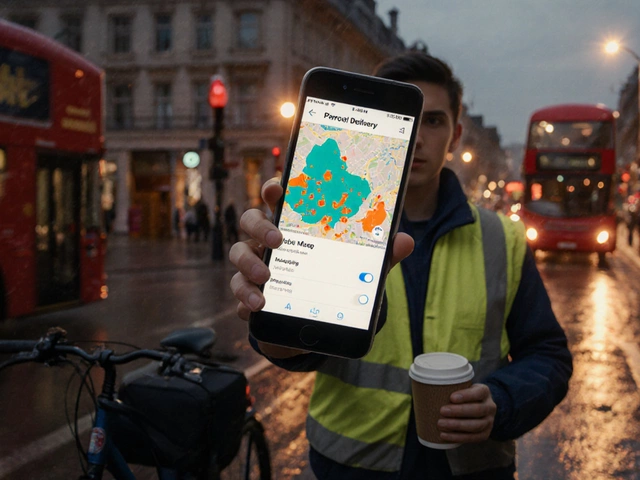
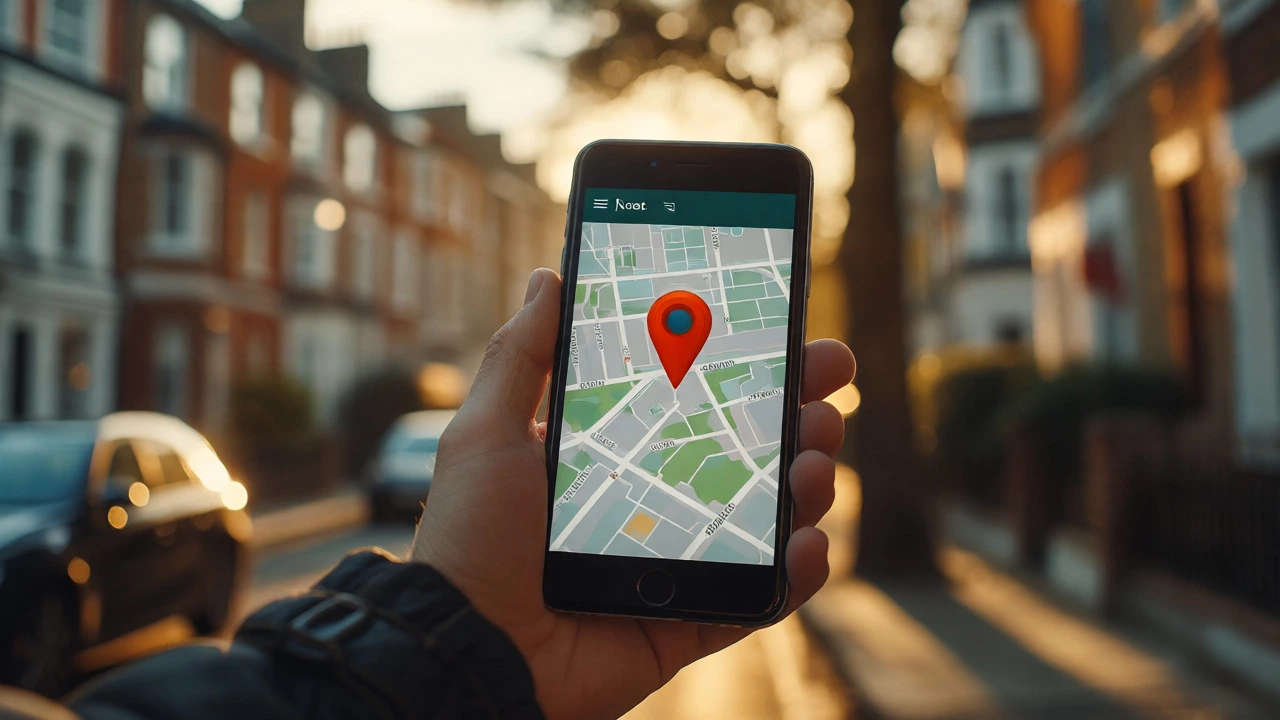
Then there’s the customer-facing side. Transparency builds trust. When a customer receives a generic "shipped" email, they feel disconnected. When they get a link showing exactly where their driver is-like Uber for parcels-they feel in control. Implementing a branded tracking page allows you to keep customers on your website longer, upselling products while they wait. It also reduces "Where is my order?" (WISMO) tickets by nearly 40%. Less support volume means lower operational overhead.
Rethinking the Customer Experience
Handling last mile delivery isn’t just about moving boxes; it’s about managing emotions. The moment a package arrives-or fails to arrive-is the peak emotional point of the entire buying journey. Get it wrong, and you lose loyalty. Get it right, and you gain an advocate.
One of the biggest friction points is the delivery window. Nobody wants to stay home all day waiting for a vague "between 9 AM and 5 PM" slot. Offer precise time slots. Better yet, allow customers to choose between morning, afternoon, or evening deliveries. Some might pay extra for guaranteed evening drops so they don’t have to rearrange their work schedule. This small shift turns a logistical constraint into a revenue opportunity.
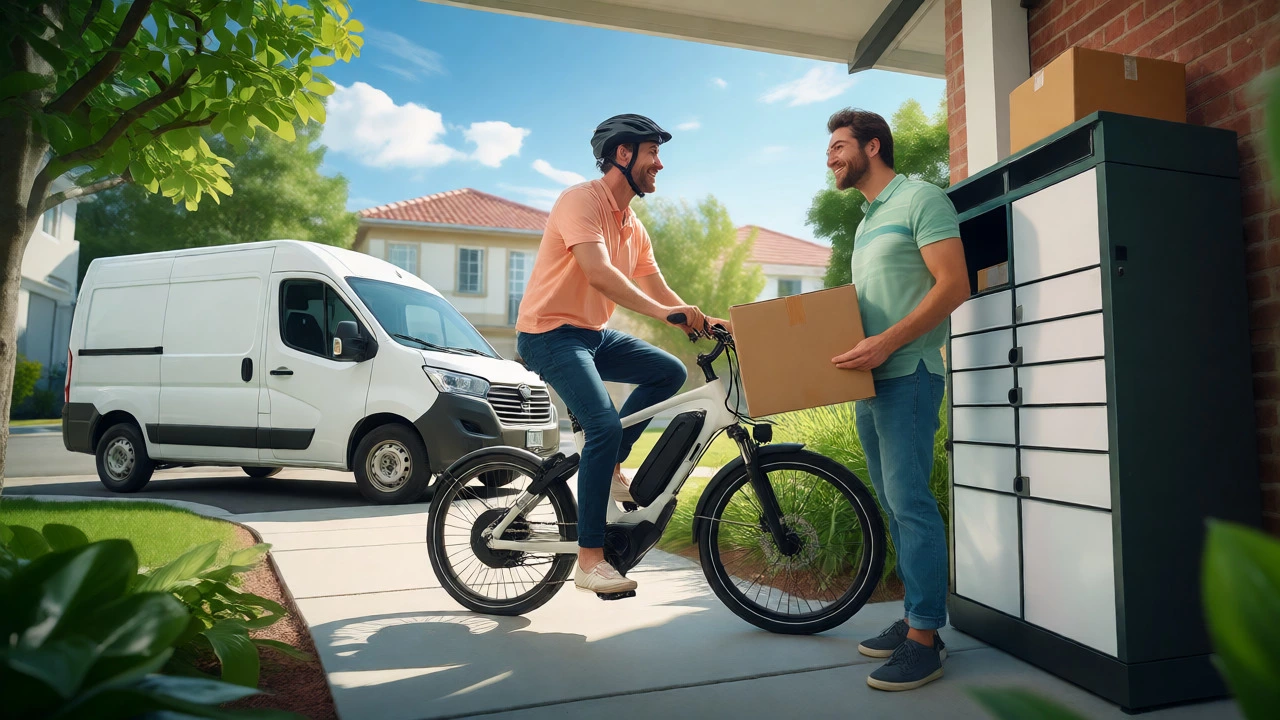
Another tactic is offering alternative delivery locations. Not everyone wants a box left on their porch, especially in bad weather or high-theft areas. Integrating options like parcel lockers, convenience store pickup points, or workplace delivery gives customers agency. In Bristol, for instance, many commuters prefer picking up packages at a local shop during their lunch break rather than waiting at home. By partnering with networks like Collect+ or InPost, you expand your delivery footprint without building new infrastructure.
Optimizing Your Warehouse Outbound Process
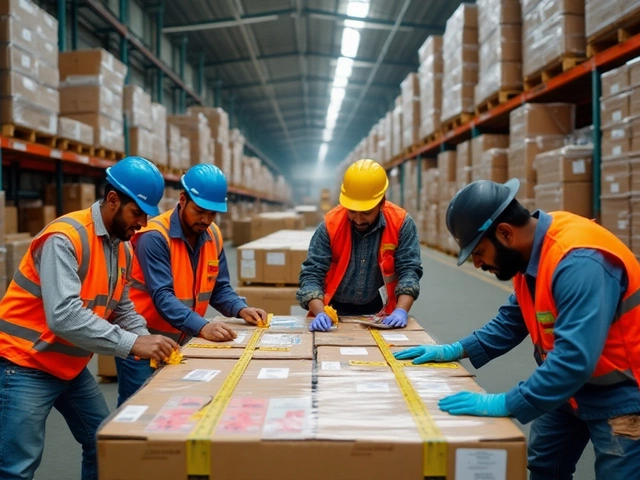
Your last mile strategy starts inside your four walls. If your warehouse team packs orders slowly or inconsistently, your drivers sit idle, burning cash. Streamlining the outbound process is critical for keeping the last mile efficient.
Batch processing is essential here. Group orders by geographic zone before they even hit the packing bench. If you know Zone A has 50 orders going out today, pack them together. This ensures that when the driver arrives, they load in sequence, minimizing loading time and maximizing drop density. High drop density-the number of stops within a small radius-is the single biggest factor in reducing delivery costs. More stops per mile equals lower cost per stop.
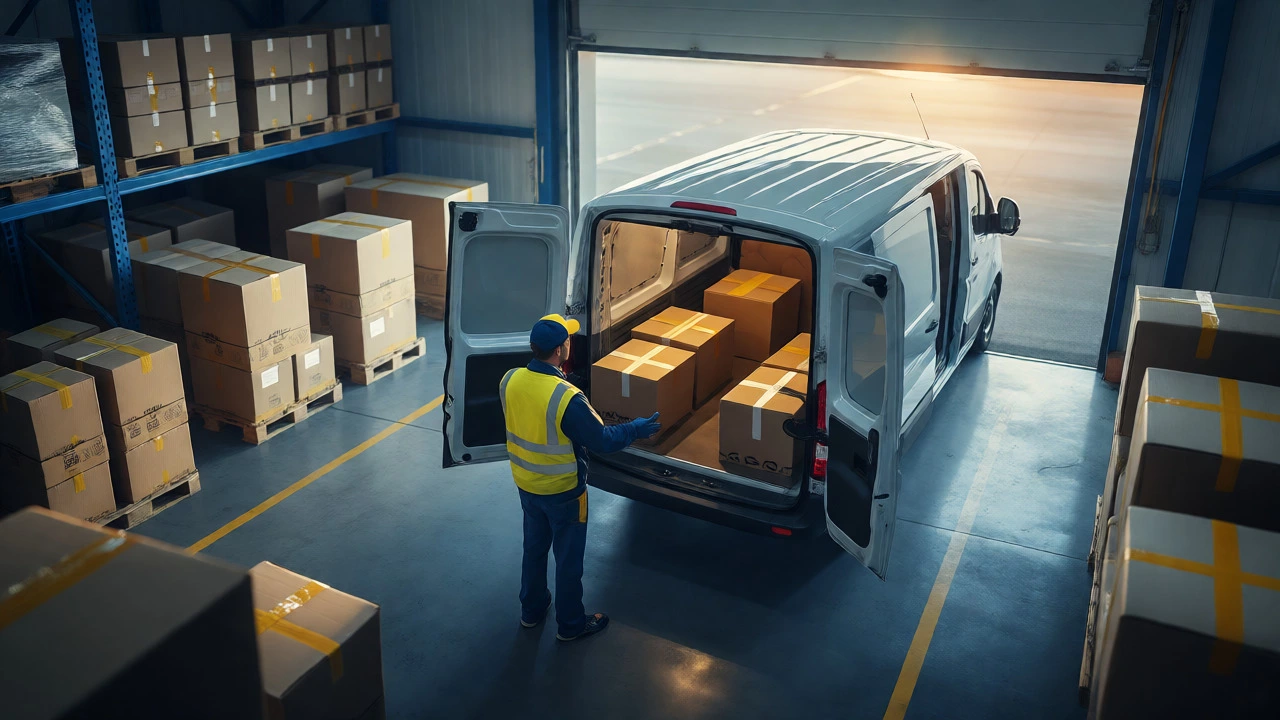
Also, consider packaging. Bulky, non-standard boxes waste truck space. Standardized packaging dimensions allow for better cube utilization in vans. If you’re selling small items, use padded mailers instead of rigid boxes. Lighter, smaller packages mean more units per van, which spreads the fixed cost of the driver and vehicle across more sales.
Choosing the Right Partners
You don’t have to own a fleet to succeed. In fact, owning trucks is rarely worth it for growing brands unless you have massive, predictable volume. Third-party logistics providers (3PLs) and specialized last-mile carriers are usually the smarter play. But not all partners are created equal.
When vetting carriers, look beyond price. Ask about their failure rates. What is their average first-attempt success rate? Do they offer proof of delivery (POD) with photos? Can they integrate with your existing tech stack via API? A cheap carrier that loses 10% of your parcels will cost you more in refunds and reputation damage than a slightly pricier, reliable partner.
| Carrier Type | Best For | Cost Profile | Flexibility |
|---|---|---|---|
| National Carriers (e.g., DPD, Royal Mail) | Long-distance, low-volume | Low per unit, high minimums | Low |
| Local Couriers | Urban, same-day, high-touch | Higher per unit, no minimums | High |
| Crowdsourced Fleets | Surge capacity, irregular peaks | Variable market rates | Very High |
| In-House Fleet | Brand control, high density | High fixed costs | Total Control |
For many UK businesses, a hybrid model works best. Use national carriers for base load and local couriers for overflow or premium services. This protects you from capacity crunches during peak seasons like Black Friday or Christmas, when national networks often buckle under pressure.
Measuring What Matters
You can’t improve what you don’t measure. Stop looking at just "delivery times." Start tracking metrics that correlate with profit and happiness.
- First Attempt Delivery Rate (FADR): Aim for above 90%. Every percentage point below this costs you money.
- Cost Per Delivery: Track this weekly. Watch for spikes caused by route inefficiencies or surcharges.
- Customer Satisfaction Score (CSAT): Send a quick post-delivery survey. Was the driver polite? Was the package intact?
- On-Time Performance: Measure against promised windows, not just daily averages.
Use these insights to negotiate better terms with carriers. If you consistently provide accurate address data and clear labeling, argue for discounts. If you notice a specific region has high failure rates, investigate why. Is it poor access? Wrong addresses? Fix the root cause, not just the symptom.
Handling last mile delivery effectively is less about magic tricks and more about disciplined execution. It requires aligning your warehouse processes, choosing the right tech, and treating your customers like humans who value their time. Start by auditing your current failure rates. Then, implement real-time tracking. Finally, diversify your carrier mix. These three steps alone will significantly tighten your margins and improve your brand reputation. The last mile is tough, but it’s where you win or lose the customer’s heart-and wallet.
What is considered a good first attempt delivery rate?
A good first attempt delivery rate (FADR) is typically above 90%. Industry leaders often achieve 95% or higher. Rates below 85% indicate significant issues with address accuracy, customer availability, or carrier performance, leading to increased costs due to re-deliveries and returns.
Is it cheaper to use local couriers or national carriers for last mile delivery?
It depends on volume and geography. National carriers are generally cheaper for long-distance shipments and low volumes due to economies of scale. Local couriers are often more cost-effective for dense urban areas and same-day deliveries because they avoid the sorting hub delays and can optimize shorter, high-frequency routes. Many businesses use a hybrid approach to balance cost and speed.
How can I reduce WISMO (Where Is My Order?) tickets?
Implement proactive communication. Instead of waiting for customers to ask, send automated SMS or email updates at key milestones: shipped, out for delivery, and delivered. Provide a live tracking link that shows the driver's location. This transparency reduces anxiety and eliminates the need for customers to contact support for status updates.
What are parcel lockers and should I offer them?
Parcel lockers are secure, self-service kiosks located in public places like supermarkets or train stations. Offering them as a delivery option increases flexibility for customers who aren't home during standard hours. It also reduces failed delivery attempts for carriers, potentially lowering your overall shipping costs and improving sustainability by consolidating deliveries.
How does dynamic routing help save money?
Dynamic routing uses algorithms to adjust driver paths in real-time based on traffic, new orders, and cancellations. This maximizes drop density and minimizes empty miles. By ensuring drivers spend less time idling or driving inefficient loops, you reduce fuel consumption and labor hours, directly lowering the cost per delivery.