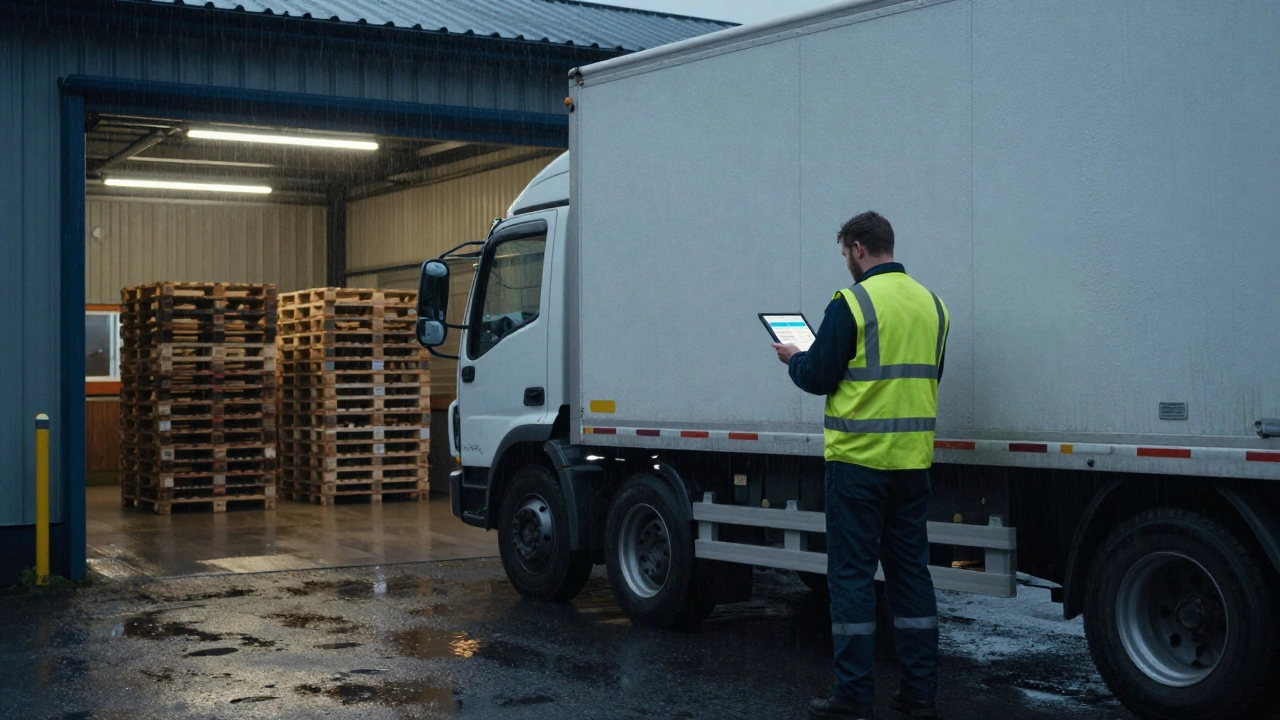
Logistics Problem-Solver Challenge
Scenario #1: Late Shipment
A customer in Manchester has ordered a critical batch of medical supplies. The shipment was scheduled to arrive by 10 AM today, but the truck is now reported to be 4 hours late due to traffic. The customer is demanding immediate delivery for their urgent patient care.
What's the best first step?
People often ask if learning logistics is hard. The answer isn’t yes or no-it’s learning logistics is different. It’s not about memorizing formulas or passing exams. It’s about understanding how things move, when they move, and why they get stuck. If you’ve ever waited for a package that never arrived, or seen a truck stuck in traffic with a load of groceries, you’ve seen logistics in action. And that’s where the real learning begins.
What logistics actually is (and what it isn’t)
Logistics isn’t just delivery. It’s not just driving trucks or sorting boxes in a warehouse. It’s the entire system that gets a product from a factory in Vietnam to a shelf in Bristol. That includes planning routes, managing inventory, negotiating with carriers, handling customs paperwork, tracking shipments in real time, and fixing problems before customers notice them.
Think of it like a giant puzzle with hundreds of moving pieces. One delay in Shanghai can mean a store in Manchester runs out of stock. A mislabeled pallet in Poland can hold up an entire warehouse in Birmingham. The job isn’t to know every piece-it’s to know how they fit together.
Most people assume logistics is about driving or warehouse work. But the biggest roles today are in planning, data analysis, and problem-solving. Companies don’t need more people to lift boxes. They need people who can predict where boxes will go wrong-and stop it before it happens.
Why it feels harder than it is
Learning logistics feels tough because it’s not taught like math or history. You won’t find a single textbook that covers it all. The rules change by country, by carrier, by season. A shipment that moves smoothly in summer might get stuck in winter due to weather, strikes, or port congestion.
There’s also a lot of jargon. Terms like cross-docking, OTIF (On-Time In-Full), freight class, or EDI (Electronic Data Interchange) sound like alphabet soup. But once you see them in action, they make sense. Cross-docking? It’s when a truck unloads boxes and another truck loads them-no storage. OTIF? It’s how well a company delivers on time and with the right items. You learn these by doing, not by reading.
The real challenge isn’t the complexity-it’s the lack of clear starting points. Most courses throw you into software tools before you understand the basics. You end up clicking buttons without knowing why. That’s where people get stuck.
What you actually need to learn (and what you don’t)
You don’t need a degree in supply chain management to start. You don’t need to know how to code. You don’t even need to know how to use Excel perfectly.
What you do need:
- Basic understanding of transportation modes: How air freight differs from sea freight, why rail is cheaper for bulk, and when road transport makes sense.
- How warehouses work: Not just packing boxes, but how inventory moves in and out, how barcodes and scanners track items, and why cycle counts matter.
- How orders flow: From a customer clicking ‘buy’ to a truck pulling out of a depot. Every step has a handoff, a deadline, and a risk.
- Communication skills: Logistics is 70% talking. To drivers, to suppliers, to customers, to customs agents. If you can explain a delay clearly and calmly, you’re already ahead.
- Problem-solving mindset: When a shipment is late, you don’t panic. You ask: Where’s the bottleneck? Who needs to know? What’s the backup plan?
That’s it. No advanced math. No engineering. No memorizing laws. Just observation, questions, and a willingness to follow the trail of a package from start to finish.

Real-world examples of people who learned logistics
Take Sarah, who started as a warehouse assistant in Coventry. She didn’t have a degree. She just asked questions. Why is this pallet here? Who approved this route? What happens if the driver calls in sick? Within 18 months, she was managing inbound shipments for a mid-sized ecommerce company.
Or James, a former retail assistant in Leeds. He noticed his store kept running out of stock on weekends. He dug into the delivery schedules and found the supplier was shipping on Thursdays-but the carrier didn’t deliver until Monday. He suggested switching to a next-day service. The company saved £12,000 in lost sales in six months. He got promoted.
These aren’t rare stories. They’re common. People learn logistics by being curious. By watching. By asking, “What if we tried this?”
The tools you’ll use (and they’re easier than you think)
You don’t need to be a tech wizard. Most logistics software is designed for people who aren’t.
Here’s what you’ll actually use:
- TMS (Transportation Management Systems): Tools like MercuryGate or Oracle TMS help plan routes and track trucks. They show maps, delivery windows, and delays. You don’t build them-you use them.
- WMS (Warehouse Management Systems): Systems like SAP EWM or Fishbowl track inventory. You scan barcodes, confirm receipts, and flag missing items. It’s like a digital checklist.
- Excel (yes, really): Still the most common tool for tracking shipments, calculating costs, and spotting trends. If you can sort a column and use SUM and IF functions, you’re good.
- Communication apps: WhatsApp, Teams, email. Most logistics problems are solved by a quick message, not a report.
Most companies train you on these tools in a day or two. What they can’t teach you is how to think like a logistics professional. That comes from experience.
Where to start (no degree required)
If you want to learn logistics, here’s how to begin:
- Watch a delivery truck in your area. Where does it come from? Where does it go? How many stops does it make? What time does it leave? Do you see delays?
- Track a package you ordered. Go to the tracking page. Note every status change: ‘Out for delivery’, ‘Held at facility’, ‘Customs cleared’. Ask yourself: Why did it stop?
- Volunteer at a local warehouse or courier hub. Even one day helps. You’ll see how pallets are loaded, how labels are scanned, how errors happen.
- Take a free online course. Coursera and FutureLearn have short intro courses on supply chain basics. No cost. No pressure. Just learn the language.
- Ask someone who works in logistics. Most people in the industry love to talk about their job. Ask them: What’s the hardest part? What surprised you when you started?
You don’t need to quit your job. You don’t need to go back to school. Just start paying attention.

Who it’s not for
Logistics isn’t for everyone. If you hate surprises, you’ll struggle. If you need everything to be predictable, you’ll burn out. If you can’t handle pressure when a shipment is late and a customer is angry, it won’t be a good fit.
It’s also not for people who think it’s just about driving trucks. The biggest growth areas are in data, planning, and customer service-not behind the wheel.
But if you like solving puzzles, if you’re good at spotting patterns, if you don’t mind being the person who fixes things before they break-then logistics might be the quiet, essential job you didn’t know you were looking for.
What happens after you learn it
Once you understand the basics, doors open. You can move into:
- Operations coordinator
- Logistics analyst
- Warehouse supervisor
- Freight broker
- Supply chain planner
Salaries start around £25,000 for entry-level roles and can hit £50,000+ with experience. Many people move from warehouse roles to planning roles in under two years. The demand is high-especially after the pandemic showed how fragile global supply chains really are.
Companies in the UK are hiring. From small couriers in Bristol to giants like Amazon and DHL. They don’t need graduates. They need people who can make things work.
Final thought: It’s not about being smart. It’s about being observant.
Learning logistics isn’t hard because it’s complex. It’s hard because no one tells you how to start. But once you begin watching how things move-how a box gets from a warehouse to your door-you start seeing the system. And once you see it, you can fix it. That’s the real skill.
You don’t need to be an expert to begin. You just need to care enough to ask why.
Do I need a degree to work in logistics?
No, you don’t need a degree. Many people start in warehouse roles, delivery jobs, or customer service and move into logistics planning without formal education. Employers value experience, problem-solving, and reliability more than a degree. Free online courses and on-the-job training are enough to get started.
Is logistics a good career for someone starting out?
Yes, especially if you like practical, hands-on work. Logistics offers clear career paths, stable demand, and opportunities to grow quickly. Entry-level roles are easy to find, and you can advance into planning, management, or analysis roles within a few years. It’s one of the few industries where you can move up without a university degree.
What’s the biggest mistake people make when learning logistics?
Trying to learn everything at once. People jump into software tools or complex theories before understanding the basics of how shipments move. Start by tracking a single package from start to finish. Watch how delays happen. Talk to drivers or warehouse staff. Build your knowledge from real examples, not textbooks.
Can I learn logistics while working another job?
Absolutely. Many people learn logistics part-time. Spend 30 minutes a day tracking deliveries, reading industry blogs, or watching free videos. Volunteer for a day at a local warehouse. Ask questions at work. You don’t need full-time training-just consistent curiosity.
How long does it take to become competent in logistics?
Most people become comfortable with the basics in 3 to 6 months if they’re actively learning. To be truly proficient-able to handle planning, problem-solving, and coordination-takes about 18 to 24 months of real-world experience. It’s not about time spent in class. It’s about how many shipments you’ve tracked, fixed, and improved.