
SAP Learning Path Explorer
Select your target role to see personalized learning insights, timeline estimates, and recommended strategies.
Click a role above to reveal your personalized learning path
Walking onto the floor of a modern distribution center, you hear the hum of conveyor belts and the beep of scanners. Behind that physical activity sits a digital brain: an Enterprise Resource Planning system. For many in the logistics sector, that brain is SAP, a comprehensive suite of business software applications designed to manage day-to-day business activities such as accounting, procurement, project management, and supply chain operations. The question on everyone’s mind isn’t just whether it works-it’s whether they can actually learn it. Is SAP difficult to learn?
The short answer is yes, but with a massive asterisk. It depends entirely on what part of the puzzle you are trying to solve. If you are a warehouse operator picking boxes, the interface is relatively straightforward. If you are a consultant configuring the backend logic for inventory movement types, you are entering deep water. This guide breaks down the reality of learning SAP within the context of warehouse solutions, systems and processes designed to optimize the storage, handling, and movement of goods within a facility.
The Spectrum of Difficulty: User vs. Administrator
To understand the learning curve, you have to separate the people using the tool from the people building it. In any large-scale logistics operation, these roles rarely overlap.
The End-User Experience
If your job involves scanning barcodes, confirming putaways, or checking stock levels, SAP is not particularly difficult. Modern interfaces, especially SAP Fiori, a user experience design concept developed by SAP that provides role-based, device-independent access to business applications, look like standard web apps or mobile dashboards. You tap a button, scan a code, and the system tells you where to go. The cognitive load here is low. You don’t need to understand how the database works; you just need to follow the prompts. Training usually takes a few days to a week.
The Functional Consultant Experience
This is where the difficulty spikes. A functional consultant needs to know how to configure SAP Extended Warehouse Management (EWM), a module within SAP S/4HANA that manages complex warehouse processes including inbound, outbound, and internal warehouse movements. You need to understand concepts like storage types, storage sections, bin determination, and wave planning. You aren’t just clicking buttons; you are defining the rules of physics for the warehouse. If you get the configuration wrong, trucks don’t load, and orders don’t ship. This requires months, often years, of dedicated study and hands-on project experience.
The Technical Developer Experience
For developers, SAP introduces its own proprietary languages and frameworks. While traditional ABAP, Advanced Business Application Programming, a high-level programming language developed by SAP for creating custom business applications, is still used, the industry is shifting toward SAP BTP, Business Technology Platform, which serves as the foundation for extending SAP applications and integrating them with third-party services. Learning to extend SAP functionality without breaking the core upgrade path is a specialized skill that generalist software engineers often find frustrating at first.
Why SAP Feels Overwhelming at First
If you’ve ever tried to navigate the older SAP GUI, the traditional graphical user interface for accessing SAP systems, known for its dense, transaction-code-driven layout, you know the feeling. It looks like something from the 1990s. But the difficulty isn’t just aesthetic. It stems from three core factors:
- Transaction Codes (T-Codes): Instead of searching for "Create Sales Order," you type
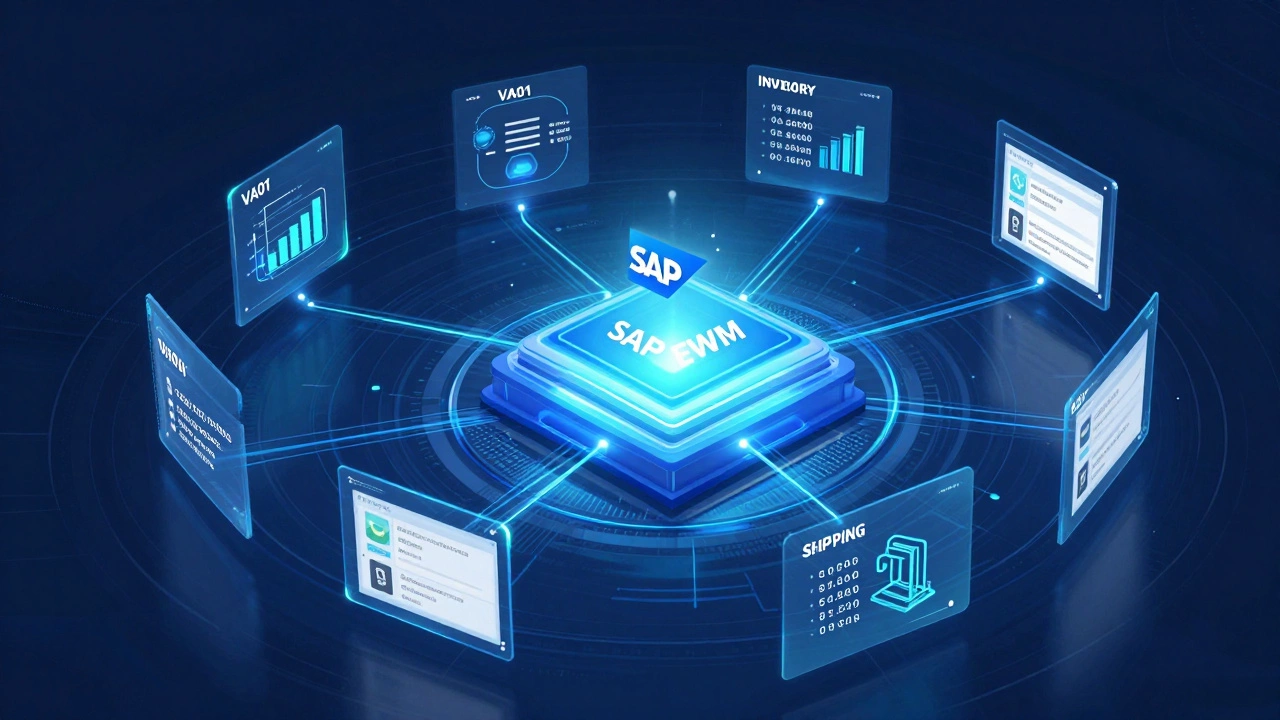
VA01. There are thousands of these codes. Memorizing them feels like learning a new alphabet. - Interconnectedness: In SAP, nothing happens in isolation. A change in the warehouse module affects finance, sales, and purchasing. To learn one piece, you often need a basic understanding of five others.
- Jargon Density: Terms like "Movement Type 101" or "Stock Transfer Order" are specific to SAP. They don’t translate directly to everyday English until you’ve lived inside the system for a while.
The Role of SAP S/4HANA in Simplifying Learning
There is good news if you are starting fresh today. The shift to SAP S/4HANA, SAP's next-generation ERP suite built on the HANA in-memory computing platform, offering real-time data processing and simplified architecture, has changed the landscape. Unlike legacy SAP ECC, which was fragmented, S/4HANA is more integrated. The data model is simpler because it runs on columnar databases that process information faster. This means fewer background jobs and less complex coding for simple tasks.
Furthermore, the push toward cloud-based solutions means users interact more through Fiori apps than the old GUI. If you are comfortable with modern web interfaces, the barrier to entry for daily operations is significantly lower than it was ten years ago.
How Long Does It Actually Take?
Timeframes vary wildly based on your goal. Here is a realistic breakdown for someone entering the warehouse logistics field:
| Role / Goal | Time to Basic Competency | Time to Job Readiness | Key Focus Areas |
|---|---|---|---|
| Warehouse Operator | 3-7 Days | 2 Weeks | Fiori Apps, Scanning, T-Codes for Goods Movement |
| Junior Functional Consultant | 3 Months | 6-12 Months | EWM Configuration, Master Data, Integration with SD/MM |
| Technical Developer | 6 Months | 12+ Months | ABAP, RAP Model, BTP Extensions, APIs |
Note that "Job Readiness" assumes you are working on live projects. Classroom learning alone rarely sticks in SAP because the system is too vast to memorize without context.
Strategies to Make Learning Easier
You cannot brute-force your way through SAP. You need a strategy. Here is how successful learners approach it:
- Start with the Process, Not the Software: Before you touch the keyboard, understand how a warehouse works. What is cross-docking? What is cycle counting? If you understand the business process, the software becomes a tool to execute it, rather than a mystery to decode.
- Use Simulation Environments: Never practice on a live production system. Use SAP IDES, Internet Demonstration and Education System, a pre-configured SAP system used for training and testing purposes. or cloud sandboxes provided by training providers. Break things. Mess up the data. Then reset and try again.
- Focus on One Module First: Don’t try to learn Finance, HR, and Warehouse Management simultaneously. Pick SAP WM, Warehouse Management, the older module for warehouse processes, largely superseded by EWM but still relevant in legacy systems, or EWM. Master the flow of goods from receipt to shipment before worrying about how it impacts the balance sheet.
- Leverage Community Knowledge: The SAP Community, an online platform where SAP professionals share knowledge, ask questions, and discuss best practices, is invaluable. Most errors you encounter have been solved by someone else. Learning to search effectively is a critical skill.
Certification: Worth the Effort?
Many newcomers ask if they should pursue SAP Certification, official credentials offered by SAP that validate expertise in specific modules or technical areas. For warehouse roles, the answer is nuanced.
For end-users, certification is rarely required. Employers care more about your ability to operate scanners and follow procedures. However, for consultants and developers, certification signals competence. It proves you have structured your knowledge. That said, certification exams test your ability to pass a test, not necessarily your ability to solve real-world problems. Many senior consultants prefer candidates with two solid implementation projects over someone with three certificates and no field experience.
Common Pitfalls to Avoid
Learning SAP is a marathon, not a sprint. Here are the traps that slow people down:
- Ignoring Master Data: In warehouse management, garbage in equals garbage out. If your material masters, plant data, and storage location configurations are messy, no amount of clever configuration will fix it. Spend time understanding data hygiene.
- Over-Customizing Early On: New consultants often want to build custom code to make the system fit their perfect mental model. Resist this. Standard SAP covers 80% of use cases. Learn the standard first. Customize only when absolutely necessary.
- Burning Out: The volume of information is staggering. It’s normal to feel overwhelmed in the first month. Take breaks. Step back. Look at the big picture. You don’t need to know every single T-Code on day one.
The Future of SAP in Warehousing
As we move further into 2026, SAP is integrating more Artificial Intelligence, technology that simulates human intelligence processes by computers, including learning, reasoning, and self-correction, and machine learning into its warehouse solutions. Predictive analytics for stockouts, automated bin recommendation, and robotic process automation are becoming standard features. This changes the learning curve again. You won’t just be learning how to enter data; you’ll be learning how to interpret AI-driven insights and override them when necessary.
This makes adaptability more important than rote memorization. The specific screens might change, but the logic of supply chain management remains constant.
Do I need to know ABAP to work in SAP warehouse management?
No. If you are a functional consultant or an end-user, you do not need to know ABAP. Functional roles focus on configuration and business processes. Only technical developers and basis administrators need deep coding skills. However, understanding basic logic helps you communicate better with developers.
Is SAP EWM harder to learn than SAP WM?
Yes, generally. SAP Extended Warehouse Management (EWM) is more complex and feature-rich than the older Warehouse Management (WM) module. EWM handles larger volumes, more complex layouts, and deeper integration with execution systems. However, since SAP is phasing out WM in favor of EWM, learning EWM is the better long-term investment.
Can I learn SAP online for free?
You can learn the theory for free. Platforms like openSAP offer free courses, and there are countless YouTube tutorials. However, you cannot practice effectively without access to a sandbox system. Access to a live SAP environment usually requires a paid subscription or employer-provided license.
What is the easiest SAP module to start with?
For beginners, Material Management (MM) is often considered the easiest entry point because it deals with tangible goods and straightforward processes like purchasing and inventory. From MM, moving into Warehouse Management (WM/EWM) is a natural progression.
How does SAP integrate with WMS hardware?
SAP integrates with hardware like handheld scanners, conveyors, and robots via middleware or direct interfaces. In modern setups, SAP EWM acts as the central brain, sending instructions to WES, Warehouse Execution System, software that controls real-time warehouse equipment and labor. devices. Understanding these integration points is crucial for technical roles.