UPS Shipping Insurance Cost Calculator
Shipment Details
Total Coverage Limit
$0
Additional Cost
$0
- Covers loss & damage up to declared amount
- Must be purchased before shipping
- Proof of value required for claims
Consider services like ShipGuard if you ship via multiple carriers. They often offer faster payouts for a flat monthly fee.
Enter your item value to see recommended coverage and costs.
You just packed that expensive item. You sealed the box with extra tape. You paid for the premium shipping label. Then, three days later, your customer says it arrived crushed. Or worse, they say it never arrived at all. In that moment, you are asking yourself one question: Is UPS insurance worth it?
The short answer is yes, but only if you understand exactly what you are buying. Most shippers assume their package is fully covered by default. It isn’t. The difference between getting a full refund and eating the loss often comes down to knowing the difference between basic liability and declared value coverage.
What Does UPS Actually Cover By Default?
Before you decide whether to buy extra insurance, you need to know what you already have. When you ship a package via UPS is a global logistics company providing supply chain management and freight transportation services, you automatically get a baseline level of protection. This is not called "insurance" in the traditional sense; it is called carrier liability.
For domestic shipments within the United States, UPS provides up to $100 in liability coverage at no extra cost. If you are shipping internationally, this drops significantly to $100 as well, though specific international treaties can sometimes alter these limits slightly depending on the destination country.
Here is the catch: this $100 limit applies regardless of how much you paid for the shipping label. Whether you paid $5 for Ground or $50 for Next Day Air, your free coverage caps at $100. If you are sending a laptop worth $800, you are already underinsured before you even think about adding extras.
| Coverage Type | Max Payout (Domestic) | Cost | Best For |
|---|---|---|---|
| Basic Liability | $100 | Free | Low-value documents, samples |
| Declared Value (Up to $500) | $500 | ~$4.95 | Electronics, small appliances |
| Declared Value ($500 - $5,000) | $5,000 | ~$6.75 + fees | High-end retail goods |
| Special Handling / High Value | $50,000+ | Custom Quote | Jewelry, art, industrial parts |
Understanding Declared Value Coverage
If your item is worth more than $100, you need to purchase Declared Value Coverage is an optional service from UPS that allows shippers to declare a higher value for their shipment to increase liability limits. This is what most people mean when they talk about "UPS insurance."
This service works on a tiered pricing structure. You pay a fee based on the value you declare. For example, increasing your coverage from $100 to $500 usually costs around $4.95. Going higher increases the fee incrementally. The maximum standard declared value you can add online is typically $5,000. If you are shipping something worth $10,000, you cannot simply check a box online; you need to contact UPS directly for special handling arrangements.
Why is this worth it? Because without it, UPS is only liable for the cost of the materials used to ship the item, not the item itself, if the damage was due to improper packaging. With declared value, you are shifting the risk back to the carrier. If they break a $400 monitor, and you paid for the upgrade, they owe you $400. If you didn’t, they might argue the monitor was fragile and you didn’t pack it right, leaving you with nothing.
When Is UPS Insurance NOT Worth It?
Not every package needs extra coverage. Adding declared value to a shipment of t-shirts worth $30 is a waste of money. Here is how to decide if you should skip the extra fee:
- The item is low-value: If the replacement cost is under $100, stick with the free liability. The hassle of filing a claim for $50 isn’t worth the time, and the insurance premium might eat into your profit margin entirely.
- You have third-party insurance: Many ecommerce sellers use platforms like Shopify, WooCommerce, or specialized insurers like ShipGuard or ParcelPro. These policies often cover lost or damaged packages across all carriers (UPS, FedEx, USPS) for a flat monthly fee or per-shipment rate. If you already have this, buying UPS-specific insurance is double-dipping. Check your policy first.
- The item is prohibited: UPS will not cover certain items regardless of how much you pay. Perishables, hazardous materials, and high-risk items like cash or negotiable instruments are often excluded or heavily restricted. Don’t waste money insuring something they won’t pay out on.
The Hidden Trap: Proof of Value
This is where most claims fail. Buying the insurance is step one. Proving the value is step two. UPS does not care what you *say* the item is worth. They care what you can *prove* it is worth.
To get a payout, you need documentation. An invoice showing the sale price is good. A receipt from the manufacturer is better. If you are selling vintage items or custom goods, a recent appraisal or comparable sales data helps. Without this paper trail, UPS may deny your claim or offer a fraction of the declared value based on their own internal estimates.
Also, note that UPS pays out based on the replacement cost or actual cash value, depending on the terms. They rarely pay for "lost profits" or "business interruption." If a delayed part stops your factory line, UPS insurance won’t cover the downtime. It only covers the physical item.
How to File a Claim Successfully
If the worst happens, speed matters. You generally have 9 months from the date of shipment to file a claim for domestic shipments. However, waiting that long makes things harder. Memory fades, evidence degrades, and boxes get thrown away.
- Keep the packaging: Do not throw away the box, the dunnage (packing material), or the label. UPS often requires photos of the damaged item inside the original packaging. If the box is gone, your claim looks weaker.
- Document immediately: Take clear photos of the damage from multiple angles. Include a photo of the shipping label. If the recipient signed for it, try to get them to note the damage on the signature scan if possible.
- Gather proof of value: Pull up the invoice, the credit card statement, or the manufacturing receipt. Have these ready to upload.
- Submit online: Use the UPS Claims Center on their website. It is faster than calling. Upload your photos and documents. Keep a copy of everything for your records.
Claims can take anywhere from a few weeks to several months to resolve. Complex cases involving high values may require an inspection by a UPS adjuster. Be patient, but persistent. Follow up if you don’t hear back within the promised timeframe.
UPS vs. Third-Party Shipping Insurance
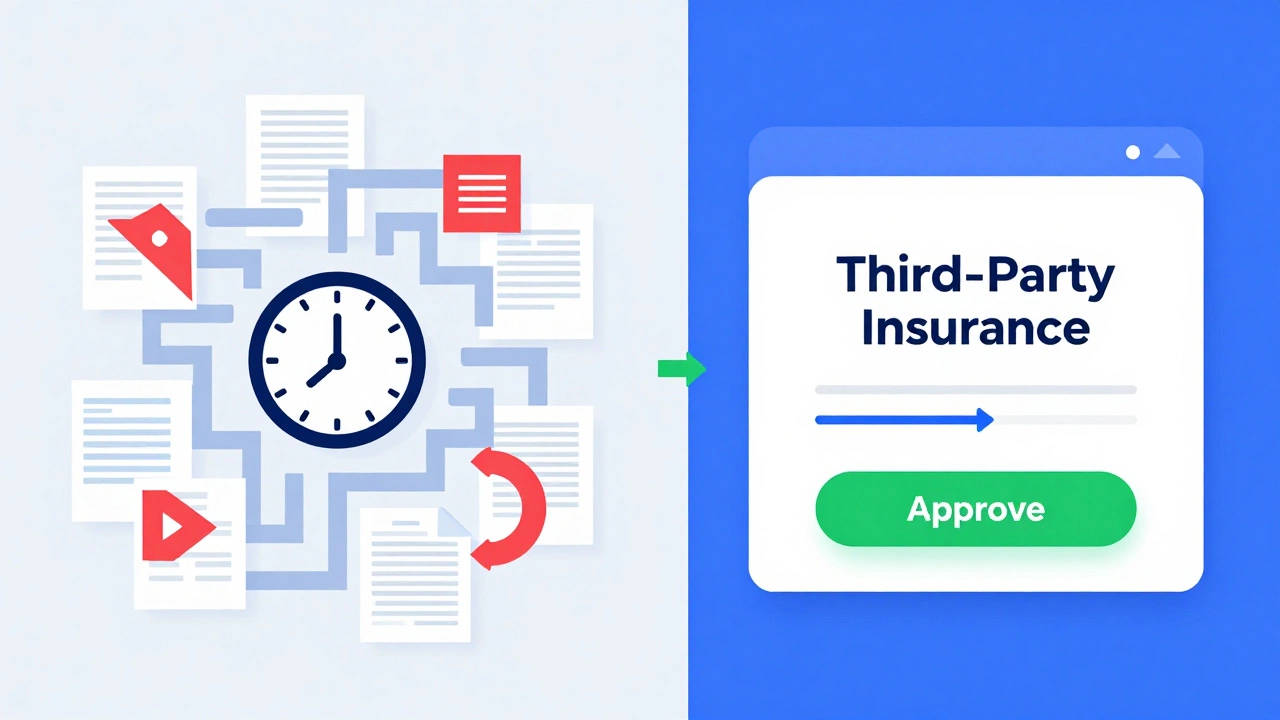
You have two main choices for protecting your goods: carrier-provided coverage (like UPS Declared Value) or third-party insurance providers. Here is how they stack up:
| Feature | UPS Declared Value | Third-Party (e.g., ShipGuard) |
|---|---|---|
| Payout Speed | Slower (weeks/months) | Faster (often days) |
| Claim Process | Strict, requires carrier approval | Simpler, automated for small claims |
| Cost Structure | Percentage of value | Flat fee or subscription |
| Coverage Scope | Only UPS shipments | All carriers (UPS, FedEx, USPS) |
| Deductibles | None usually | Often has a deductible |
If you ship exclusively via UPS and your items are moderately valuable, UPS Declared Value is straightforward. You buy it, you file with them, you get paid by them. No middleman.
If you ship via multiple carriers, or if you hate dealing with bureaucratic claim processes, third-party insurance is often superior. Companies like ParcelPro or ShipSafe integrate directly with your ecommerce platform. When a package is lost, you click a button, and they pay you out quickly, then *they* deal with UPS to recover the money. For high-volume shippers, this saves hours of administrative work.
Pro Tips for Maximizing Your Protection
Insurance is a safety net, but prevention is better. Here are some practical steps to ensure your claim gets approved if you ever need it:
- Use rigid boxes: Corrugated cardboard absorbs shock better than poly mailers for heavy or fragile items. UPS guidelines specify minimum thickness for cartons. Follow them.
- Fill void space: If the item moves inside the box, it breaks. Use bubble wrap, air pillows, or packing peanuts to fill every gap. Shake the box-if you hear movement, add more padding.
- Label clearly: Put the shipping label on the largest flat surface. Cover old labels with tape or a sticker. Misread labels lead to misdeliveries, which complicate claims.
- Require signature: For high-value items, always select "Signature Required." This proves who received the package. If the customer claims they didn’t get it, the signature is your defense against fraud.
Finally, review your annual shipping volume. If you are losing more than 1% of your packages to damage or theft, it’s time to audit your packing process. Insurance covers the financial hit, but it doesn’t fix the root cause. Better packaging reduces claims, which keeps your insurance premiums lower and your customers happier.
Does UPS insurance cover lost packages?
Yes, both the basic $100 liability and the purchased Declared Value coverage apply to lost packages. If UPS loses your shipment, you can file a claim for the declared value of the contents, provided you have proof of value.
How much does UPS insurance cost per $100?
The cost varies by value tier. Generally, upgrading from $100 to $500 costs around $4.95. For values above $500, there is a base fee plus a percentage of the declared amount, typically ranging from 1% to 3% depending on the total value and distance.
Can I buy UPS insurance after shipping the package?
No, you must purchase Declared Value coverage at the time of shipment creation. You cannot add insurance to a package that has already been picked up or scanned into the UPS network.
Does UPS cover partial damage?
Yes, if an item is partially damaged, UPS will assess the repair cost or the depreciation in value. You will need to provide photos of the damage and estimates for repair. The payout will be the lesser of the repair cost or the difference in market value.
What is the maximum amount I can insure with UPS?
For standard online shipments, the maximum declared value is usually $5,000. For items worth more than $5,000, you must contact UPS directly to arrange special handling and higher liability limits, which can go up to $50,000 or more for qualified shippers.