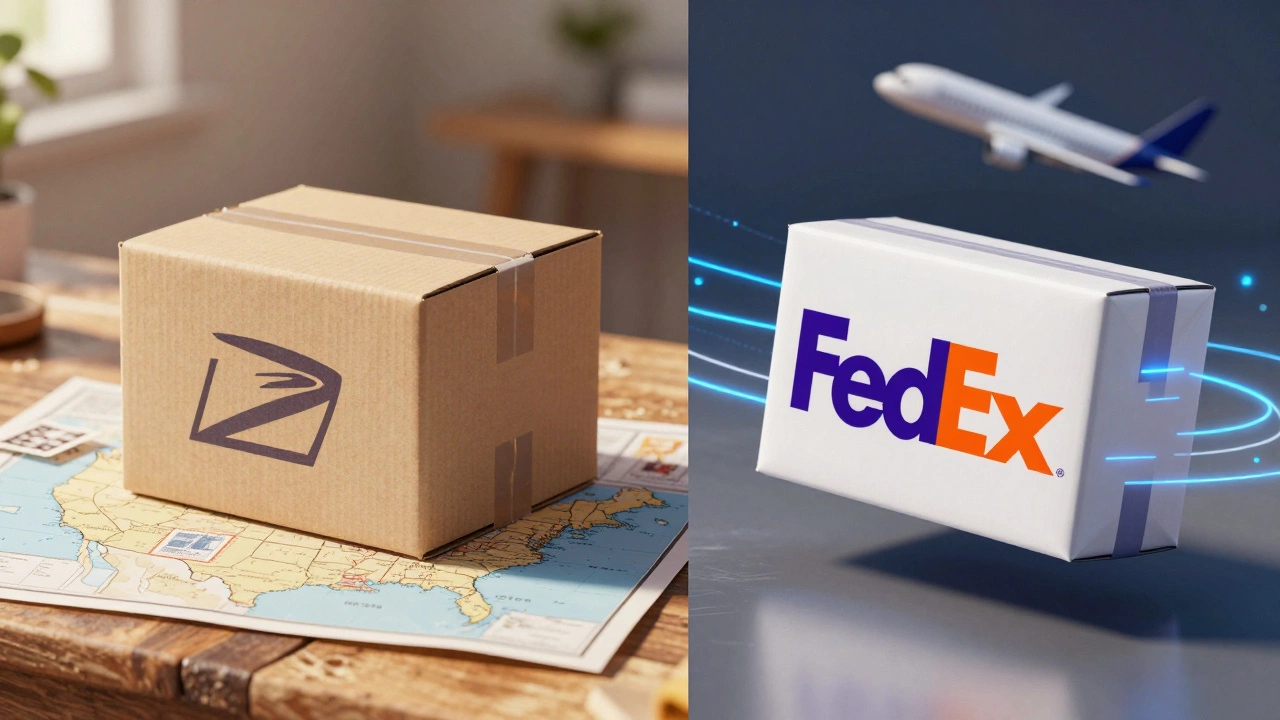
Shipping Speed & Cost Estimator
Package Details
USPS Priority Mail
Hybrid Network- Cheaper option
- No money-back guarantee
FedEx 2Day
Dedicated Air- Money-back guarantee
- Superior tracking
Enter your package details and click "Compare Options" to see which carrier is best for your needs.
You have a package that needs to arrive in two days. You are staring at your computer screen, weighing the options between USPS Priority Mail, which is the United States Postal Service's standard expedited service offering 1-3 day delivery and FedEx 2Day, which is a premium express shipping service from Federal Express guaranteeing delivery by end of day on the second business day. The question isn't just about who promises what; it is about who actually delivers when you need them to. If you are sending something critical, like legal documents or replacement parts for a broken machine, "faster" means "on time," not just "quick."
The short answer? FedEx 2Day is generally more reliable for strict deadlines because it operates on a guaranteed schedule. However, USPS Priority Mail can often be cheaper and surprisingly fast for shorter distances within the contiguous United States. Let’s break down exactly how these two services work, where they fail, and which one you should pick based on your specific situation.
Understanding the Speed Promise
To understand which is faster, we first need to look at what each company actually promises. This is where the marketing language gets tricky. Many people assume "Priority" means "Fastest," but in the world of logistics, those words mean very different things depending on the carrier.
FedEx 2Day does exactly what it says on the tin. It guarantees delivery by the end of the day on the second business day after pickup. If you ship on Monday morning, it arrives Wednesday. If you ship Tuesday, it arrives Thursday. This consistency is its main selling point. It uses FedEx’s dedicated air network, meaning your package flies directly to major hubs and then out to local facilities. There is less handling by third parties, which reduces the chance of delays.
On the other hand, USPS Priority Mail has a delivery window of one to three business days. Notice the range? That is the key difference. For a package traveling from New York to Boston, Priority Mail might arrive the next day. For a package going from Los Angeles to Miami, it could easily take three days. USPS relies on a massive ground network supplemented by air transport, but it does not prioritize every package equally once it enters the system unless you pay extra for Priority Mail Express.
| Feature | USPS Priority Mail | FedEx 2Day |
|---|---|---|
| Delivery Window | 1-3 Business Days | 2 Business Days (Guaranteed) |
| Network Type | Hybrid (Ground & Air) | Dedicated Air Network |
| Weekend Delivery | Optional (Saturday available) | Available (with surcharge) |
| Money-Back Guarantee | No (unless Express) | Yes |
The Distance Factor: Geography Matters
Shipping is not uniform across the country. Where you are sending the package from and where it is going plays a huge role in speed. This is often overlooked when people compare rates online.
If you are shipping within the same region-say, from Chicago to Detroit-USPS Priority Mail can sometimes beat FedEx 2Day. Why? Because USPS has an incredibly dense ground network. They deliver to almost every address in the US, including rural areas where FedEx Ground might drop off at a central location. For short hauls, the truck ride is faster than the fly-and-sort process of air freight.
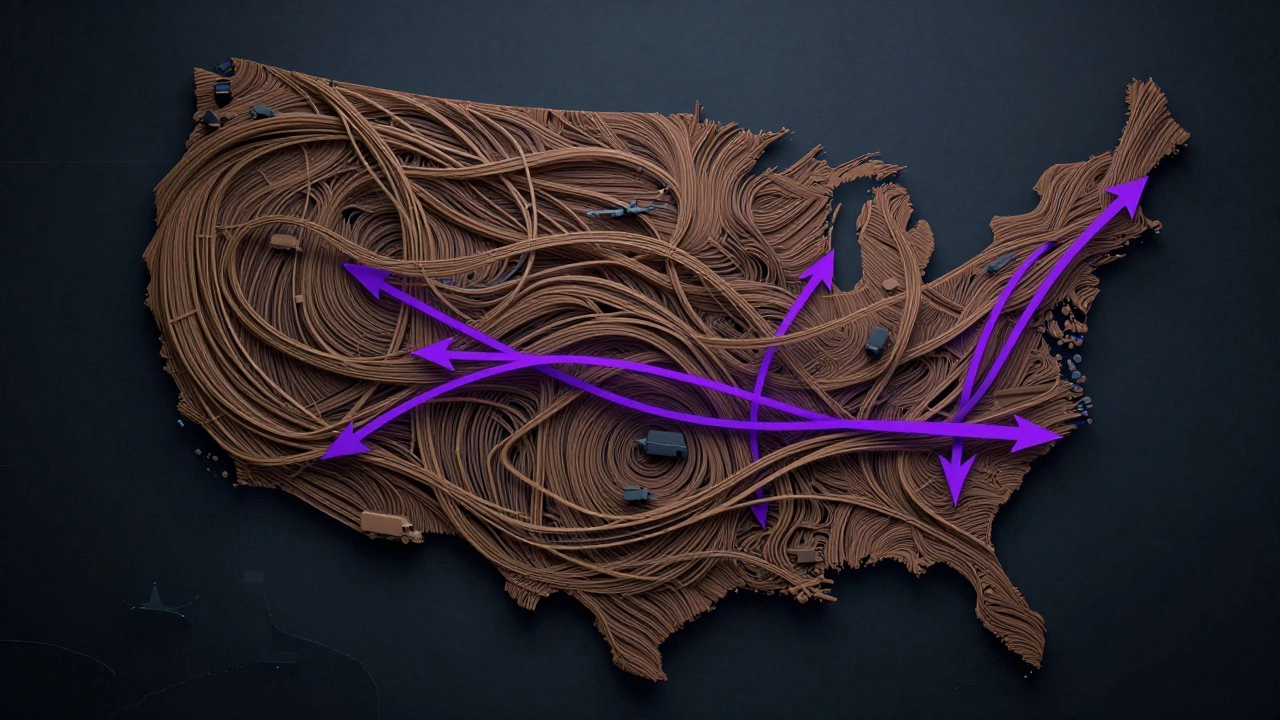
However, as distance increases, the advantage shifts to FedEx. When shipping from Seattle to Atlanta, FedEx 2Day’s direct air routes ensure the package moves quickly through major hubs. USPS Priority Mail might get stuck in regional sorting facilities, adding an extra day to the transit time. In my experience helping businesses set up their shipping logic, I’ve seen Priority Mail take four days for cross-country shipments during peak seasons, while FedEx 2Day stuck to its two-day promise.
Reliability and Tracking Precision
Speed is useless if you don’t know where your package is. This is where the user experience differs significantly between the two carriers.
FedEx Tracking is known for its granularity. You can often see exactly when a package leaves a facility, when it boards a plane, and when it arrives at the destination hub. This level of detail helps you manage expectations with your customers. If there is a delay, FedEx usually provides a reason and updates the estimated delivery time proactively.
USPS Tracking has improved over the years, but it can still feel opaque. You might see "In Transit" for several days without any location updates until the package reaches the final local post office. For high-value items or time-sensitive documents, this lack of visibility can be stressful. Additionally, USPS tracking sometimes shows "Delivered" before the package actually appears at the door, leading to customer confusion.
Another critical factor is the money-back guarantee. FedEx 2Day comes with a refund option if the package does not arrive by the end of the second business day. USPS Priority Mail does not offer this guarantee. If your package takes three days, you are out of luck financially, even if the delay caused you problems. This makes FedEx a safer bet for B2B shipments where late deliveries can disrupt operations.
Cost vs. Speed: The Hidden Trade-offs
Let’s talk money, because speed rarely comes free. Generally, FedEx 2Day is more expensive than USPS Priority Mail. The price difference can be significant, especially for heavier packages. For a 5-pound box, you might pay $20 for Priority Mail and $45 for FedEx 2Day. Is that extra $25 worth it?
It depends on your margin and your customer’s expectation. If you are selling low-cost items, absorbing the FedEx cost might eat into your profits entirely. In that case, USPS Priority Mail is the logical choice, provided you communicate clearly that delivery could take up to three days. Set realistic expectations, and most customers will be satisfied.
However, if you are shipping high-ticket items or urgent replacements, the cost of a late delivery-such as a return, a chargeback, or lost future sales-far exceeds the shipping difference. Here, FedEx 2Day pays for itself through reliability. Always calculate the total cost of ownership, not just the sticker price of the label.
Peak Season Performance
The true test of any shipping service is during the holidays or major sale events like Black Friday. This is when networks get congested, and promises start to slip.
In recent years, both USPS and FedEx have faced challenges with volume spikes. However, FedEx tends to maintain stricter adherence to its service standards because its business model relies heavily on corporate clients who demand consistency. USPS, dealing with billions of pieces of mail annually, often experiences bottlenecks that push Priority Mail beyond its three-day window. During the 2023 holiday season, reports indicated that a significant percentage of Priority Mail packages took longer than expected due to staffing shortages and volume overload.
If you are shipping during November or December, lean towards FedEx 2Day for anything that must arrive by a specific date. For non-urgent gifts, USPS Priority Mail remains a viable, cost-effective option, but add buffer time to your estimates.
Which One Should You Choose?
So, which is faster? It depends on your definition of "fast." If you mean "most likely to arrive in exactly two days no matter what," FedEx 2Day wins. Its dedicated air network and money-back guarantee provide peace of mind that USPS cannot match with standard Priority Mail.
If you mean "cheapest way to get it there quickly," USPS Priority Mail is often the better choice, especially for domestic shipments under 10 pounds and within the same region. Just remember to prepare your customers for the possibility of a three-day transit time.
For e-commerce businesses, a hybrid approach works best. Use USPS Priority Mail for standard orders to keep costs down, and offer FedEx 2Day as an upgrade option for customers who need guaranteed speed. This strategy balances profitability with customer satisfaction, giving you control over both your budget and your delivery promises.
Is FedEx 2Day faster than USPS Priority Mail?
Generally, yes. FedEx 2Day guarantees delivery in two business days, while USPS Priority Mail offers a 1-3 day window. For long-distance shipments, FedEx is more consistent. For short distances, USPS can sometimes be just as fast or faster due to its dense ground network.
Does USPS Priority Mail include Saturday delivery?
Yes, USPS offers Saturday delivery for Priority Mail, but it may require an additional fee depending on your location and the specific service level selected. FedEx also offers Saturday delivery for 2Day service, usually with a surcharge.
What happens if FedEx 2Day is late?
FedEx offers a money-back guarantee for 2Day service if the package does not arrive by the end of the second business day. You can file a claim for a refund of the shipping charges. USPS Priority Mail does not offer a similar guarantee for standard Priority Mail.
Which is cheaper for a 5-pound package?
USPS Priority Mail is typically cheaper for lighter packages, including those around 5 pounds. FedEx 2Day commands a premium for its guaranteed speed and air network usage. Prices vary by zone, so always check current rates for your specific route.
Can I track both services in real-time?
Yes, both USPS and FedEx provide tracking numbers. However, FedEx tracking is often more detailed and frequent, providing specific location updates throughout the journey. USPS tracking can sometimes have gaps in information until the package reaches the final destination facility.