UPS Billable Weight Calculator
Determine Your Billable Weight
Tip: Include the weight of the box, tape, and padding.
Package Dimensions (Inches)
Billable Weight: 0 lbs
Enter details to calculate.
The short answer: both matter
If you've ever sent a light but bulky box and were shocked by the price, you've run into the reality of how UPS is a global package delivery and supply chain management company that calculates costs based on more than just the scale reading. The truth is, UPS uses both the actual weight and the size of your package to decide what you pay. They call this "Dimensional Weight." Basically, they charge you for whichever number is higher: the actual weight of the box or the space it takes up in the truck or plane.
Quick Takeaways
- UPS compares actual weight (scale) with dimensional weight (size).
- You pay for whichever value is greater.
- Dimensional weight is calculated by multiplying Length x Width x Height and dividing by a specific divisor.
- Using the smallest possible box is the easiest way to lower costs.
- International shipments often have stricter size-to-weight ratios.
How actual weight works
Actual weight is the straightforward part. You put your package on a scale, and the number it shows is the weight. If you're shipping a 5lb lead weight in a tiny box, UPS focuses on that physical mass. For most small, dense items, this is the primary factor in your UPS shipping rates.
However, weight isn't just about the item. It includes the cardboard box, the bubble wrap, the packing peanuts, and the heavy-duty tape. If you're shipping something fragile, like a vintage lamp, the protective layering can easily add a pound or two, potentially pushing you into a higher price bracket.
What is dimensional weight and why does it exist?
Imagine shipping a giant box filled with popcorn. The box might only weigh 2 pounds, but it takes up the same space as ten heavy boxes of books. If UPS only charged by actual weight, they'd lose money because that popcorn box blocks other packages from fitting in the vehicle. To fix this, they use Dimensional Weight, which is a pricing technique used by carriers to account for the volume of a package in relation to its weight.
Think of it as "density pricing." UPS is essentially charging you for the volume of the cargo hold you're occupying. If your package is "light but large," you'll be charged based on its size rather than its weight on the scale.

The math behind the size charge
Calculating dimensional weight isn't rocket science, but it's where most people get confused. UPS uses a specific formula to turn a box's dimensions into a weight value. Here is the process they use:
- Measure the length, width, and height of your box in inches.
- Multiply those three numbers together (L x W x H) to get the total cubic inches.
- Divide that total by the UPS "dim divisor." For most standard shipments, this divisor is 139 (though it can vary based on the specific service or region).
For example, let's say you're shipping a large pillow in a box that is 20 x 20 x 10 inches. The actual weight is only 3 lbs. Here is how the math works: 20 x 20 x 10 = 4,000 cubic inches. Then, 4,000 divided by 139 equals roughly 28.7. UPS rounds this up to 29 lbs. Since 29 lbs is higher than the actual 3 lbs, you pay the price for a 29 lb package.
| Item | Actual Weight | Dimensions (Inches) | Dim Weight Calculation | Billable Weight |
|---|---|---|---|---|
| Heavy Books | 15 lbs | 10 x 8 x 4 | (320 / 139) = 2.3 lbs | 15 lbs (Actual) |
| Large Plush Toy | 4 lbs | 24 x 12 x 12 | (3,456 / 139) = 24.8 lbs | 25 lbs (Dim) |
International shipping and size constraints
When you move from domestic to International Shipping, the rules get even more critical. International shipping involves transporting goods across national borders via air or sea, where space is at a premium. Airplanes have very specific cargo hold dimensions, and every extra inch of a box can trigger a "surcharge."
For international parcels, UPS often applies stricter dimensional weight rules. If your box exceeds certain limits, you might encounter "Over Maximum Size" fees. These are separate from the weight charge and are added as a penalty for packages that are difficult to handle or require special equipment to move. If you're shipping to Europe or Asia, always double-check the maximum dimensions allowed for your specific service level (like UPS Saver or Expedited) to avoid these surprise costs.
How to avoid paying for "air"
The easiest way to save money is to stop paying for empty space. If your item is rattling around in a box that's too big, you're essentially paying UPS to ship air. Here are a few practical ways to cut those costs:
- Right-size your packaging: Use a box that fits the item snugly. If you have a box that's too large, don't just fill the gaps with bubble wrap-cut the box down to size.
- Use flexible packaging: For non-fragile items like clothing, use a heavy-duty poly mailer instead of a box. Mailers don't have a "height" in the same way boxes do, which often helps avoid high dimensional weight charges.
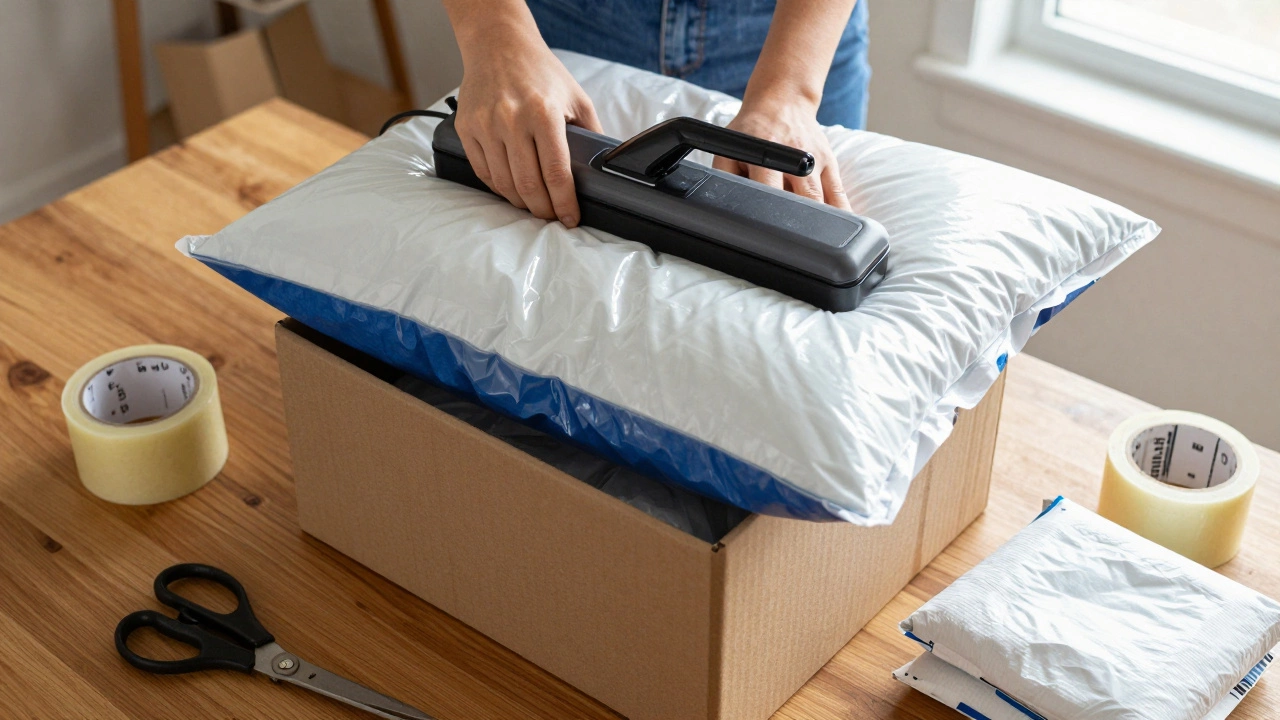
- Vacuum seal soft goods: If you're shipping pillows, blankets, or clothing internationally, use a vacuum seal bag. This shrinks the volume significantly, which can drop your billable weight from 20 lbs down to 5 lbs.
- Measure accurately: Remember that UPS measures the outermost points of the package. If your box is bulging at the sides because you overpacked it, that bulge counts as part of the width.
Common pitfalls and surprises
Many people assume that if they use a "Flat Rate" style approach, they are safe. However, UPS doesn't offer the same kind of flat-rate boxes that some other carriers do for all services. Another common mistake is forgetting about the "rounding up" rule. UPS doesn't care if your package weighs 10.1 lbs; they will bill you for 11 lbs. This is why every ounce of packing material counts.
Also, be aware of the "Residential Surcharge." While not related to weight or size, it's a common addition to the bill that makes the total cost seem higher than the calculated weight rate. If you're shipping to a home instead of a business, expect an extra fee regardless of how small your box is.
What happens if my package is very heavy but very small?
In this case, you will be charged by the actual weight. Since the dimensional weight (calculated from the small size) will be lower than the number on the scale, UPS bills you for the physical mass of the item.
Does the box material affect the cost?
Yes, indirectly. Heavier cardboard or excessive packing tape adds to the actual weight. If your package is on the edge of a weight bracket (e.g., 10.9 lbs), a heavy box could push it into the next higher pricing tier.
Is the dimensional weight divisor the same for all UPS services?
Generally, 139 is the standard for most UPS domestic and international shipments, but this can change based on the account type, the specific service level, or regional agreements. Always check your current UPS account settings or the online calculator for the most accurate divisor.
Can I use a calculator to predict my shipping cost?
Yes. The official UPS website has a "Calculate Time and Cost" tool. You enter the dimensions and actual weight, and it automatically determines whether the actual or dimensional weight is the billable one.
What is the maximum weight UPS will accept?
For most standard services, the maximum weight is 150 lbs. If your shipment exceeds this, it typically needs to be moved to UPS Freight, which uses different pricing models based on pallets and class ratings.
What to do next
If you are a business owner shipping frequently, start by auditing your box sizes. If you find you're consistently paying for dimensional weight, it's time to switch to smaller, custom-fit boxes. For one-time shippers, the best move is to use the UPS online calculator before you seal your box; that way, if the price looks too high, you can still change the packaging to save money.
If you're dealing with an international shipment, double-check the customs requirements for your destination country. Sometimes, the way a package is packed for safety can conflict with size limits, and knowing those rules beforehand prevents expensive return-to-sender fees.