Logistics Career Explorer
Select a role below to discover what people in logistics actually do on a typical day.
The Planners
Analysts & Coordinators
The Movers
Warehouse Operations
The Transporters
Drivers & Fleet Managers
The Navigators
Forwarders & Brokers
The Innovators
Technologists & Data Scientists
Select a Role
Follow a Package's Journey
See how different logistics professionals work together to deliver your package from manufacturer to your doorstep.
Demand Forecasting
Supply Chain Analyst predicts demand surge
International Shipping
Freight Forwarder books cargo space
Customs Clearance
Customs Broker processes documentation
Warehouse Processing
Inventory Controller manages stock levels
Order Picking
Warehouse Associate locates and packs item
Route Optimization
Data Scientist calculates best delivery route
Last-Mile Delivery
Courier delivers package to customer
Current Step Details
Click on any step in the timeline to see which logistics professional is responsible for that stage.
Most people think logistics is just trucks driving around or boxes sitting on shelves. You see the delivery van pull up to your door, you sign for the package, and that’s it. But behind that simple transaction is a massive, complex machine involving hundreds of different roles. If you are wondering what people in logistics actually do every day, the answer depends entirely on where they sit in the supply chain.
From the person coding the algorithm that decides which truck takes which route to the driver navigating traffic in Bristol to get your order there by noon, everyone has a specific job. This industry doesn't just move things; it manages time, space, data, and risk. Let's look at the actual daily tasks of the key players who keep the global economy moving.
The Planners: Supply Chain Analysts and Coordinators
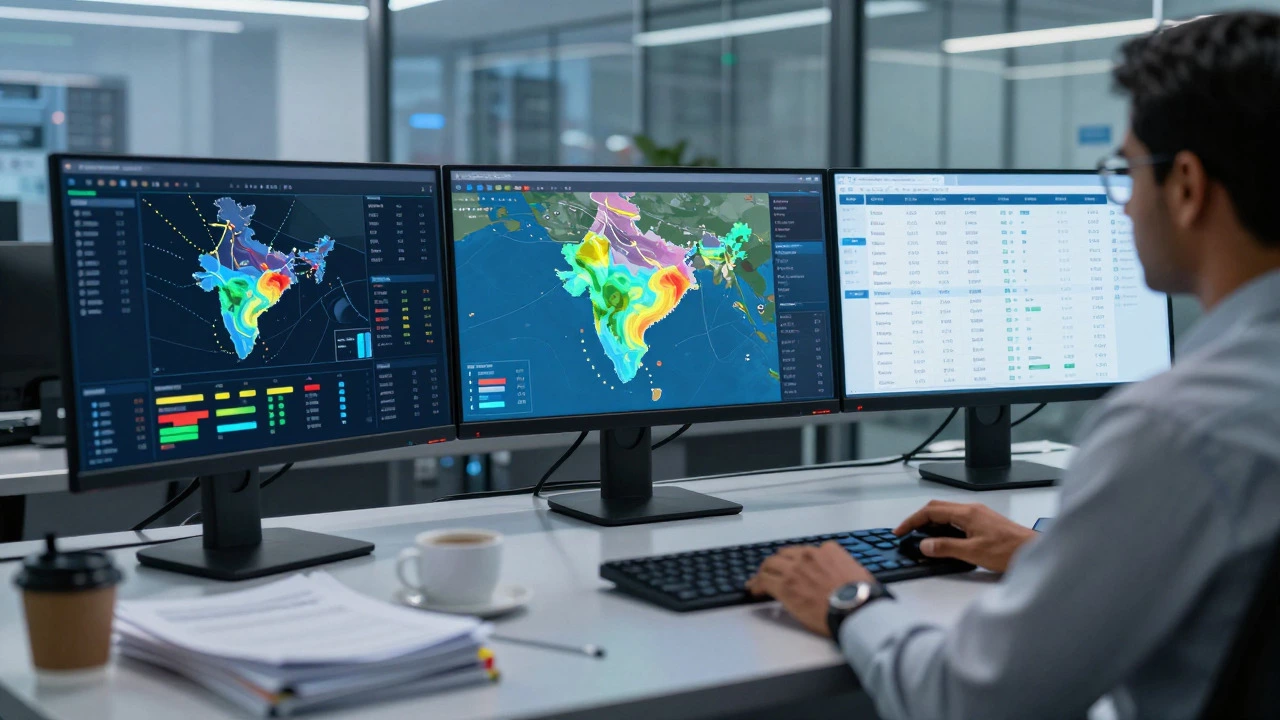
Before a single box moves, someone has to figure out how it gets from point A to point B efficiently. This is where Supply Chain Analysts come in. They don't drive trucks or lift pallets. Instead, they live in spreadsheets, dashboards, and predictive models.
Their main job is forecasting. If a retailer expects a surge in demand for winter coats in November, the analyst calculates exactly how many units need to be ordered from manufacturers overseas, when those orders need to ship, and which warehouses should hold the stock. They use historical sales data and current market trends to prevent two costly scenarios: running out of stock (lost sales) or overstocking (wasted storage costs).
Logistics Coordinators take these plans and execute them operationally. They act as the bridge between the customer and the carriers. On a typical Tuesday, a coordinator might spend their morning negotiating rates with a freight forwarder for a shipment of electronics, then spend the afternoon resolving a delay because a container got stuck at the Port of Felixstowe. They are problem solvers first, administrators second.
- Daily Task: Monitoring shipment tracking systems for delays.
- Daily Task: Communicating with suppliers to confirm production schedules.
- Daily Task: Adjusting inventory levels based on real-time sales data.
The Movers: Warehouse Operations and Inventory Control
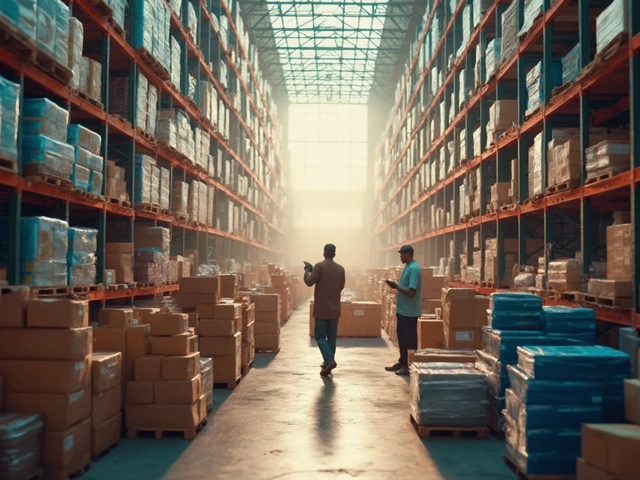
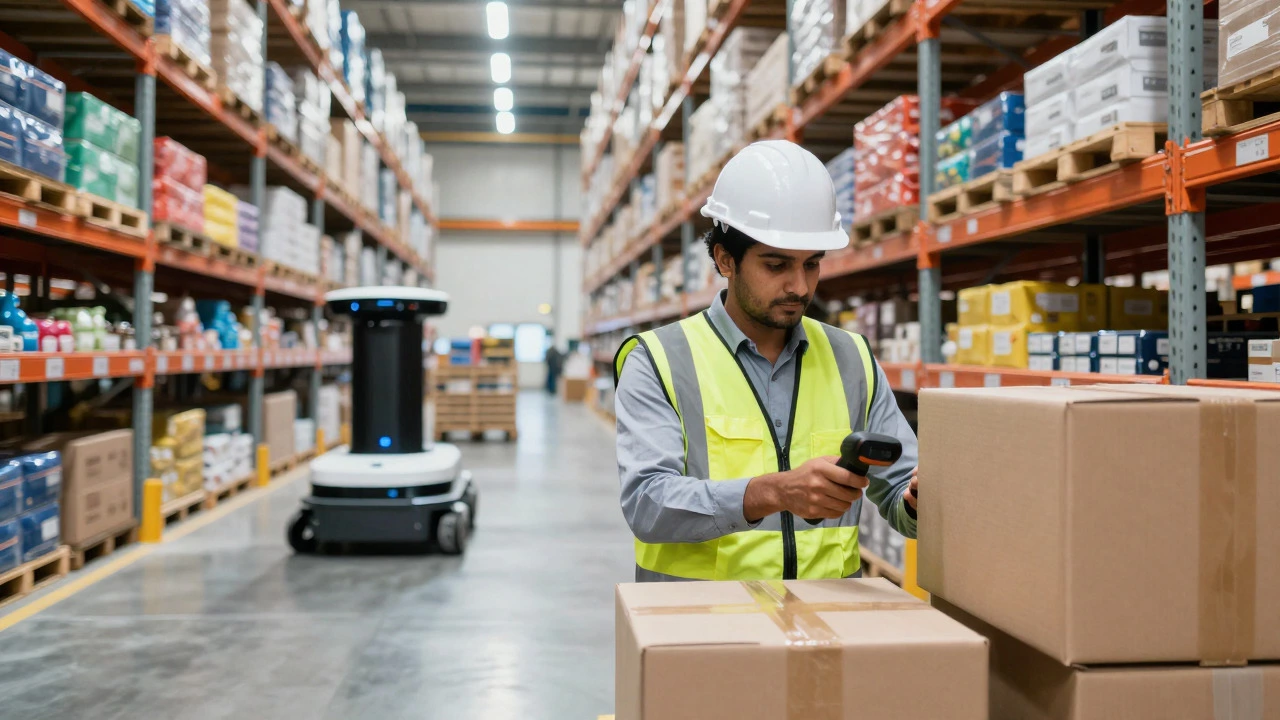
Once the goods arrive, they enter the warehouse. This is not just a storage unit; it is a high-speed processing plant. The people working here ensure that items are received, stored, picked, packed, and shipped accurately.
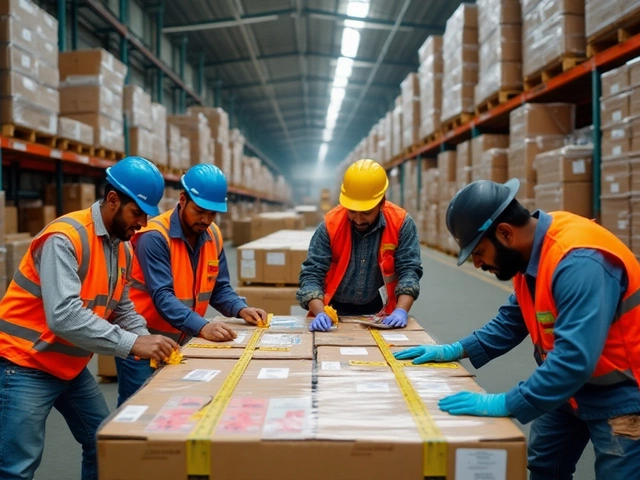
Warehouse Associates perform the physical labor. In modern facilities, this often involves using handheld scanners connected to a Warehouse Management System (WMS). When a worker scans a barcode, the system tells them exactly which aisle and bin the item belongs in. Their accuracy is critical. If an associate puts a red shirt in the blue shirt bin, the wrong item gets shipped, leading to returns and unhappy customers.
Inventory Controllers manage the data side of the warehouse. They conduct cycle counts-checking small sections of inventory regularly rather than shutting down the whole building for one massive count. They investigate discrepancies. If the computer says there are fifty laptops in stock but the shelf only has forty-nine, the controller finds out why. Was it theft? Was it a scanning error? Did a damaged unit get written off incorrectly?
| Role | Primary Focus | Key Tools Used |
|---|---|---|
| Warehouse Associate | Physical movement of goods | Forklifts, Handheld Scanners, Picking Lights |
| Inventory Controller | Data accuracy and stock levels | WMS Software, Audit Reports, Barcode Printers |
| Warehouse Manager | Staff scheduling and safety compliance | HR Systems, Safety Manuals, KPI Dashboards |
The Transporters: Drivers and Fleet Managers
The most visible part of logistics is transportation. Truck Drivers and Last-Mile Couriers are the ones physically moving the product. However, their jobs differ significantly.
A long-haul truck driver might spend three days on the road, driving from Manchester to London and back. Their job involves strict adherence to hours-of-service regulations to prevent fatigue. They must also handle vehicle inspections, ensuring brakes, tires, and lights are safe before every trip. It is a solitary job that requires intense focus and discipline.
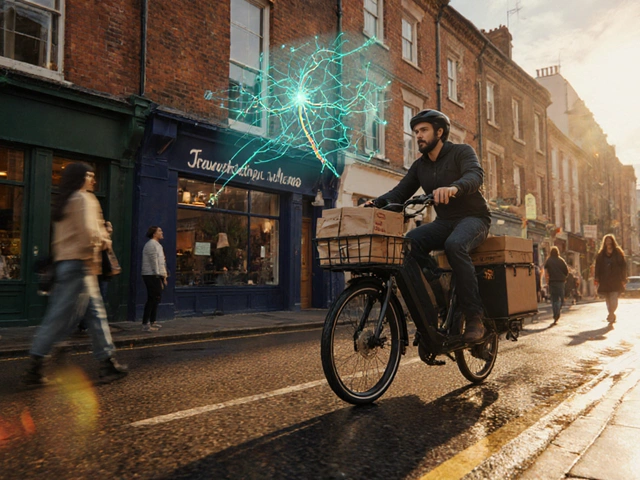
Last-mile couriers, on the other hand, operate in dense urban environments. They have dozens of stops per day. Their challenge is not distance; it is time and access. Can they find parking? Is the recipient home? Is the loading dock blocked? They use route optimization apps that constantly update based on traffic conditions. In cities like Bristol or London, a courier might navigate narrow streets and congestion charges while trying to deliver fragile items without damage.
Behind these drivers are Fleet Managers. They decide which vehicles are assigned to which routes. They monitor fuel consumption, schedule maintenance to prevent breakdowns, and ensure all drivers have valid licenses and insurance. With rising fuel prices and stricter emissions regulations, fleet managers are under constant pressure to reduce carbon footprints while maintaining delivery speeds.
The Navigators: Freight Forwarders and Customs Brokers
When goods cross international borders, logistics becomes much more complicated. This is where Freight Forwarders step in. Think of them as travel agents for cargo. They don't own the ships or planes; instead, they book space on them. They consolidate shipments from multiple smaller businesses into one large container to save money, then break it down again at the destination.
A freight forwarder’s day involves comparing air freight versus sea freight costs. Air is fast but expensive; sea is slow but cheap. They advise clients on the best option based on urgency and budget. They also arrange inland transport to get goods to the port.
Once the goods reach a border, Customs Brokers take over. They ensure all paperwork is correct. Every item needs a Harmonized System (HS) code, which determines the duty rate. If a broker misclassifies a "cotton t-shirt" as a "polyester blend," the customs authorities might seize the shipment or charge heavy fines. Brokers stay updated on changing trade laws, tariffs, and sanctions to keep goods flowing legally across borders.
The Innovators: Logistics Technologists and Data Scientists
Modern logistics runs on code. Logistics Technologists build and maintain the software that connects all these moving parts. They develop APIs that allow an e-commerce store to talk directly to a shipping carrier’s system. When you click "buy now" and immediately get a tracking number, that is the work of a technologist.
Data Scientists dig deeper. They analyze vast amounts of data to find inefficiencies. For example, they might discover that packages sent from a specific distribution center consistently arrive late due to a particular highway bottleneck. They create algorithms that automatically reroute future shipments away from that bottleneck. They also work on predictive maintenance, analyzing sensor data from trucks to predict when an engine part will fail before it actually breaks down.
Why These Roles Matter Together
No single person in logistics does everything. The planner forecasts the demand, the warehouse stores the goods, the forwarder books the ship, the broker clears customs, the driver transports the load, and the technologist ensures all the data flows correctly between them. If one link fails, the whole chain breaks.
This interdependence is why communication skills are just as important as technical skills in this industry. A warehouse manager needs to explain a shortage to a planner. A driver needs to report a delay to a coordinator. A data scientist needs to translate complex findings into actionable advice for executives. People in logistics are essentially professional connectors, ensuring that products reach consumers reliably, safely, and cost-effectively.
Do you need a degree to work in logistics?
It depends on the role. Entry-level positions like warehouse associates or delivery drivers typically require no formal degree, though certifications like a CDL license are needed for driving. However, roles such as Supply Chain Analyst, Logistics Manager, or Freight Forwarder usually require a bachelor's degree in logistics, supply chain management, business, or engineering. Many professionals also pursue certifications like CSCP (Certified Supply Chain Professional) to advance their careers.
Is logistics a stressful job?
Logistics can be high-pressure because timing is critical. Delays in one area cascade through the entire supply chain. Coordinators and planners often deal with unexpected disruptions like weather events, port strikes, or supplier failures. However, stress levels vary by role. Warehouse work is physically demanding but routine, while analytical roles involve mental stress from solving complex problems. Good companies mitigate stress through clear processes and supportive team cultures.
What skills are most valuable in logistics careers?
Problem-solving is the number one skill. Things go wrong constantly in logistics, so the ability to think quickly and find alternatives is crucial. Other key skills include attention to detail (for documentation and inventory), communication (for coordinating with diverse teams), and technical proficiency (using WMS, TMS, and Excel). Adaptability is also essential as regulations and technologies change rapidly.
How is technology changing logistics jobs?
Technology is automating repetitive tasks. Robots are picking items in warehouses, and AI is optimizing delivery routes. This means fewer manual labor jobs but more demand for tech-savvy workers who can manage these systems. Roles focused on data analysis, software integration, and automation oversight are growing. Workers need to be comfortable with digital tools and continuous learning to stay relevant.
What is the difference between logistics and supply chain management?
Logistics is a subset of supply chain management. Logistics focuses specifically on the movement and storage of goods-transportation, warehousing, and inventory control. Supply chain management is broader, encompassing the entire flow from raw material sourcing to manufacturing, logistics, and finally delivering to the end consumer. It includes relationships with suppliers and customers, not just the physical movement of products.