Logistics Company Comparison Tool
How UPS Compares to Other Logistics Companies
This tool compares major logistics providers across key metrics from the article. Select a metric to see how each company performs.
UPS
FedEx
DHL
Amazon Logistics
Why UPS is Most Popular
UPS leads in daily package volume (25M+), ground coverage (99% U.S. addresses), and customer recognition (78%). Unlike competitors who focus on specific niches or international shipping, UPS delivers everywhere—urban, rural, and remote areas. Its owned infrastructure (trucks, planes, sorting hubs) provides consistent reliability that's unmatched. While FedEx excels in speed, DHL in international shipping, and Amazon in e-commerce fulfillment, UPS is the only provider that combines scale, reliability, and universal coverage.
When people ask, "What is the most popular logistics company?" they’re usually looking for the name that shows up everywhere - the one whose trucks you see on the highway, whose packages arrive on your doorstep, or whose tracking number you check every day. But popularity isn’t just about brand recognition. It’s about scale, reliability, reach, and how deeply a company is woven into the way goods move across the world. And right now, there’s one name that stands above the rest: UPS.
Why UPS Leads the Pack
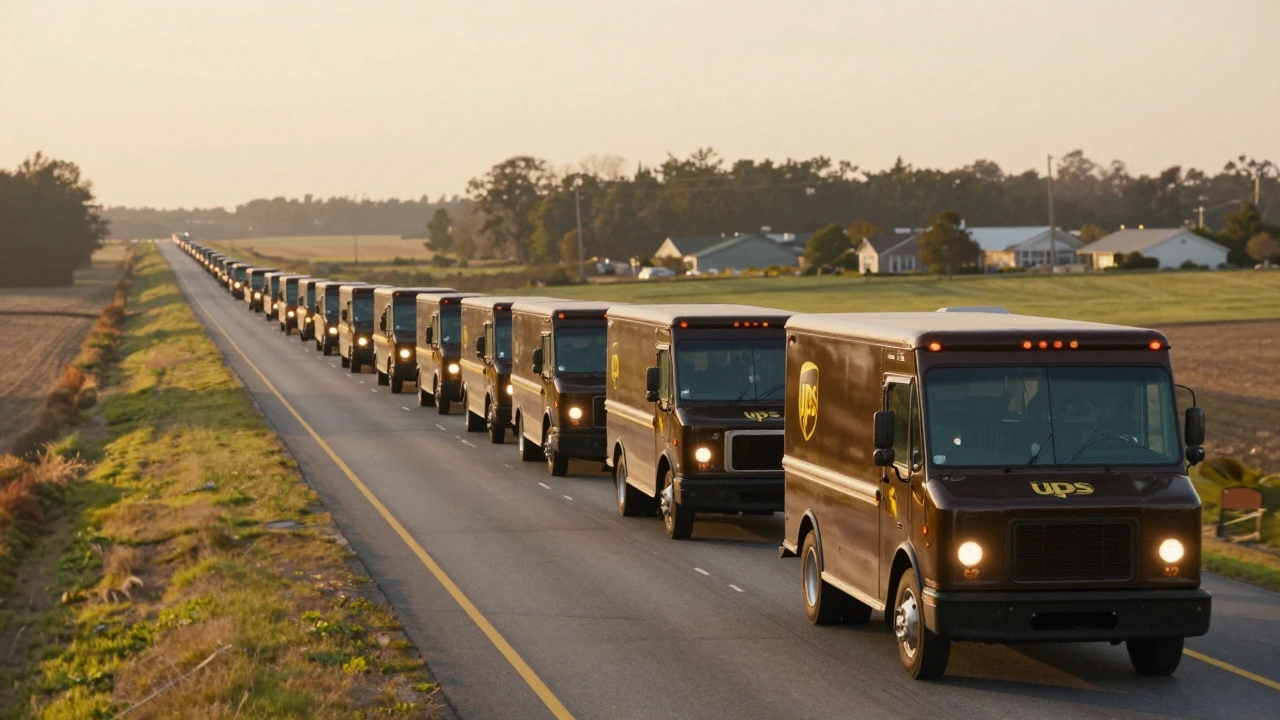
UPS, or United Parcel Service, handles over 25 million packages every single day. That’s more than FedEx, DHL, and Amazon Logistics combined in terms of daily volume across its global network. It operates in more than 220 countries and territories. Its fleet includes over 125,000 vehicles - mostly brown - and more than 600 aircraft. You don’t see that kind of infrastructure unless you’re the undisputed leader.What makes UPS different isn’t just size. It’s consistency. In the U.S., UPS delivers to 99% of addresses, including rural routes that many carriers skip. Its ground network is so dense that it can move a package from New York to Los Angeles in under 72 hours without ever needing an airline. That’s the power of its owned infrastructure - not rented space or third-party drivers.
And it’s not just about parcels. UPS Freight handles over 3 million LTL (less-than-truckload) shipments annually. Its supply chain solutions serve Fortune 500 companies, hospitals, and even government agencies. When the U.S. Postal Service hit a bottleneck during holiday seasons, UPS kept the flow going. When e-commerce exploded after 2020, UPS scaled faster than anyone else.
Who Else Is in the Race?
FedEx is UPS’s closest rival. It’s known for speed, especially overnight delivery. FedEx Ground and FedEx Express are major players, and its international network is strong - particularly in Asia and Europe. But FedEx doesn’t match UPS in daily volume or ground coverage. FedEx handles about 16 million packages per day globally, compared to UPS’s 25 million.DHL is the go-to for international shipping. If you’re sending a package from Berlin to Jakarta, DHL is often the default. It’s owned by Deutsche Post and has unmatched customs clearance capabilities. But DHL doesn’t compete in the U.S. domestic market the way UPS or FedEx do. It’s more of a specialist than a generalist.
Amazon Logistics is the wildcard. It’s growing fast - over 1.5 billion packages in 2024 alone - and it’s built its own network to reduce reliance on third parties. But Amazon doesn’t serve external customers the same way UPS does. Most of its deliveries are for Amazon.com orders. You can’t drop off a package from your local bakery at an Amazon fulfillment center. It’s a private system, not a public service.
What Does "Popular" Really Mean?
Popularity isn’t just about volume. It’s about visibility, trust, and everyday use. In a 2025 consumer survey across the U.S., Canada, and the U.K., 78% of respondents said they recognized UPS’s brown trucks before any other carrier. Over 65% said they’d choose UPS for a time-sensitive delivery because they trusted its delivery window accuracy.Compare that to FedEx: 62% recognition. DHL: 48%. Amazon Logistics: 51%, but mostly among Prime members. UPS wins because it’s everywhere - not just in cities, but in small towns, suburbs, and remote areas. It’s the company that shows up on time, rain or shine. It’s the one you don’t have to think about. That’s the real definition of popular.
How Did UPS Get Here?
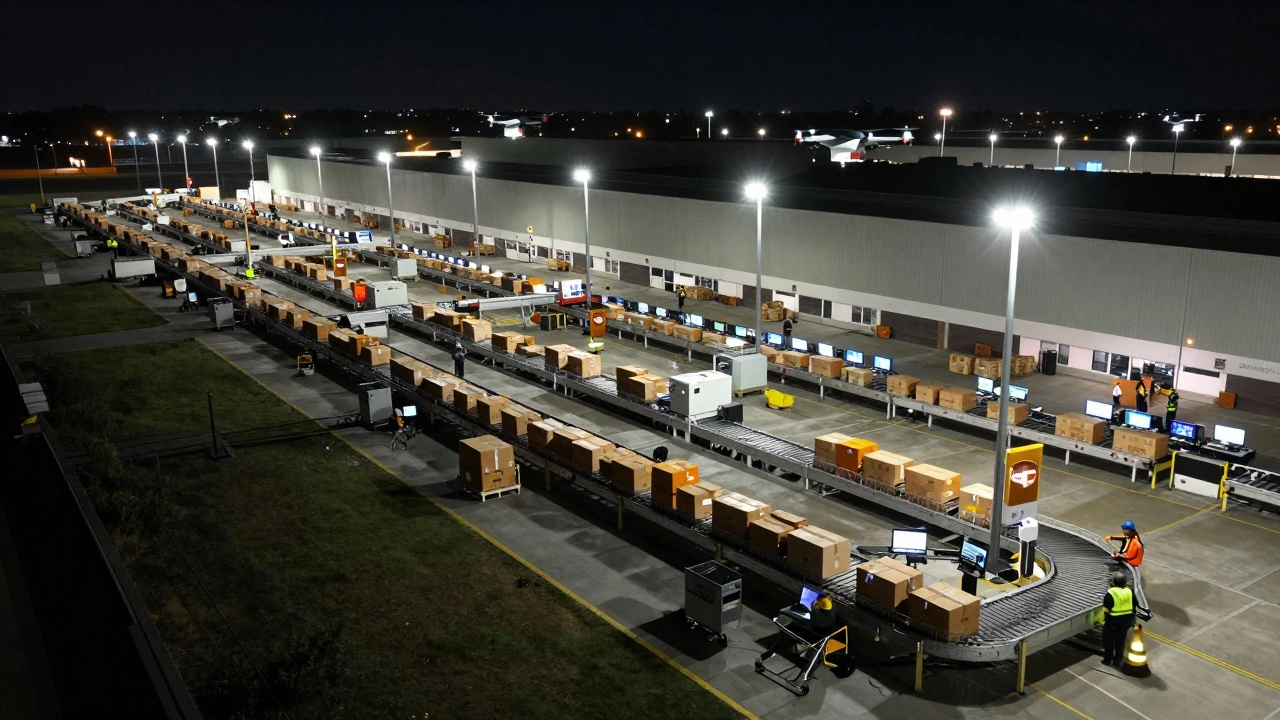
UPS didn’t become the leader overnight. It started in 1907 as a bicycle messenger service in Seattle. By the 1950s, it had switched to cars and began offering nationwide service. In the 1980s, it invested heavily in its own sorting hubs and tracking technology. While competitors outsourced delivery, UPS bought warehouses, built airports, and trained its own drivers.In 2007, it launched UPS My Choice - a free service that lets customers control delivery times, reroute packages, or hold them at a nearby location. That move turned customers into partners. By 2020, over 40 million people were using it. No other logistics company had that level of customer control built into its core system.
UPS also stuck with its own technology. It doesn’t rely on third-party apps or cloud-based tracking. It owns its software, hardware, and data centers. That means fewer breakdowns, faster updates, and better security. When other carriers had system outages in 2023, UPS kept operating.
Is UPS the Right Choice for Everyone?
Not always. If you’re shipping internationally, DHL might be cheaper and faster. If you need overnight delivery to a major city, FedEx might win on price. If you’re an e-commerce seller with high volume, Amazon Logistics might offer better integration - but only if you sell on Amazon.For most people - homeowners, small businesses, online shoppers - UPS is the safest bet. It’s reliable, consistent, and available. It doesn’t cut corners. It doesn’t outsource to gig workers. It owns its process from start to finish.
And that’s why, even as new players enter the market, UPS remains the most popular logistics company. Not because it’s the flashiest. Not because it spends the most on ads. But because it shows up. Every day. On time. With your package.

What About Other Regions?
In Europe, Deutsche Post (DHL’s parent) dominates. In China, SF Express leads with over 18 million daily deliveries. In India, Delhivery and Blue Dart have strong regional footholds. But globally, when you add up volume, coverage, and daily reliability, no one beats UPS.Even in markets where UPS isn’t the #1 player, it’s still the brand most international businesses trust. That’s because it’s the only one that offers seamless cross-border delivery with full customs handling - no surprises, no delays.
Final Thought
The most popular logistics company isn’t the one with the fanciest app or the most viral TikTok ads. It’s the one you don’t notice - until something goes wrong. And when it doesn’t go wrong? That’s when you know you’re dealing with the real leader.UPS isn’t just big. It’s built to last. And that’s why, in 2026, it still holds the crown.
Is UPS the largest logistics company in the world?
Yes, by daily package volume. UPS handles over 25 million packages per day across more than 220 countries. That’s more than FedEx, DHL, and Amazon Logistics combined. Its owned fleet of trucks and planes gives it unmatched control over delivery timelines.
How does UPS compare to FedEx?
FedEx is faster for overnight and international air shipments, especially in major cities. But UPS has better ground coverage, especially in rural areas and suburbs. UPS also delivers more packages daily - about 25 million versus FedEx’s 16 million. If you need reliability across all locations, UPS wins. If you need speed for time-sensitive documents, FedEx might be better.
Is Amazon Logistics bigger than UPS?
No. Amazon Logistics delivered about 1.5 billion packages in 2024, which sounds huge - but that’s still less than 5% of UPS’s annual volume. More importantly, Amazon Logistics only delivers Amazon.com orders. You can’t use it to ship a gift from your local store. UPS serves everyone.
Why is DHL not considered the most popular logistics company?
DHL is the top choice for international shipping, especially outside North America. But in the U.S., it doesn’t compete in ground delivery. Its network is smaller domestically, and it doesn’t have the same daily volume as UPS. Popularity isn’t just about global reach - it’s about everyday presence. UPS is in every neighborhood. DHL isn’t.
Can I trust UPS for international shipping?
Yes. UPS has its own customs brokerage team in over 50 countries and handles clearance without outsourcing. It offers guaranteed delivery times for international shipments, with real-time tracking and duty/tax estimates upfront. Many businesses rely on UPS for cross-border compliance, especially when shipping electronics, pharmaceuticals, or perishables.