Logistics Partner Selector
Answer these three questions to find which major logistics provider aligns best with your specific business needs.
Carrier Name
Description goes here.
- ✔ Advantage text
- ✔ Best for text
Why this choice?
Explanation of logic.
When you ask who the largest logistics company is in the United States, the answer isn't as simple as pointing to one name on a map. The title shifts depending on whether you measure by revenue, package volume, or sheer physical footprint. If we look at total revenue, UPS often takes the crown among traditional carriers. However, if we talk about the actual movement of goods and the scale of private networks, Amazon has quietly built the most extensive logistics infrastructure in the country.
The US logistics landscape is dominated by a few giants that handle billions of shipments annually. For businesses looking to partner with these entities, understanding their specific strengths is crucial. This guide breaks down the top contenders, explains how they operate, and helps you decide which giant aligns with your shipping needs.
The Revenue King: UPS (United Parcel Service)
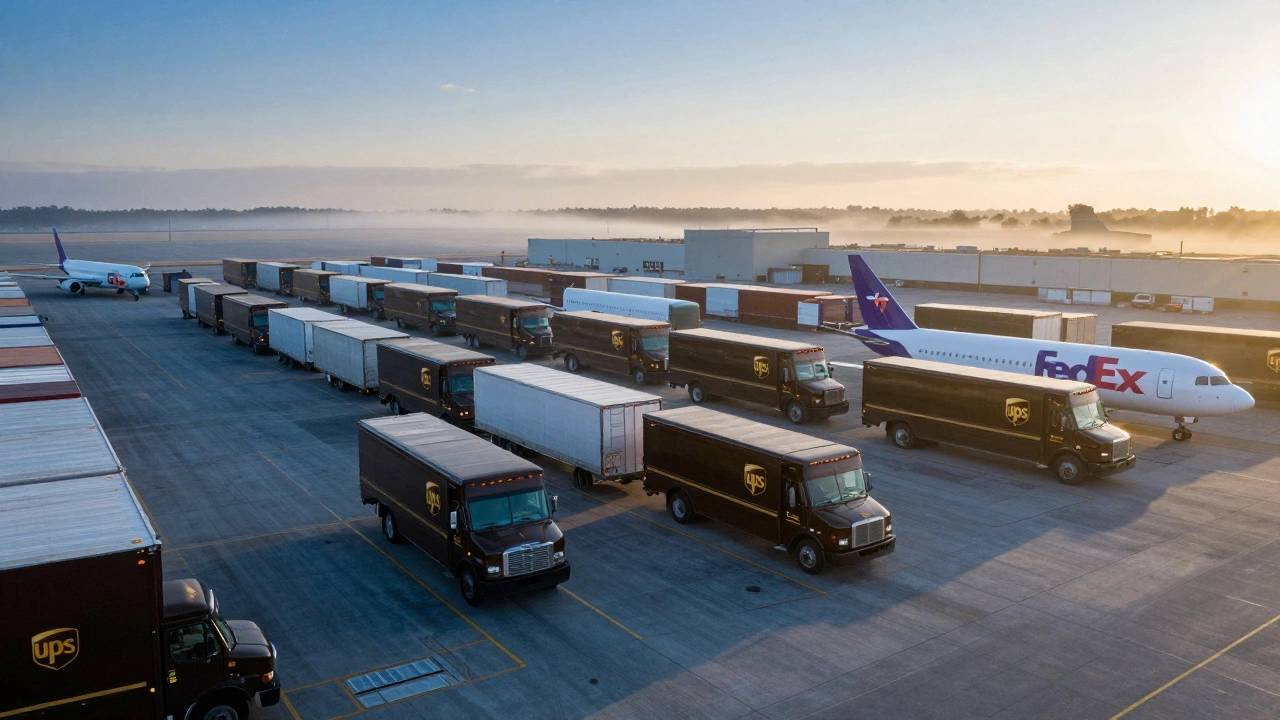
For decades, UPS has been synonymous with brown trucks and reliable global delivery. In terms of pure financial output, UPS consistently ranks as the highest-revenue logistics provider in the US. With annual revenues often exceeding $90 billion, it operates a massive network that includes air cargo, ground delivery, and supply chain solutions.
UPS’s strength lies in its integrated network. Unlike some competitors that rely heavily on subcontractors for last-mile delivery, UPS maintains direct control over a significant portion of its fleet. This allows for tighter quality control and predictable transit times. They are particularly strong in B2B (business-to-business) shipping, handling heavy packages and complex international routes with ease.
- Primary Focus: Package delivery, freight forwarding, and supply chain management.
- Key Advantage: Directly operated network reduces dependency on third parties.
- Best For: Businesses needing reliable, high-volume domestic and international shipping.
The Volume Giant: FedEx Corporation
If UPS is the steady hand, FedEx is the speed demon of the logistics world. Founded by Fred Smith, FedEx revolutionized overnight delivery. While UPS may edge them out in total revenue occasionally, FedEx remains a titan, especially in express shipping and air freight. Their hub-and-spoke model, centered around Memphis, Tennessee, allows them to consolidate and redistribute packages with incredible efficiency.
FedEx excels where time is money. If you have a critical document or a high-value component that needs to be in Chicago by morning after leaving New York at night, FedEx is often the go-to choice. They also have a robust ground division that competes directly with UPS Ground, offering competitive rates for non-urgent shipments.
- Primary Focus: Express delivery, air freight, and ground transportation.
- Key Advantage: Unmatched speed for time-sensitive shipments.
- Best For: E-commerce brands prioritizing fast delivery and businesses with urgent B2B needs.
The Private Powerhouse: Amazon Logistics
Here is where the definition of "logistics company" gets tricky. Amazon started as an online bookstore but evolved into the world's largest retailer and a logistics behemoth. Amazon does not report its logistics arm as a separate public entity in the same way UPS or FedEx do, but its impact is undeniable. Amazon handles more than half of all US parcel deliveries during peak seasons like Prime Day and Christmas.
Amazon built its own network because it was tired of relying on UPS and FedEx. Today, Amazon Logistics uses a mix of its own vans, independent contractors, and sophisticated software to deliver packages directly to consumers. This vertical integration allows Amazon to offer same-day and next-day delivery at prices that traditional carriers struggle to match.
While Amazon primarily serves its own e-commerce ecosystem, it has begun opening its logistics network to third-party sellers through programs like "Multi-Channel Fulfillment." This means even if you don't sell on Amazon, you might use their infrastructure to get products to your customers faster.
- Primary Focus: Last-mile delivery, warehousing, and fulfillment.
- Key Advantage: Extreme speed and cost-efficiency for e-commerce.
- Best For: Online retailers wanting to compete with Amazon's delivery speeds.
The Heavy Lifters: J.B. Hunt and XPO Logistics
Not all logistics is about small boxes. A huge chunk of the US economy moves via trucks carrying pallets, machinery, and raw materials. In this sector, J.B. Hunt Transport Services is the largest intermodal and truckload carrier in North America. They move goods across long distances using a combination of rail and truck, which is more fuel-efficient and cost-effective for bulk items.
Similarly, XPO Logistics focuses on less-than-truckload (LTL) shipping. If you have a shipment that doesn't fill an entire truck but is too big for a box, XPO is a key player. These companies are the backbone of manufacturing and retail supply chains, ensuring that stores stay stocked and factories keep running.
| Company | Primary Strength | Ideal Shipment Type | Network Model |
|---|---|---|---|
| UPS | Reliability & Global Reach | Packages & Freight | Directly Operated |
| FedEx | Speed & Air Freight | Express Documents & Parcels | Hub-and-Spoke |
| Amazon | Last-Mile Efficiency | E-commerce Packages | Private Network |
| J.B. Hunt | Bulk & Intermodal | Truckloads & Rail | Asset-Based Carrier |

How Technology Changes the Game
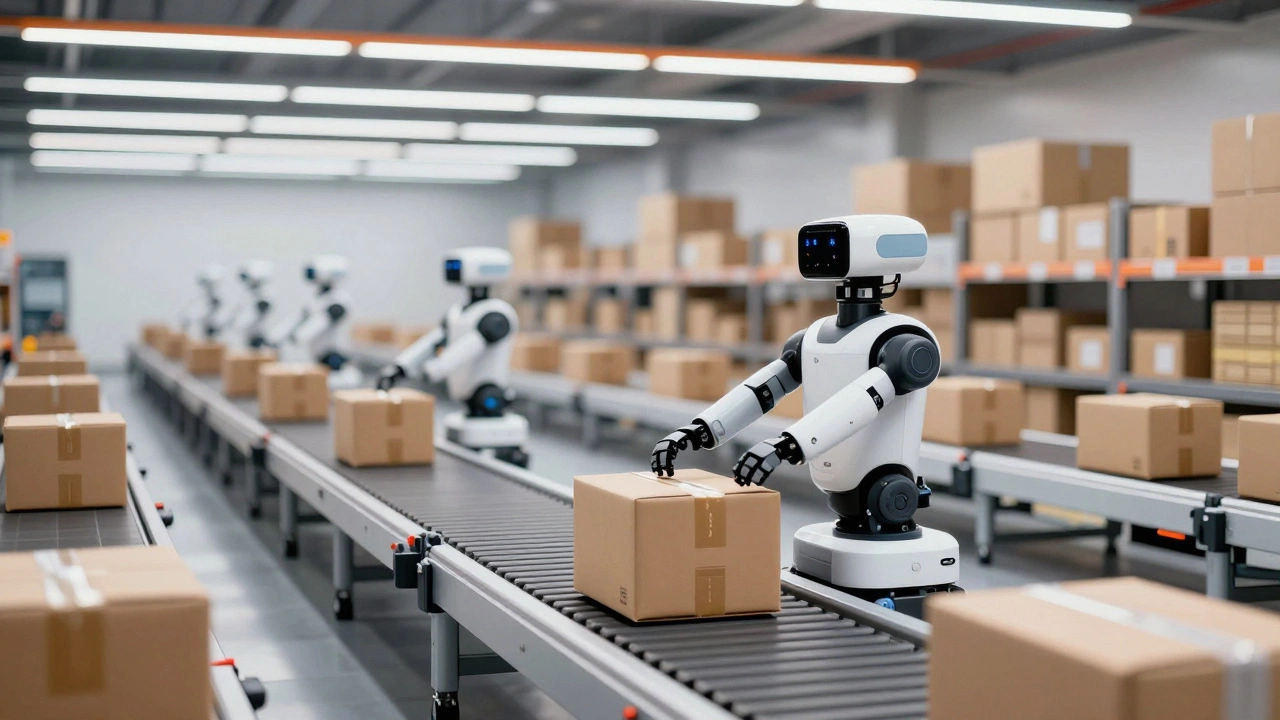
The size of a logistics company today is measured not just by trucks, but by data. The biggest players invest billions in Logistics Software platforms that optimize routes, predict demand, and automate warehouses. UPS uses AI to predict traffic patterns and adjust routes in real-time. Amazon employs robots in its fulfillment centers to pick and pack items faster than humans can.
This technological edge creates a barrier to entry for smaller competitors. It also means that when you choose a large logistics partner, you are buying into their tech stack. You get better tracking visibility, fewer lost packages, and more accurate delivery estimates. For modern businesses, this digital capability is often as important as the physical delivery itself.
Choosing the Right Partner for Your Business
Knowing who is the largest doesn't automatically mean they are the best for you. Here is how to decide:
- Assess Your Volume: High-volume shippers can negotiate better rates with UPS and FedEx. Low-volume shippers might find better service with regional carriers or Amazon's multi-channel fulfillment.
- Consider Speed vs. Cost: If your customer expects next-day delivery, FedEx or Amazon are likely necessary. If cost is the primary driver, UPS Ground or LTL carriers like XPO might be more economical.
- Look at Destination: Shipping internationally? UPS and FedEx have vast global networks. Staying domestic? Regional carriers or Amazon Logistics might offer superior last-mile coverage.
- Check Integration Capabilities: Ensure the carrier’s API integrates smoothly with your e-commerce platform or ERP system. Seamless data flow prevents errors and saves administrative time.
Is Amazon considered a logistics company?
Yes, effectively. While Amazon is primarily known as a retailer, its logistics arm, Amazon Logistics, is one of the largest delivery networks in the US. It handles billions of packages annually and offers fulfillment services to third-party sellers, functioning similarly to traditional logistics providers.
What is the difference between UPS and FedEx?
UPS generally focuses on a broader range of services including ground freight and has a more directly operated network, making it strong for B2B and consistent reliability. FedEx specializes in speed, particularly in air freight and express overnight delivery, making it ideal for time-sensitive shipments.
Which logistics company is best for small businesses?
For small businesses, USPS (United States Postal Service) is often the most cost-effective for lightweight packages under 16 ounces. For heavier items or faster delivery, Amazon Multi-Channel Fulfillment or negotiated rates with UPS/FedEx via third-party aggregators can be competitive.
How do logistics companies determine shipping costs?
Shipping costs are determined by weight, dimensions (dimensional weight), distance, delivery speed, and fuel surcharges. Large companies use complex algorithms that factor in route density, package handling complexity, and current capacity constraints.
Are there any new competitors challenging the big three?
Regional carriers and niche startups focusing on sustainable or hyper-local delivery are gaining traction. Additionally, Walmart is expanding its shipping capabilities to challenge Amazon. However, UPS, FedEx, and Amazon still dominate the national market share due to their established infrastructure.