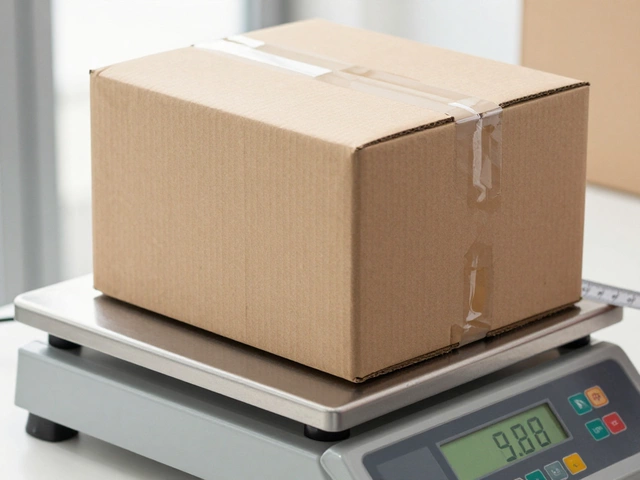
Courier Eligibility Checker
Select an item to see if it is allowed, restricted, or prohibited for standard courier delivery. This tool helps you avoid fines, delays, and damaged goods by checking against common carrier policies.
You’ve packed the box. You’ve taped it shut. You’re ready to send that vintage vinyl collection or that awkwardly shaped lamp to your friend in Manchester. But then a nagging doubt creeps in: what items can be sent by courier? It’s a question that trips up more people than you’d think. We assume if it fits in a box, it can go anywhere. The reality is messier. Courier networks are complex machines with strict safety protocols, legal requirements, and physical limitations. Sending the wrong thing doesn’t just mean a delayed delivery; it can mean hefty fines, damaged goods, or even a hazardous incident on a van.
This isn’t about being pedantic. It’s about saving you time and money. Whether you’re an e-commerce seller trying to ship handmade candles or someone moving house who needs to transport bottles of wine, knowing the boundaries of courier services is essential. Let’s break down exactly what you can-and absolutely cannot-send, so you don’t end up with a returned parcel and a headache.
The Core Rule: Safety and Legality First
Before we list specific items, understand the logic behind courier restrictions. Couriers aren’t just moving boxes; they’re managing risk. Their primary concern is whether an item poses a threat to their staff, their vehicles, or other packages. This leads to two main categories of restrictions: Dangerous Goods, which include flammable, corrosive, or explosive materials, and restricted items that require special handling due to value, fragility, or legal status.
Most major carriers like DHL, UPS, FedEx, and local UK firms operate under similar international standards set by organizations like IATA (for air) and IMDG (for sea). Even for ground transport within the UK, these guidelines heavily influence local policies. If an item is banned on a plane, it’s often restricted or banned on road networks too, especially if it might eventually join an air leg in a multi-modal journey.
Common Household Items That Are Actually Restricted
Here’s where people get caught out. You might think your kitchen is safe, but several common household staples fall into "restricted" territory.
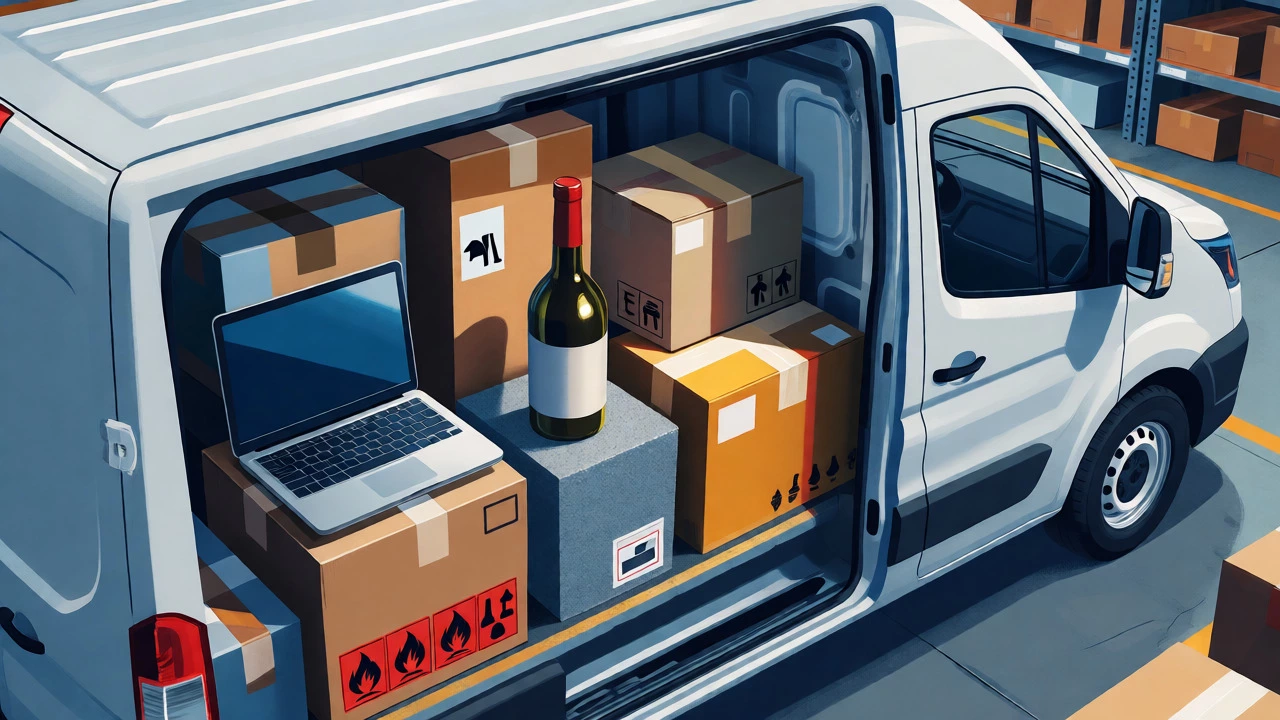
- Lithium Batteries: These are everywhere-in laptops, phones, power banks, and even some toys. Loose lithium batteries are generally prohibited from standard courier services because they can catch fire if short-circuited. However, batteries installed inside equipment (like a laptop in its case) are usually allowed, provided they are protected from accidental activation. Always check if your carrier requires specific labeling.
- Perfumes and Aerosols: Many perfumes contain alcohol, making them flammable. Aerosol cans (hairspray, deodorant, cooking spray) are pressurized and can explode under heat or pressure changes. While small quantities might be accepted by some domestic road couriers, most restrict them heavily or ban them entirely from air shipments. If you must send them, look for carriers specializing in hazmat or limited quantity dangerous goods.
- Alcohol: Yes, you can send wine and spirits, but not always easily. Most standard couriers prohibit alcohol unless you have a specific license. For individuals sending gifts, many carriers allow up to one liter per package if declared correctly, but others ban it outright. Commercial sellers need different arrangements. Also, glass bottles are fragile; proper packaging is non-negotiable, or the courier will refuse liability for breakage.
- Cosmetics and Nail Polish: Similar to perfumes, nail polish contains solvents that are flammable. Liquid makeup foundations are usually fine, but anything with high alcohol content or volatile compounds may face restrictions. Check the Material Safety Data Sheet (MSDS) if you’re unsure.
Prohibited Items: The Absolute No-Gos
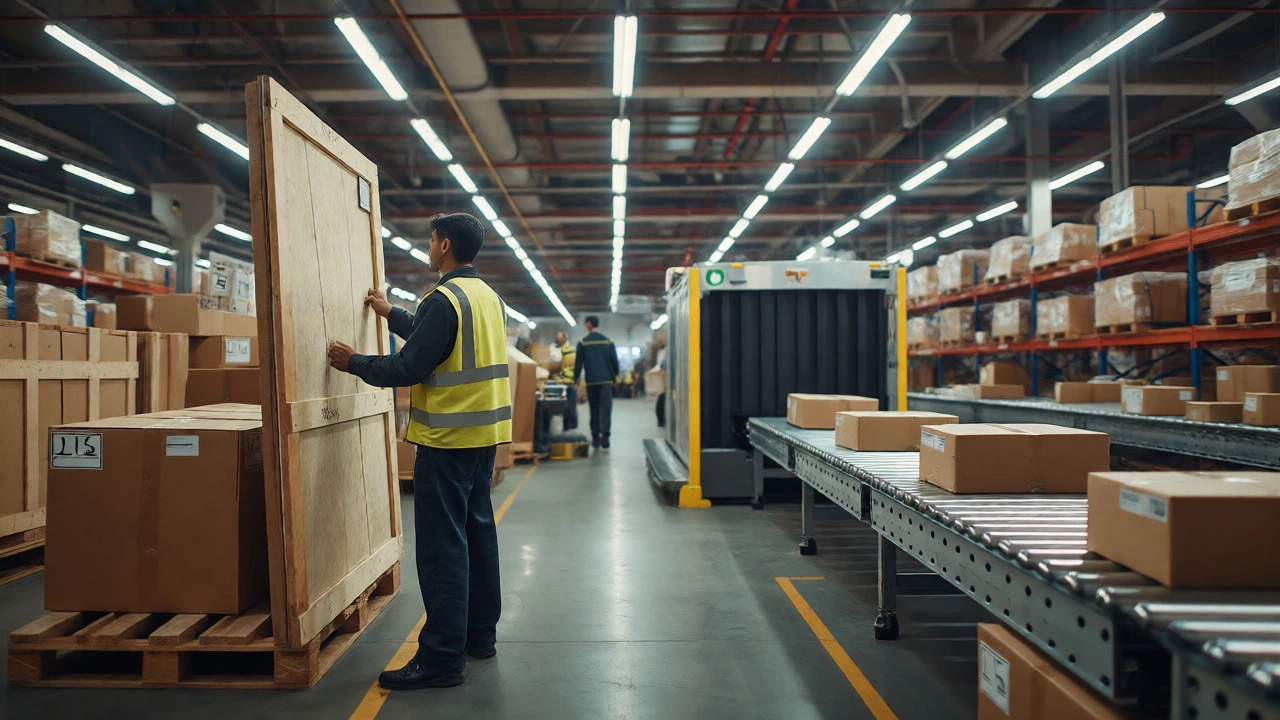
Some items simply cannot travel via standard courier services, period. Attempting to hide them in a box won’t work; X-ray scanners and random checks catch them regularly.
| Item Category | Examples | Reason for Restriction |
|---|---|---|
| Hazardous Materials | Batteries (loose), Paints, Solvents, Gas canisters | Fire risk, explosion, chemical leakage |
| Live Animals | Pets, Insects, Plants | Welfare concerns, stress, potential death |
| High-Value Currency | Cash, Gold bars, Stock certificates | Theft risk, insurance limitations |
| Illegal Substances | Drugs, Unlicensed firearms | Legal prohibition |
| Fragile/Unpackaged | Glassware without protection, Artworks | Breakage risk, lack of control over handling |
Notice the nuance with live animals. While you can’t put a hamster in a standard Amazon box, specialized pet transport services exist. They use climate-controlled vans and trained handlers. Similarly, while cash is risky, insured secure logistics providers handle bank transfers and high-value items differently than your local DPD driver.
Special Handling: Fragile, Perishable, and Oversized
Just because an item isn’t prohibited doesn’t mean it’s easy to send. Some things require extra care, and if you don’t arrange it, you’ll likely pay for damage.
Perishables like fresh food, flowers, or medical samples need temperature control. Standard courier bags won’t cut it. You need insulated liners, gel packs, or dry ice. Note that dry ice is considered a dangerous good (asphyxiant) and requires ventilation holes in the packaging. If you’re sending a cake, ask yourself: will it survive three days in a warm van? Probably not. Use next-day or same-day services specifically designed for perishables.
Oversized and Heavy Items present a different challenge. Most couriers have weight limits (often 30kg per parcel) and dimension limits (e.g., no side longer than 120cm). If you try to force a large mirror into a standard parcel network, it might be rejected at the depot. For these, consider pallet delivery or freight services. They treat your item as cargo, not a parcel, which means different pricing structures and handling procedures.
Fragile Items demand robust packaging. Bubble wrap alone isn’t enough for a ceramic vase. Use double-boxing: wrap the item, place it in a box with cushioning, then place that box inside a larger box with more cushioning. This absorbs shocks better than single-layer packing. Remember, most couriers exclude liability for inadequate packaging. If it breaks because you used newspaper instead of foam peanuts, that’s on you.
International vs. Domestic Nuances
Sending across town is different from sending across borders. International shipping adds layers of customs regulations.
In the UK post-Brexit, sending goods to the EU requires commercial invoices and potentially customs declarations. Certain items, like meat and dairy products, are strictly prohibited for personal imports into the EU from the UK. You can’t just mail a jar of jam to Paris anymore without checking the rules. Food items, plants, and animal products face stringent biosecurity checks.
Conversely, domestic UK deliveries rarely face these hurdles. You can send cheese to Scotland without paperwork. But watch out for remote areas. Highlands and Islands often incur surcharges or have longer transit times because they rely on ferry connections. Check your courier’s postcode checker before booking.
How to Verify Your Item’s Eligibility
Don’t guess. Use these steps to confirm before you book.
- Check the Carrier’s Restricted Items List: Every major courier has a PDF or webpage detailing prohibited and restricted items. Search for "[Carrier Name] restricted items." Look for updates dated within the last year.
- Consult the MSDS: If you’re sending liquids, chemicals, or electronics, find the Material Safety Data Sheet. Look for sections on "Transport Information" or "Regulatory Status." This tells you if it’s classified as hazardous.
- Contact Customer Service: For borderline cases (like a bottle of whiskey or a battery-powered device), call or chat with support. Get confirmation in writing if possible. Policies change, and agents know current operational constraints.
- Review Insurance Terms: Read the exclusions. Does the policy cover breakage? Theft? Water damage? If you’re sending something valuable, ensure the insurance covers the full replacement value, not just a fixed rate per kilogram.
Practical Tips for Smooth Shipping
Once you’ve confirmed your item is shippable, follow these best practices to avoid issues.
- Label Clearly: Mark "Fragile," "This Way Up," or "Keep Dry" prominently. Use red stickers if possible. Drivers see hundreds of boxes; make yours stand out.
- Secure Packaging: Shake the sealed box. If you hear rattling, add more padding. Empty space causes movement, which causes breakage.
- Document Everything: Take photos of the item before packing, during packing, and after sealing. Keep receipts. If a dispute arises, this evidence is crucial.
- Consider Tracking: Always choose a service with tracking. Knowing where your package is reduces anxiety and helps resolve delays quickly.
Understanding what items can be sent by courier isn’t just about reading a list. It’s about respecting the logistics chain. When you pack correctly and declare accurately, you help the system work efficiently. Next time you’re tempted to toss a loose battery into a box, pause. Check the rules. Save yourself the hassle.
Can I send perfume through the post?
It depends on the carrier and the method. Royal Mail allows small quantities of perfume if properly packaged and labeled, but many private couriers ban it due to flammability. Air freight almost always prohibits it. For road-only domestic deliveries, some carriers accept it with restrictions. Always check the specific carrier's policy first.
Are lithium batteries allowed in parcels?
Loose lithium-ion batteries are typically prohibited from standard courier services because they pose a fire risk. However, batteries installed inside devices (like laptops or smartphones) are generally permitted, provided they are switched off and protected from accidental activation. Large power banks may require special handling or declaration.
Can I send alcohol to friends abroad?
Sending alcohol internationally is tricky. Many carriers prohibit it for personal shipments due to licensing laws. Within the UK, it’s easier but still subject to carrier rules and packaging requirements. For international shipments, you often need a licensed exporter or a specialized alcohol shipping service. Customs duties may also apply.
What happens if I send a prohibited item?
If a prohibited item is discovered, the courier may return it to you at your cost, dispose of it safely (at your expense), or charge a penalty fee. In severe cases involving hazardous materials, you could face fines or legal action. Always declare contents accurately to avoid these outcomes.
Is it cheaper to send heavy items by courier or freight?
For items over 30kg or bulky items, freight or pallet delivery is often cheaper than standard courier parcel services. Couriers price based on volumetric weight and size tiers, which penalize large light items. Freight uses different metrics and is designed for heavier loads, offering better value for bulkier shipments.