3PL vs 4PL Decision Tool
Select the options that best describe your current logistics situation.
Recommended Approach:
When you hear "Amazon," you probably think of the massive online store where you buy everything from phone chargers to furniture. But behind that storefront lies one of the most complex logistics operations on the planet. For sellers and businesses trying to figure out their own supply chains, there's a nagging question: Is Amazon acting as a 3PL (Third-Party Logistics provider) or a 4PL (Fourth-Party Logistics provider)?
The short answer is that it depends entirely on which part of Amazon you are using. If you're using Fulfillment by Amazon (FBA), you're dealing with a 3PL. If you're an enterprise client using Amazon Supply Chain Solutions (ASCS) or Amazon Web Services (AWS) for logistics orchestration, you're touching on 4PL territory. Understanding this distinction isn't just academic-it changes how much control you have over your inventory, your costs, and your customer experience.
What Actually Defines a 3PL?
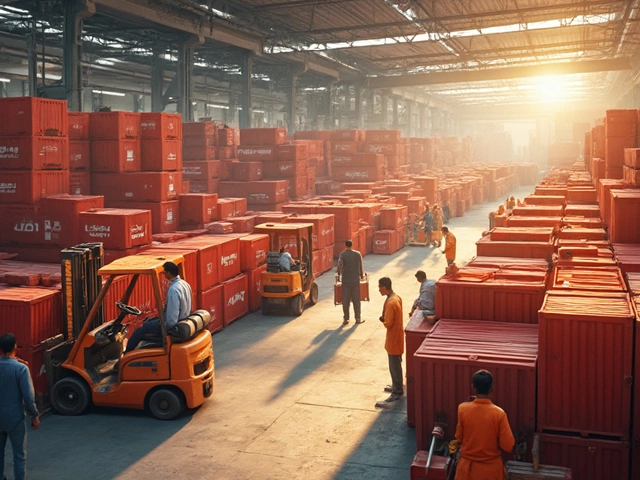
A Third-Party Logistics provider, or 3PL, handles specific operational tasks in your supply chain. Think of them as the hands-on workers. They receive your goods, store them in their warehouses, pick items when orders come in, pack them into boxes, and hand them off to carriers like UPS, FedEx, or DHL.
The key characteristic of a 3PL is that they execute physical movements. You still decide who your customers are, how you market your products, and often which carriers you prefer. The 3PL simply makes sure the box gets from point A to point B efficiently. Common services include warehousing, inventory management, order picking, packing, and last-mile delivery coordination.
For most small to mid-sized ecommerce brands, a 3PL is the standard solution. It removes the headache of renting warehouse space, hiring staff, and managing shipping software. You pay per unit stored and per order fulfilled. It’s transactional and operational.
So What Is a 4PL?
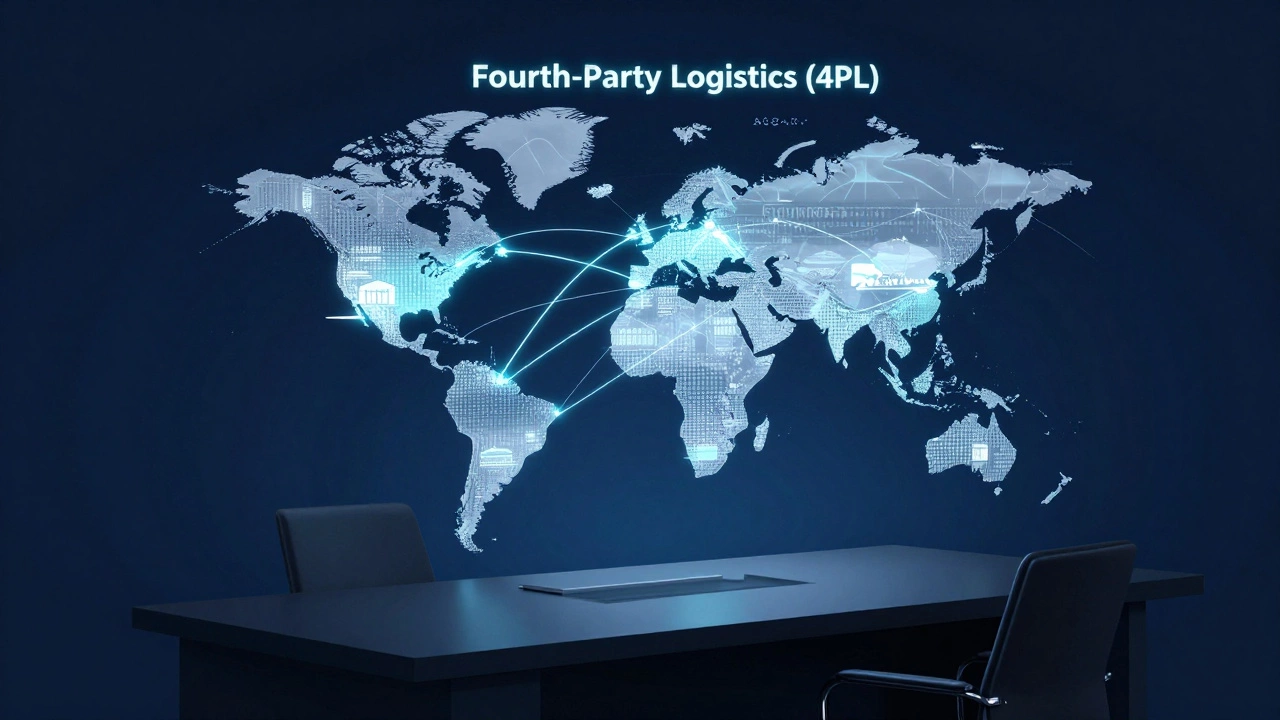
A Fourth-Party Logistics provider operates at a higher level. They don’t necessarily own trucks or warehouses. Instead, they act as a single point of contact that manages multiple 3PLs, carriers, and technology platforms on your behalf. A 4PL is essentially a supply chain architect.
Imagine you sell products globally. You might need a warehouse in Germany, another in California, and a third in Singapore. Managing three different 3PLs, each with its own software, reporting standards, and carrier contracts, is a nightmare. A 4PL steps in to oversee all of them. They integrate data, optimize routes, negotiate rates across all carriers, and provide strategic insights. They own the strategy; the 3PLs own the execution.
Key differences lie in ownership and scope. A 3PL owns assets (trucks, warehouses). A 4PL owns information and strategy. A 4PL will tell you *where* to put your stock based on demand forecasting. A 3PL just stores what you send them.
Amazon FBA: The Ultimate 3PL
When most people ask if Amazon is a 3PL, they are talking about Fulfillment by Amazon (FBA). In this model, Amazon acts as a classic, albeit highly sophisticated, 3PL. Here is how it breaks down:
- Warehousing: You ship bulk inventory to Amazon’s fulfillment centers. They store it.
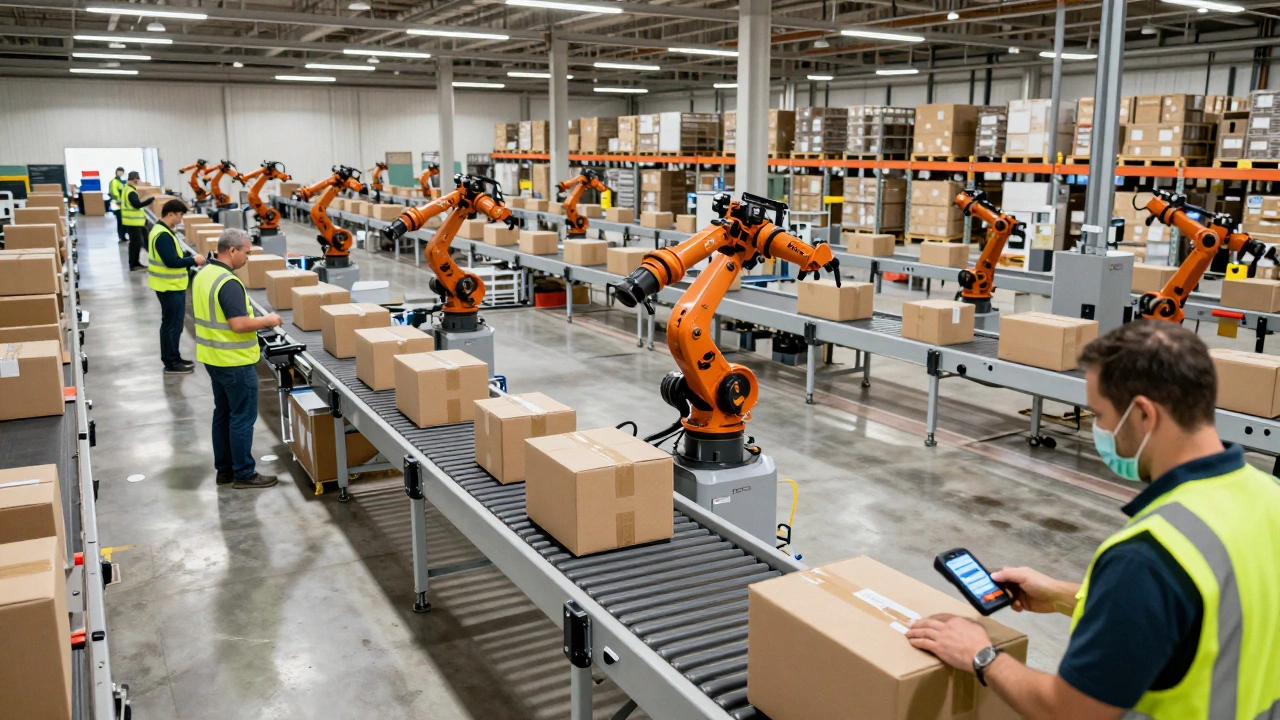
- Picking and Packing: When a customer buys your item, Amazon robots and staff pick it, pack it, and label it.
- Shipping: Amazon uses its own network (Amazon Logistics) or partners with UPS, USPS, and others to deliver the package.
- Customer Service: Amazon handles returns and basic customer queries regarding delivery.
You, the seller, do not manage these daily operations. However, you still retain significant control. You decide your pricing, your marketing strategy, and your brand identity. You also choose whether to use FBA or Merchant Fulfilled Network (MFN). Amazon FBA does not typically redesign your entire global supply chain strategy unless you opt for their more advanced enterprise solutions. Therefore, FBA fits squarely into the 3PL category.
| Feature | 3PL (e.g., Amazon FBA) | 4PL (e.g., Accenture Supply Chain) |
|---|---|---|
| Primary Role | Execution & Operations | Strategy & Orchestration |
| Asset Ownership | Owns warehouses, trucks, tech | Usually asset-light, owns data/strategy |
| Control Level | Tactical (day-to-day) | Strategic (long-term planning) |
| Client Relationship | Transactional | Partnership-based |
| Best For | Ecommerce sellers, SMEs | Large enterprises, global brands |
Where Does Amazon Cross Into 4PL Territory?
If FBA is a 3PL, why do some industry experts call Amazon a 4PL? The confusion comes from Amazon’s broader ecosystem. Through services like Amazon Supply Chain Solutions (ASCS), Amazon offers end-to-end supply chain management for large manufacturers and retailers.
With ASCS, Amazon doesn't just store your goods. They help you design your supply chain. They might advise you on where to locate factories, how to manage raw material inventory, and how to balance stock across multiple regions. They integrate deeply with your ERP systems and use AI to predict demand. This holistic, strategic oversight is the hallmark of a 4PL.
Additionally, Amazon Web Services (AWS) provides the cloud infrastructure that powers many modern supply chain platforms. While AWS itself is not a logistics provider, it enables 4PLs to build the digital twins and data analytics engines required for high-level orchestration. By providing both the physical infrastructure (warehouses/trucks) and the digital brain (AI/cloud), Amazon blurs the line between 3PL and 4PL.
Why the Distinction Matters for Your Business
Choosing between a 3PL and a 4PL approach affects your bottom line and your agility. If you are a growing ecommerce brand, starting with a 3PL like Amazon FBA is usually the right move. It scales easily. You can ship 10 units or 10,000 units without changing your internal team structure. The cost is predictable: storage fees plus fulfillment fees.
However, as you grow, relying solely on a 3PL can create bottlenecks. You might find yourself paying high storage fees during peak seasons or struggling with limited customization options. At this stage, you might need a 4PL to optimize your network. A 4PL could suggest splitting your inventory between Amazon FBA and a regional 3PL to reduce shipping times and costs. They would manage the data flow between both providers so you see one unified view of your inventory.
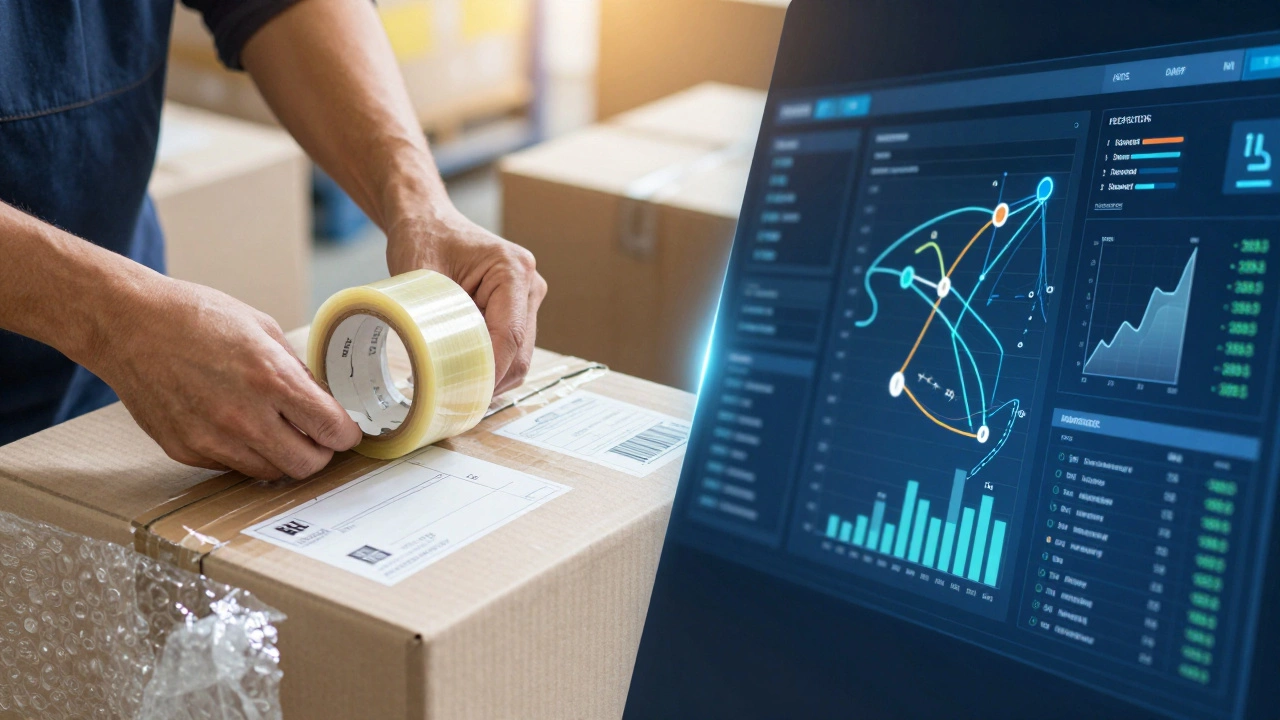
Consider this scenario: You launch a new product line. A 3PL will simply store and ship it. A 4PL will analyze sales data from similar past launches, recommend optimal stock levels, suggest packaging changes to reduce dimensional weight, and coordinate with suppliers to ensure timely replenishment. That extra layer of intelligence is worth the premium for large-scale operations.
The Hybrid Model: Best of Both Worlds
In practice, many successful companies use a hybrid model. They leverage Amazon FBA as their primary 3PL for speed and Prime eligibility but work with a 4PL consultant or platform to manage their overall strategy. This allows them to benefit from Amazon’s massive reach while maintaining strategic control over their supply chain.
Technology plays a huge role here. Modern logistics software integrates data from multiple 3PLs, giving you a 4PL-like view without hiring a full-service 4PL firm. Tools like ShipBob, Flexport, or custom ERP integrations allow you to orchestrate your own multi-channel fulfillment strategy. You become your own 4PL, using data to direct various 3PLs.
This democratization of logistics means you don't need to be a Fortune 500 company to access 4PL benefits. With the right software stack, a mid-sized business can achieve strategic visibility and optimization previously reserved for giants.
Common Pitfalls to Avoid
Misunderstanding the 3PL/4PL dynamic can lead to costly mistakes. One common error is expecting a 3PL to provide strategic advice. If you ask Amazon FBA to optimize your global distribution network, they won’t. Their goal is to process your orders efficiently within their existing infrastructure. They are not incentivized to save you money on long-term strategy; they are incentivized to keep their warehouses full and their algorithms running smoothly.
Another pitfall is assuming a 4PL will handle day-to-day operations. If you hire a 4PL partner, expect them to manage your vendors, not pick boxes. If you need hands-on operational support, you still need a strong 3PL relationship. The 4PL coordinates; the 3PL executes.
Finally, beware of vendor lock-in. Deep integration with Amazon’s ecosystem can make it difficult to diversify later. If Amazon changes its fee structure or algorithm, your business can suffer. A true 4PL approach encourages diversification and resilience, ensuring you aren't dependent on a single provider.
Is Amazon FBA considered a 3PL?
Yes, Amazon FBA is primarily a 3PL service. It handles the physical aspects of logistics: warehousing, picking, packing, and shipping. Sellers retain control over their business strategy, marketing, and pricing, while Amazon executes the fulfillment operations.
Can Amazon act as a 4PL?
Yes, through services like Amazon Supply Chain Solutions (ASCS), Amazon offers 4PL capabilities. These services involve strategic supply chain design, end-to-end visibility, and management of multiple logistics partners, going beyond simple fulfillment to optimize the entire network.
What is the main difference between a 3PL and a 4PL?
The main difference is scope and strategy. A 3PL focuses on tactical execution (moving and storing goods), while a 4PL focuses on strategic orchestration (managing multiple 3PLs, optimizing networks, and providing data-driven insights). A 3PL owns assets; a 4PL owns information and strategy.
Should I use a 3PL or a 4PL for my ecommerce business?
Most small to mid-sized ecommerce businesses should start with a 3PL like Amazon FBA due to lower entry barriers and scalability. As your business grows and complexity increases, adding 4PL services or software can help optimize costs and improve supply chain resilience.
Does Amazon own its own delivery fleet?
Yes, Amazon has invested heavily in its own logistics infrastructure, including Amazon Logistics (last-mile delivery), cargo planes, and semi-trucks. This vertical integration allows them to control the entire customer experience, blurring the lines between traditional 3PL and 4PL roles.