E-commerce Impact Calculator
Calculate Your Impact
See how your online shopping habits affect the environment and workers compared to store visits.
Your Impact Summary
Comparison: Your online shopping produces more carbon than in-store shopping.
When you click "Buy Now" on your phone, you don’t think about the truck that just left a warehouse in Ohio, the drone that flew over a neighborhood in London, or the worker who’s been on their feet for 12 hours packing orders. But every single one of those things happens because of e-commerce. So is it a good thing? The answer isn’t simple. It’s not just about convenience or lower prices. It’s about what we’re trading off - and who pays the price.
Speed is the new standard
Five years ago, two-day shipping felt like magic. Today, same-day delivery is expected in 70% of U.S. metro areas. Amazon, Walmart, and even small retailers now compete on delivery speed. This isn’t just a marketing gimmick - it’s reshaping how warehouses operate, how roads are used, and how people live.
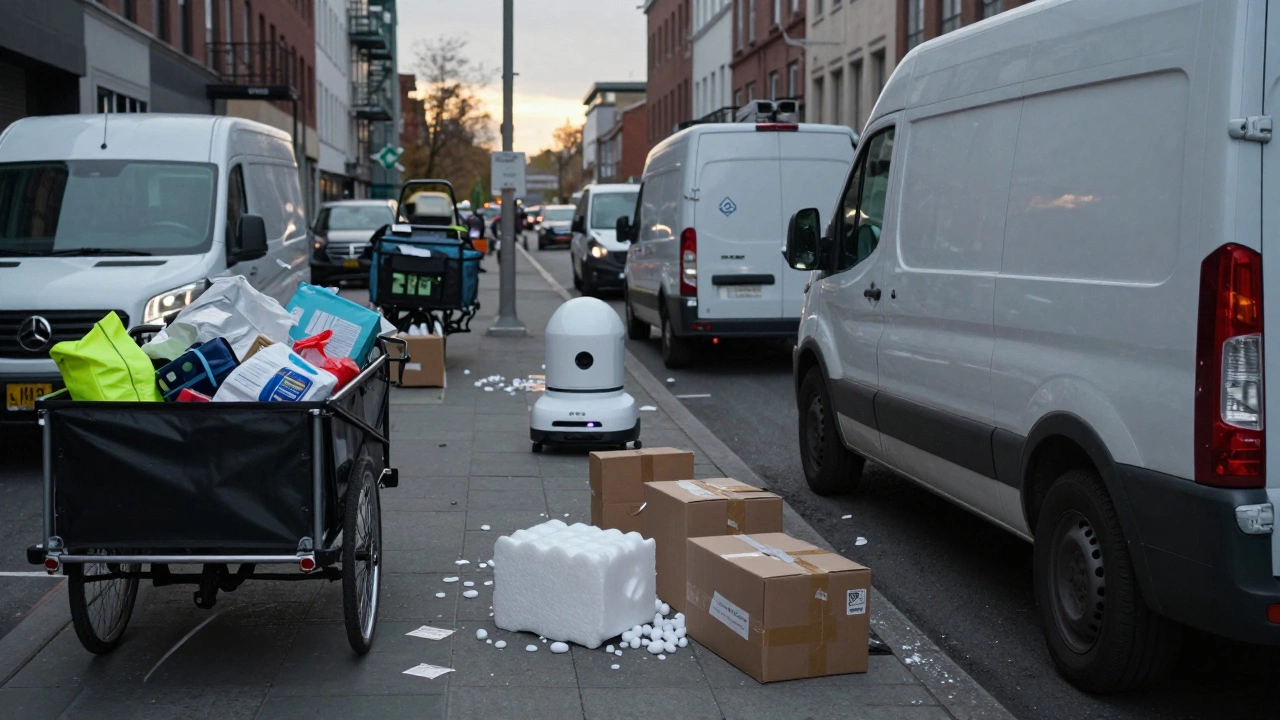
In 2025, the average American receives 14 online packages per year. That’s up from 6 in 2019. The number of delivery vehicles on the road has grown by 42% since 2020. And it’s not just cars. Electric vans, cargo bikes, and automated robots are now common in city centers. But more deliveries mean more traffic, more emissions, and more pressure on local infrastructure.
The hidden cost of convenience
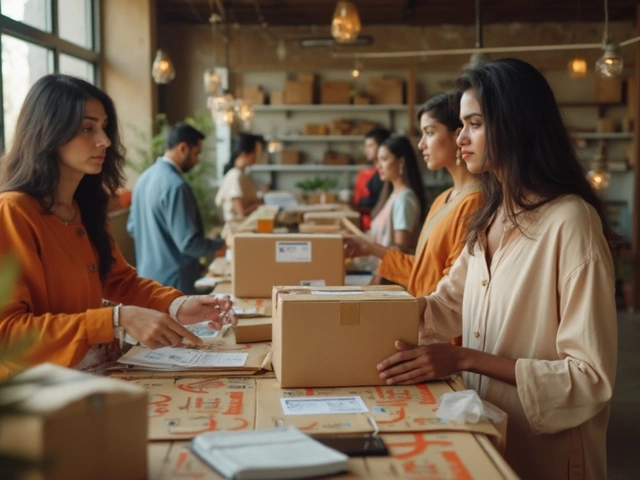
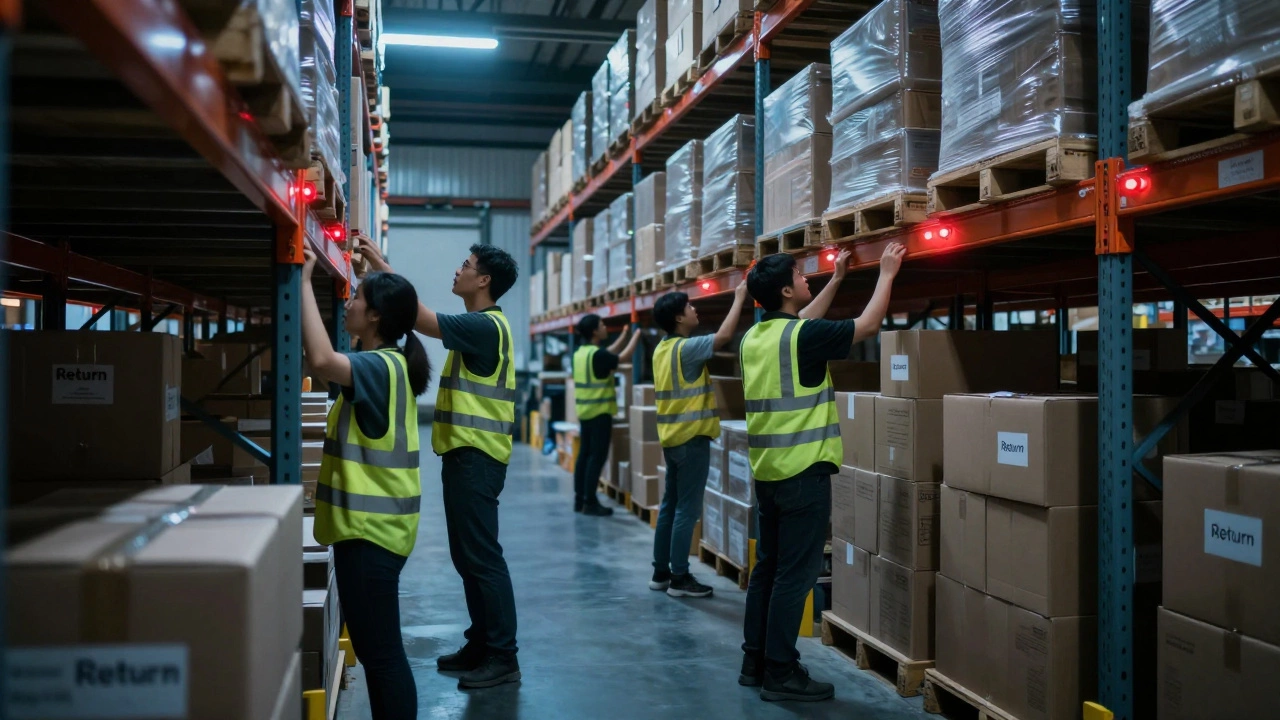
Think about your last return. You printed a label, dropped it off at a UPS store, and forgot about it. But behind that simple act? A warehouse worker had to unpack, inspect, repackage, and restock that item. Returns now make up 15% of all e-commerce sales - double what they were in 2018. That’s not just waste. It’s a logistical nightmare.
One study from the University of Michigan found that the carbon footprint of a returned item is 20% higher than a kept one. Why? Because it travels twice. And often, the returned item ends up in landfill. Fast fashion brands, in particular, have turned returns into a business model - but the environmental cost is real.
Who’s really winning?
Consumers get speed. Retailers get data. But what about the people who make it all happen?
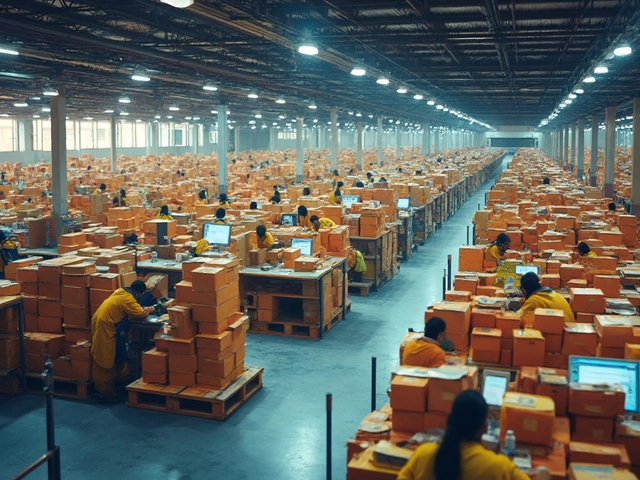
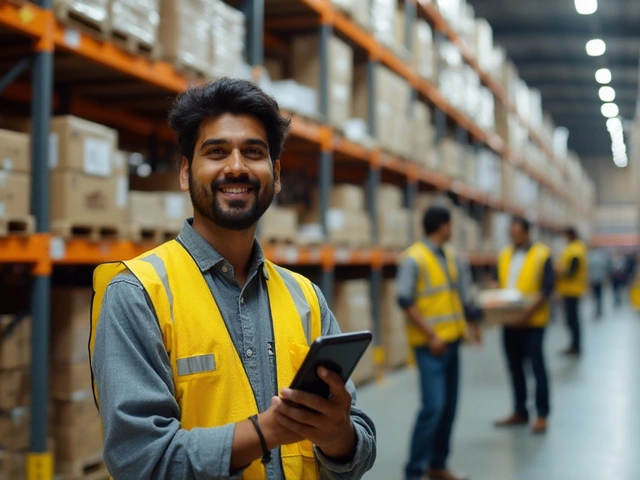
Warehouse workers now face pressure to pick 150+ items per hour. That’s not a typo. In some fulfillment centers, sensors track every movement. Breaks are timed. Productivity is measured in seconds. In 2024, the injury rate in e-commerce warehouses was 3.5 times higher than the national average for all jobs. And turnover? Over 60% in the first year.
Drivers aren’t much better. Gig delivery apps promise flexibility, but most drivers work 50+ hours a week just to break even after gas, vehicle maintenance, and app fees. And when it rains? No one gets paid extra. No one gets hazard pay. Just more orders.
The environmental bill
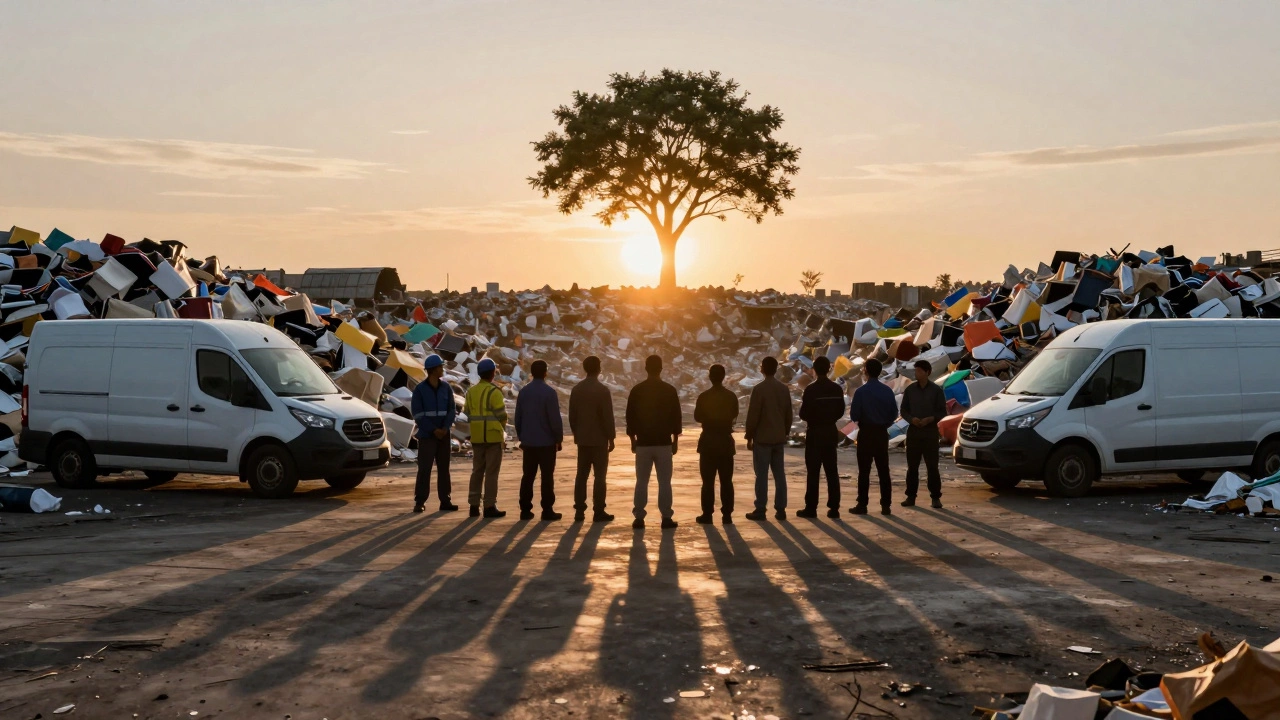
E-commerce generates 1.5 billion tons of CO2 each year - more than the entire aviation industry. Packaging alone accounts for 30% of that. Most of it isn’t recycled. Plastic air pillows, foam inserts, and single-use tape pile up in landfills. Even "recyclable" boxes often get contaminated with tape and labels, making them unusable.
And then there’s the energy. Data centers that handle millions of daily orders? They use as much electricity as a small country. Cooling servers in Nevada and Virginia burns more power than 1.2 million homes. The carbon cost of a single online purchase? It’s often higher than buying the same item in-store - if you drive there once a month.
What’s changing?
It’s not all bad. Some companies are trying to fix this.
Amazon now uses 100% renewable energy for its global operations. IKEA lets customers pick up orders at local hubs to cut delivery miles. Alibaba’s Cainiao network uses AI to group orders by neighborhood, reducing truck trips by 22%. And in Germany, cities are banning delivery vans during peak hours - forcing companies to use cargo bikes instead.
Some shoppers are switching to "buy local" platforms. In Portland, a co-op of 87 small businesses now shares one warehouse. Orders are packed together, delivered once a day by electric vans. The result? 40% fewer trips and 60% less packaging.
The trade-off isn’t going away
E-commerce isn’t going to disappear. But its current model? It’s unsustainable. We’ve built a system that rewards speed over sustainability, profit over people, and convenience over consequence.
There are ways to make it better. Better packaging standards. Fair wages for warehouse and delivery workers. Regulations that limit rush delivery during peak hours. Carbon pricing for shipping. Investment in local fulfillment centers.
But none of that happens unless we stop treating online shopping like a harmless habit. Every click has a chain of effects - from the soil in a landfill to the hands of a worker who never gets a lunch break. The question isn’t whether e-commerce is good. It’s whether we’re willing to make it better.
Is e-commerce better for the environment than shopping in stores?
It depends. If you drive 10 miles to buy one item, then yes - online shopping can be greener. But if you order five things a week with next-day delivery, the emissions from multiple trips, packaging waste, and returns often outweigh the savings. A 2023 study in Nature Sustainability found that buying 10+ items in one trip to a local store produces less CO2 than ordering those same items online with rush shipping.
Why do e-commerce warehouses have higher injury rates?
Speed is the main driver. Workers are expected to pick 150+ items per hour, often while carrying heavy boxes. Many facilities use motion-tracking systems that penalize slow movement. This leads to repetitive stress injuries, slips, and falls. In 2024, the Bureau of Labor Statistics reported that fulfillment center workers had a 3.5x higher injury rate than the national average for all jobs. Most injuries happen in the first six months.
How much packaging waste does e-commerce create?
In 2025, e-commerce generated over 40 million tons of packaging waste globally. That’s equivalent to 120 Empire State Buildings. Most of it is non-recyclable - think plastic bubble wrap, foam peanuts, and adhesive tape. Even cardboard boxes are often ruined by plastic liners or excessive tape. Only 28% of e-commerce packaging gets recycled. The rest ends up in landfills or incinerators.
Do returns really hurt the environment?
Yes - and badly. Returns create a second trip, doubling emissions. They also increase labor, sorting, and restocking costs. In 2025, 30% of returned items couldn’t be resold and were thrown away. That’s over 5 billion items in the U.S. alone. Brands like Zara and Shein have started charging return fees, but most still absorb the cost - and the waste - to keep customers happy.
What’s the most sustainable way to shop online?
Plan ahead. Order fewer items, choose standard shipping (not overnight), combine orders, and avoid returns by checking sizes and reviews. Support retailers that use local fulfillment centers or carbon-neutral delivery. And if you can, pick up your order at a nearby locker or store - it cuts delivery miles by up to 70%.