USPS vs. Courier Decision Tool
Answer the questions below to find out which service is best suited for your shipment.
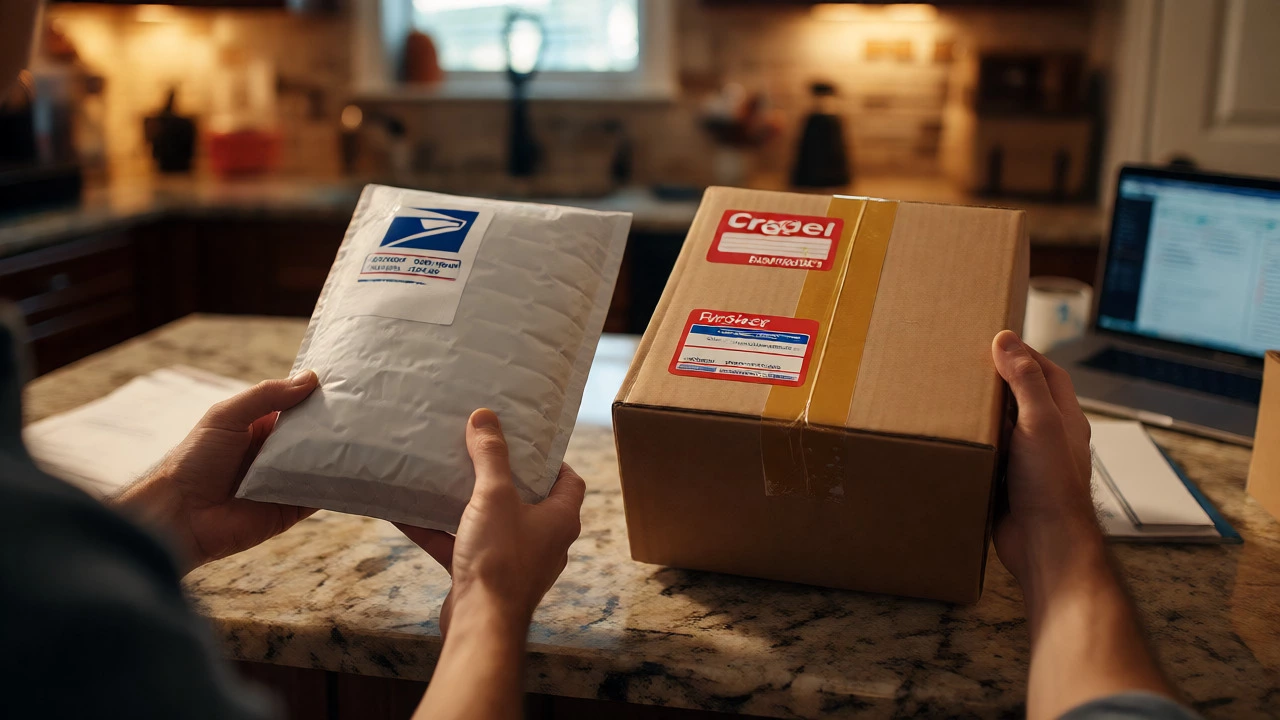
You’re standing at your kitchen counter, holding a package you need to send. You have two choices: walk to the post office or call a private courier like FedEx or UPS. The question pops up: Is USPS considered a courier?
The short answer is no. While both move packages from point A to point B, they operate under different rules, laws, and business models. Confusing them can cost you money or time. If you think USPS acts exactly like DHL or DPD, you might miss critical deadlines or pay for services that don’t exist in their catalog. Let’s break down why these two worlds are distinct, even if they look similar on the surface.
The Core Distinction: Public Service vs. Private Logistics
To understand the difference, we have to look at what each entity actually is. United States Postal Service (USPS) is an independent agency of the executive branch of the United States federal government. It has a legal mandate to serve every address in the country, regardless of profitability. This is known as universal service obligation.
A courier, by contrast, is a private company that offers rapid delivery services. Couriers like FedEx, UPS, or DHL focus on speed, tracking precision, and premium handling. They pick up goods directly from your door or business and deliver them quickly, often with guaranteed time windows.
Here is the practical reality: USPS delivers mail. Couriers deliver parcels. While USPS now handles a massive volume of e-commerce parcels, its infrastructure was built for letters and flats first. Couriers were built for boxes and pallets from day one. This foundational difference shapes everything else, from pricing to liability.
Why People Confuse Them (And Why It Matters)
The confusion stems from the rise of e-commerce. When you buy something online, you rarely care who carries it. You just want it delivered. Amazon, for instance, uses a mix of its own logistics network, private carriers, and USPS. Because you see a "delivered" notification regardless of the carrier, the distinction blurs.
But for businesses and individuals sending valuable or time-sensitive items, the difference is stark. Imagine you are sending a legal contract that must arrive by 10 AM tomorrow. You cannot use standard USPS First-Class Mail. You might consider USPS Priority Mail Express, which does offer overnight delivery. However, this is still a postal product with specific cutoff times and collection points. A true courier service often offers same-day pickup within hours and real-time driver tracking, features that traditional postal services historically lacked.
Think of it this way: USPS is like public transport. It runs on fixed routes and schedules, serving everyone equally. A courier is like a taxi or private car hire. It goes where you need it to go, when you need it to go there, but you pay a premium for that flexibility and speed.
Service Scope and Infrastructure Differences
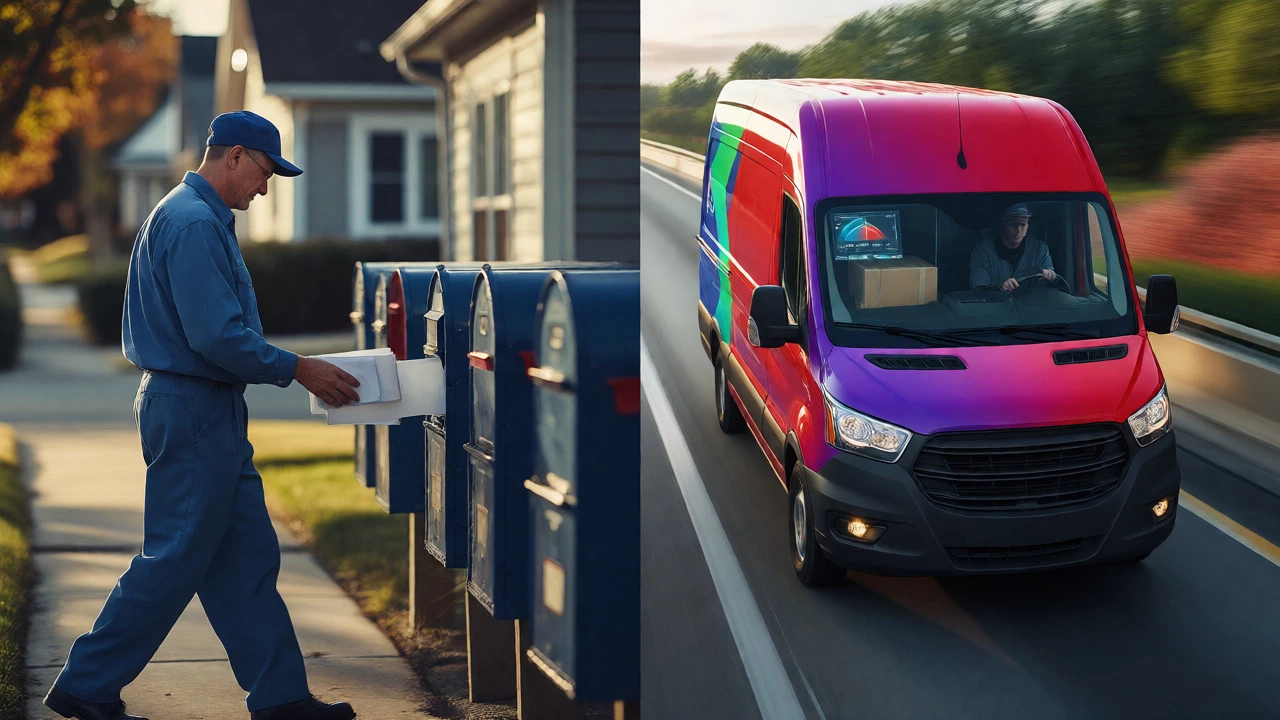
The physical networks differ significantly. USPS utilizes a vast network of post offices, blue mailboxes, and letter carriers who walk or drive residential routes daily. Their primary asset is access to every mailbox in America. This makes them unbeatable for small, lightweight items like envelopes, flyers, and small packets.
Couriers rely on hub-and-spoke systems. Packages are collected from businesses or drop-off points, flown or trucked to regional hubs, sorted rapidly, and dispatched via dedicated vans. This system is optimized for volume and speed of larger parcels. If you try to send a single envelope via a global courier, you will likely overpay because you are using a high-speed parcel network for a low-weight item.
| Feature | USPS (Postal Service) | Private Courier (e.g., FedEx/UPS) |
|---|---|---|
| Primary Focus | Letters, flats, small parcels | Packages, freight, urgent deliveries |
| Ownership | Government-owned agency | Private corporation |
| Pricing Model | Weight-based, subsidized rates | Dimensional weight, zone-based, premium |
| Tracking | Basic to advanced (varies by service) | Real-time, granular updates |
| Liability | Limited included insurance | Higher limits, customizable coverage |
| Access | All addresses (universal obligation) | Select areas, may charge remote fees |

When to Choose USPS Over a Courier
So, when should you ignore the courier label and stick with the postman? The answer usually comes down to cost and size.
- Lightweight Items: If your package weighs less than 1 pound, USPS First-Class Package Service is often significantly cheaper than any private courier. Couriers struggle to compete on price for sub-1lb items due to their higher operational costs per stop.
- Standard E-commerce: For non-urgent retail shipments where next-day arrival isn’t required, USPS Ground Advantage provides reliable 2-5 day delivery at competitive rates.
- PO Box Deliveries: Only USPS can deliver directly to a Post Office Box. Couriers typically require a physical street address. If your recipient only has a PO Box, you have no choice but to use the postal service.
- Rural Areas: In extremely remote locations, couriers may impose surcharges or lack direct coverage, requiring handoffs to local partners. USPS has a legal obligation to deliver to every rural route.
When You Actually Need a Courier
Conversely, there are scenarios where treating USPS as a courier will lead to frustration.
- High-Value Goods: While USPS offers insurance, private couriers often provide better liability protection and easier claims processes for expensive electronics or jewelry. If you are shipping a $5,000 laptop, the peace of mind from a dedicated courier account is worth the extra cost.
- Time-Critical Deadlines: If you need a document signed by 2 PM today, a same-day courier service is essential. USPS Priority Mail Express is fast, but it operates on postal schedules. A courier can dispatch a driver immediately upon your call.
- B2B Freight: Moving pallets or large volumes of inventory between warehouses is a courier/freight task. USPS is not designed for heavy industrial logistics.
- International Complexity: While USPS handles international mail well, private couriers offer integrated customs brokerage. With USPS, you often deal with the destination country’s postal service after the border. With FedEx or DHL, one company manages the entire chain, including customs clearance, which reduces delays.
The Hybrid Reality: Last Mile Partnerships
It’s worth noting that the line is getting blurrier through partnerships. Many private companies use USPS for the "last mile." For example, Amazon Logistics might handle the long-haul transport, but a USPS carrier drops the final box at your doorstep. This hybrid model leverages the efficiency of private logistics for bulk movement and the universal reach of the postal service for final delivery.
This doesn’t make USPS a courier. It makes USPS a partner in a broader supply chain. The key takeaway is that USPS lacks the end-to-end control that defines a true courier service. They don’t manage the aircraft, the customs broker, and the final van driver in a single unified system the way integrated logistics providers do.
Key Takeaways
- USPS is a postal service, not a courier. It prioritizes universal access and low-cost handling of small items.
- Couriers are private logistics firms that prioritize speed, tracking, and premium handling of parcels.
- Choose USPS for lightweight, non-urgent, or PO Box deliveries to save money.
- Choose a courier for high-value, time-sensitive, or complex international shipments.
- Don’t confuse capability with category. Just because USPS can deliver a box quickly doesn’t mean it operates like a courier.
Can I track a USPS package like a courier?
Yes, but with limitations. USPS provides tracking numbers for most parcel services. However, the granularity differs. Couriers often provide real-time GPS location and precise delivery windows. USPS tracking typically updates at scan points (acceptance, departure, arrival, out for delivery). You won't always know exactly when the driver will arrive, unlike some premium courier apps.
Does USPS offer same-day delivery?
Generally, no. Standard USPS services are next-day or multi-day. They do not offer a true same-day courier service in most markets. Some local metro areas may have limited options, but it is not a core feature of the national postal network. If you need same-day delivery, you must use a private courier or gig-economy delivery platform.
Why is USPS sometimes slower than couriers?
USPS relies on a mixed-mode network involving ground transport and commercial airline cargo space. Couriers own their fleets of planes and trucks, allowing them to optimize routes specifically for their packages. Additionally, USPS processes millions of letters alongside parcels, which can create bottlenecks during peak seasons like Christmas, whereas couriers separate their parcel operations more distinctly.
Is it cheaper to use USPS or a courier?
For packages under 2 pounds, USPS is almost always cheaper. For heavier packages, especially those with large dimensions relative to their weight, private couriers can sometimes be more competitive due to their dimensional weight calculations and negotiated commercial rates. Always compare quotes based on the specific size and weight of your shipment.
Do couriers deliver to PO Boxes?
No. Private couriers like FedEx, UPS, and DHL generally cannot deliver to a USPS PO Box. They require a physical street address. If the recipient only has a PO Box, you must use USPS or a specialized mail forwarding service that accepts courier packages and transfers them to the box.