Pallet Delivery Cost Estimator
Enter your shipment details and click "Calculate" to see an estimated price range.
Cost Breakdown
| Base Rate (Distance & Volume) | £0.00 |
| Surcharge: Tail Lift | £0.00 |
| Surcharge: Hard Access | £0.00 |
| Estimated Total | £0.00 |
Quick Summary: Key Takeaways
- Pallet delivery moves goods on flat transport structures (pallets) using forklifts or pallet jacks.
- It is the most cost-effective method for shipping heavy or bulky items over long distances.
- Standard pallet sizes in the UK are 1200mm x 1000mm (Euro pallet) and 1200mm x 800mm.
- You pay for the space your pallet occupies on a truck, not just its weight, making consolidation key.
- Proper wrapping and labeling prevent damage during transit and ensure smooth handling at depots.
You have probably seen them stacked high in warehouse aisles or loaded onto trucks at motorway service stations. They look like simple wooden squares, but they are the backbone of modern supply chains. If you have ever wondered why moving a single sofa costs more than moving ten boxes, the answer usually lies in how the item travels. That is where pallet delivery comes in. It is not just about putting things on wood; it is a standardized system that allows massive volumes of goods to move efficiently across the country and around the world.
For many small business owners or individuals moving house, the concept feels intimidating. Do I need a forklift? How do I measure my load? What happens if the driver cannot unload it? This guide strips away the logistics jargon. We will explain exactly what a pallet delivery is, when you should use one, and how to avoid the common pitfalls that lead to damaged goods or unexpected fees. Whether you are shipping machinery from Bristol to London or sending bulk stock to a customer in Manchester, understanding this process saves money and stress.
The Core Concept: Why Use a Pallet?
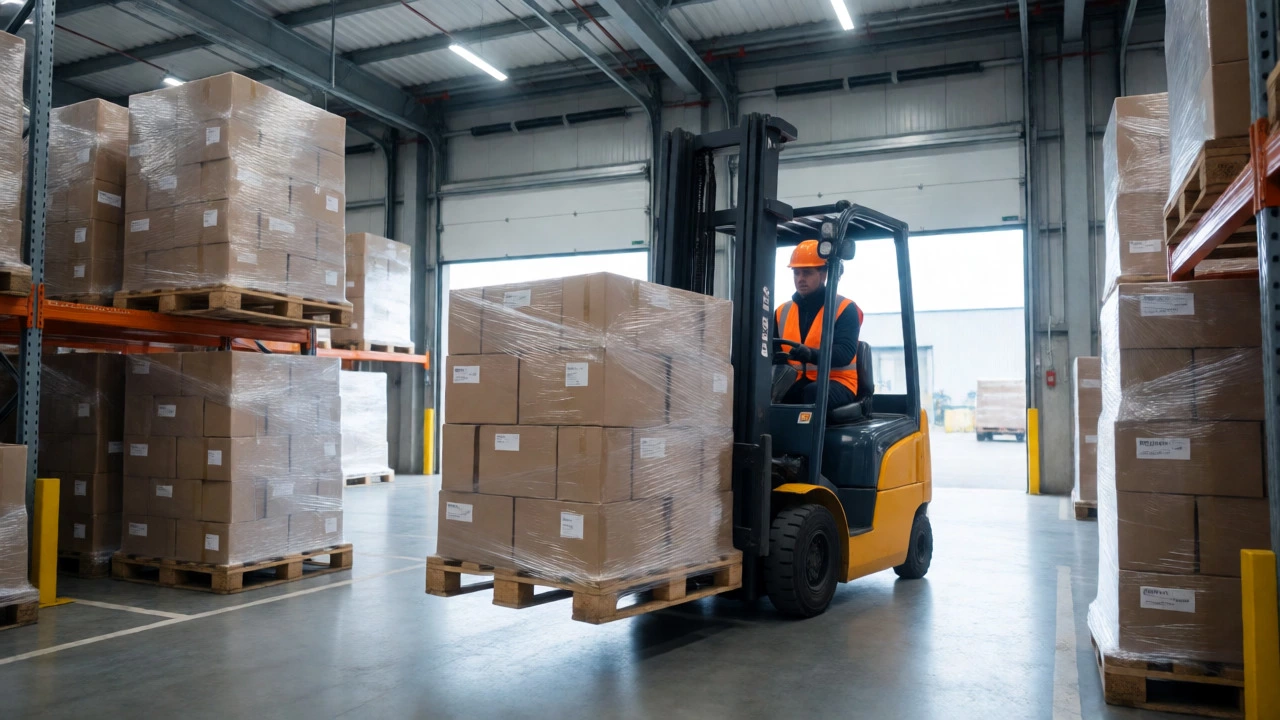
At its simplest, a pallet is a flat transport structure that supports goods in a stable fashion while being lifted by a forklift, pallet jack, or front loader. The magic isn't in the wood itself, but in the standardization. Before pallets became universal, workers had to manually stack and unstack crates, which was slow and dangerous. Today, a pallet turns loose cargo into a single, manageable unit.
When you book a pallet delivery, you are essentially renting space on a truck for a specific footprint. Carriers group these pallets together-a practice known as consolidating freight-to fill up large vehicles. This shared space model makes it incredibly cheap compared to hiring an entire truck (known as Full Truck Load or FTL) for just one shipment. If you are shipping less than a full truckload, your pallet joins others on a Less Than Truckload (LTL) service. The carrier picks up multiple pallets from different senders, drives them to a central hub, sorts them, and delivers them to their respective destinations.
This system relies heavily on mechanical handling. Because forklifts do the heavy lifting, human error drops significantly. You don't risk back injuries from carrying heavy boxes, and goods are less likely to be crushed under other items because they sit on a rigid base. However, this efficiency demands strict adherence to rules. If your load shifts during transit, it can topple, damaging your goods and potentially injuring warehouse staff.
Anatomy of a Standard Pallet
Not all pallets are created equal. In the United Kingdom and Europe, two main types dominate the market. Choosing the wrong one can result in rejection at the depot or extra charges for non-standard handling.
The most common is the EUR pallet. Also known as the Euro pallet, it measures exactly 1200mm x 800mm. It features five top boards, three bottom boards, and nine blocks. These are often branded with a EUR logo and are designed to fit perfectly into standard truck trailers and shipping containers. They are sturdy, reusable, and widely recognized by every logistics company in Europe.
| Feature | EUR Pallet | Industrial Pallet | Custom/Ex-Plywood |
|---|---|---|---|
| Dimensions | 1200mm x 800mm | 1200mm x 1000mm | Variable |
| Material | Treated Timber | Treated Timber | Timber or Plastic |
| Weight Capacity | Up to 1500kg static | Up to 1500kg static | Depends on build |
| Compatibility | Universal EU/UK | Common in UK Industry | May require special handling |
The second common type is the industrial pallet, measuring 1200mm x 1000mm. While slightly larger, it is also widely accepted in the UK domestic network. If you are shipping internationally within Europe, stick to the EUR size to avoid compatibility issues with foreign infrastructure. For one-off shipments of irregularly shaped items, you might use a custom-built pallet. Just remember: if it doesn't fit standard racking systems, carriers may charge a surcharge for manual handling.
How the Process Works Step-by-Step
Booking a pallet delivery isn't as complex as booking air travel, but it requires more preparation. Here is what actually happens between your door and the recipient's.
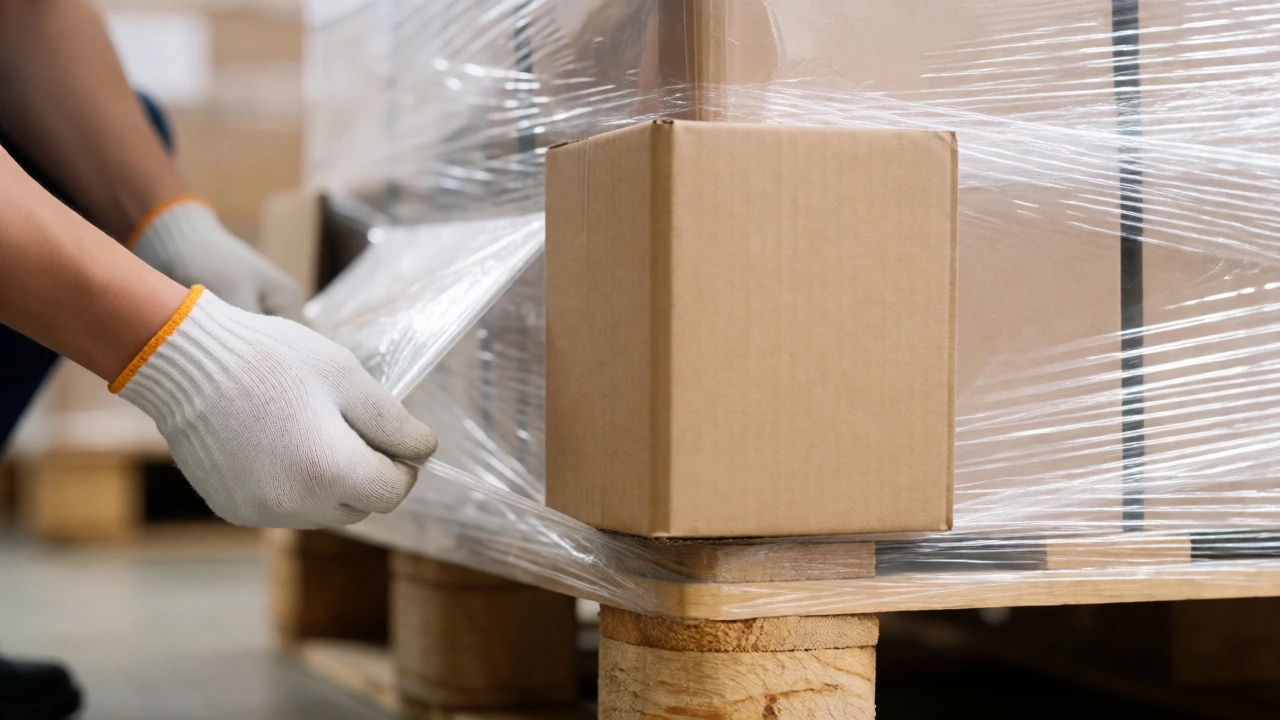
- Preparation: You stack your goods onto the pallet. Crucially, nothing should hang over the edge. Overhang reduces stability and risks crushing lower items. Once stacked, you secure the load. Stretch wrap (shrink film) is the industry standard. It holds the load together and protects it from dust and moisture. Corner protectors are highly recommended for cardboard boxes to prevent strap cutting.
- Labeling: You must attach clear labels to at least two sides of the pallet. Include the collection address, delivery address, contact numbers, and any special instructions (e.g., "This Way Up"). Barcodes are ideal for tracking, but clear handwritten text works if legible.
- Collection: The carrier arrives with a vehicle equipped with a tail lift or forklift. They scan the pallet, creating a digital record. At this stage, they check the condition. If the load looks unstable, they might refuse collection until you fix it.
- Transit: Your pallet goes to a local depot, then potentially to a national hub, and finally to a destination depot. During this time, it is stored in racks. This is why height matters-most racks accommodate pallets up to 1.8 meters tall including the pallet itself.
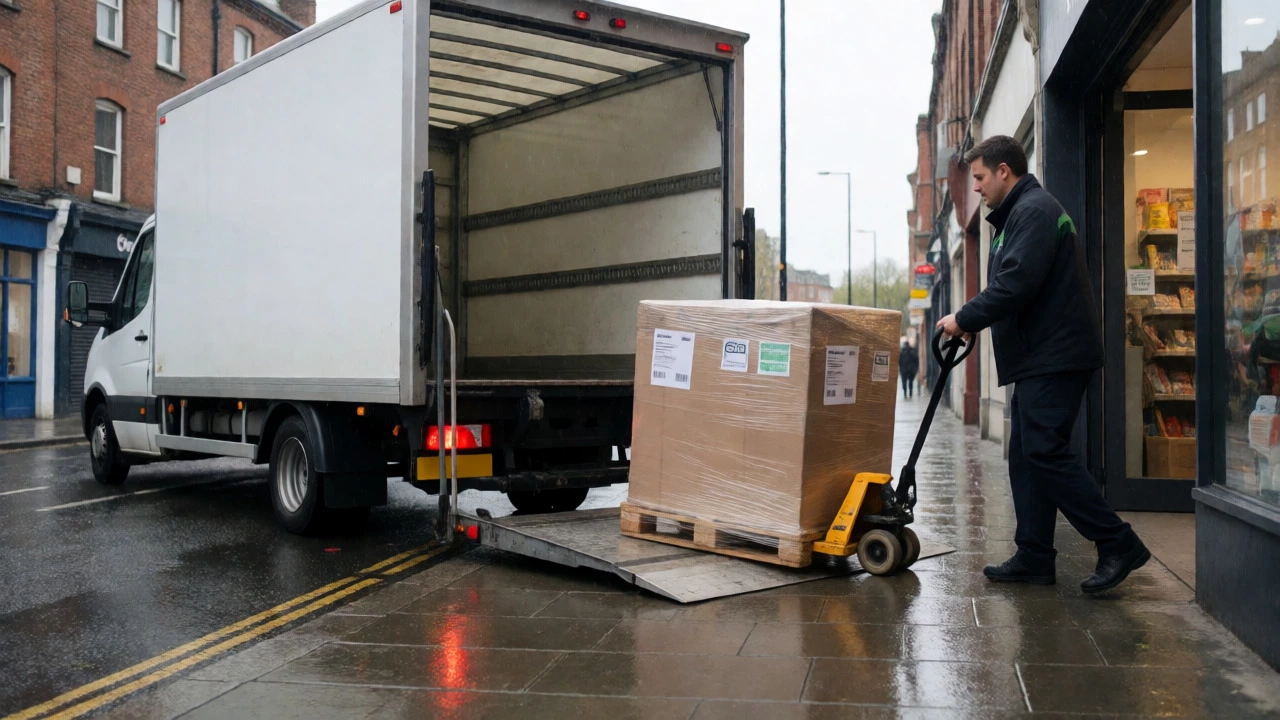
- Delivery: The final-mile driver brings the pallet to the recipient. If the recipient has a forklift, great. If not, the driver uses a tail lift and hand truck (pallet jack) to move it to the door. Note: drivers rarely carry goods inside buildings or up stairs unless pre-booked as a premium service.
Cost Factors: What Are You Paying For?
Price surprises are the biggest complaint in logistics. Understanding the variables helps you budget accurately. Unlike courier parcels, which are priced by volumetric weight, pallets are priced based on linear meter usage or fixed pallet slots.
Distance is the primary driver. Moving a pallet from London to Edinburgh costs significantly more than London to Birmingham due to fuel and time. But volume matters too. If you ship two half-full pallets, you pay for two full spaces. Consolidating goods onto fewer, fuller pallets lowers the per-unit cost.
Access issues add hidden costs. Does the pickup location have easy access for a large truck? Is there a narrow street in central London where parking is restricted? If the driver needs to wait or use smaller vans for part of the journey, expect surcharges. Similarly, if the delivery site lacks a loading dock or forklift, you might need to pay for a tail-lift delivery or even a specialist offloading service.
| Factor | Impact on Price | How to Mitigate |
|---|---|---|
| Distance | High | Consolidate shipments to reduce frequency. |
| Pallet Size/Height | Medium | Keep loads under 1.8m total height. |
| Access Issues | Variable | Check road restrictions and parking availability. |
| Insurance Value | Low-Medium | Only insure for replacement value, not retail. |
Common Mistakes to Avoid
Even experienced shippers slip up. The most frequent error is under-wrapping. A loosely wrapped pallet can shift during braking or cornering. When that happens, goods crash into each other, causing breakage that insurance might not cover if negligence is proven. Always wrap tightly, starting from the bottom and working up, overlapping layers by 50%.
Another issue is incorrect dimensions. If you book a slot for a 1-meter high pallet but deliver a 1.5-meter high one, the carrier may reject it at the depot because it won't fit on the rack. Measure twice, book once. Remember to include the pallet's own height (usually 144mm for timber) in your total measurement.
Finally, ignore the paperwork at your peril. Ensure the Air Waybill (AWB) or delivery note matches the physical label on the pallet. Mismatched information causes delays as the carrier tries to identify the correct owner of the goods. Clear communication prevents your pallet from becoming lost in a sea of similar-looking wooden squares.
Frequently Asked Questions
Do I need to provide the pallet myself?
No, most carriers offer pallet hire services for a small fee. However, providing your own clean, undamaged pallet is often cheaper in the long run. If you hire one, you typically need to return it or pay a deposit.
Can I ship fragile items on a pallet?
Yes, but you must pack them securely. Use bubble wrap, foam inserts, and strong outer cartons. Place heavier items at the bottom and lighter, fragile ones on top. Clearly mark the pallet with "Fragile" stickers on all four sides.
What happens if the recipient cannot unload the pallet?
If the recipient lacks a forklift or loading bay, you must book a tail-lift delivery. The driver will bring a hydraulic lift and a manual pallet jack. Be aware that drivers are not porters; they will leave the pallet at the kerbside or nearest safe spot, not inside the building.
Is pallet delivery insured?
Basic coverage is usually included but is limited (often £10-£20 per kg). For valuable goods, you should purchase additional transit insurance. Declare the true commercial value to ensure you are fully covered in case of loss or damage.
How fast is pallet delivery?
Domestic UK pallet deliveries typically take 2-3 working days. Express options exist for next-day delivery, but they cost significantly more. International European shipments usually take 3-7 days depending on distance and customs clearance.