Logistics Routing Efficiency Simulator
Scenario Configuration
Adjust parameters to see how different routing technologies handle the workload.
Performance Analysis
Efficiency Comparison (Relative Score)
Industry Tech Stack Comparison
FedEx
Core: Proprietary Algorithms + Cloud AI
Partners: IBM Watson, Microsoft Azure
UPS
Core: ORION System
Partners: Oracle, SAP
Amazon
Core: In-house AI/ML Models
Partners: AWS (Internal)
DHL
Core: Resilience360 + Custom
Partners: SAP, Siemens
Have you ever wondered how a package gets from a warehouse in Ohio to your doorstep in London by tomorrow morning? It’s not magic, and it’s certainly not just drivers guessing the best way. Behind every on-time delivery is a massive, invisible engine of data processing and algorithmic decision-making. For FedEx, one of the world's largest courier companies, this engine is built on proprietary software that has been refined over decades.
The short answer is that FedEx doesn't use a single off-the-shelf product like Google Maps for its core operations. Instead, they rely on a complex ecosystem of internal tools, most notably their flagship system known as FedEx Delivery Manager (FDM) for customers and a suite of backend algorithms for drivers. However, the real secret sauce lies deeper in their infrastructure, involving partnerships with major tech giants and custom-built neural networks.
The Core: Proprietary Algorithms and Internal Systems
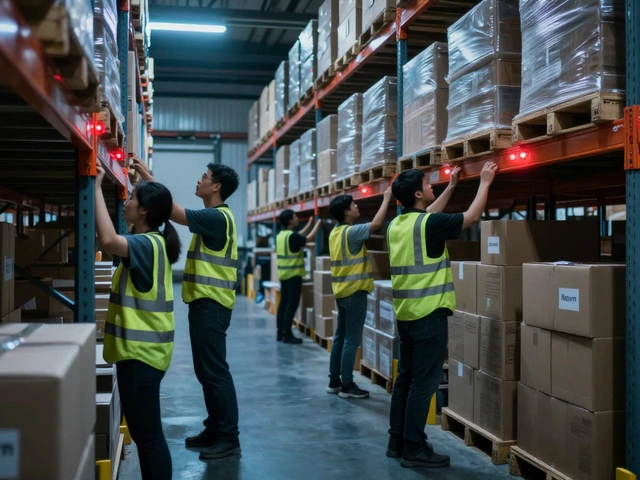
When people ask what software FedEx uses, they are often looking for a brand name they can buy or install. The reality is more nuanced. FedEx develops much of its critical routing logic in-house. This makes sense when you consider the scale: millions of packages, thousands of variables, and tight deadlines.
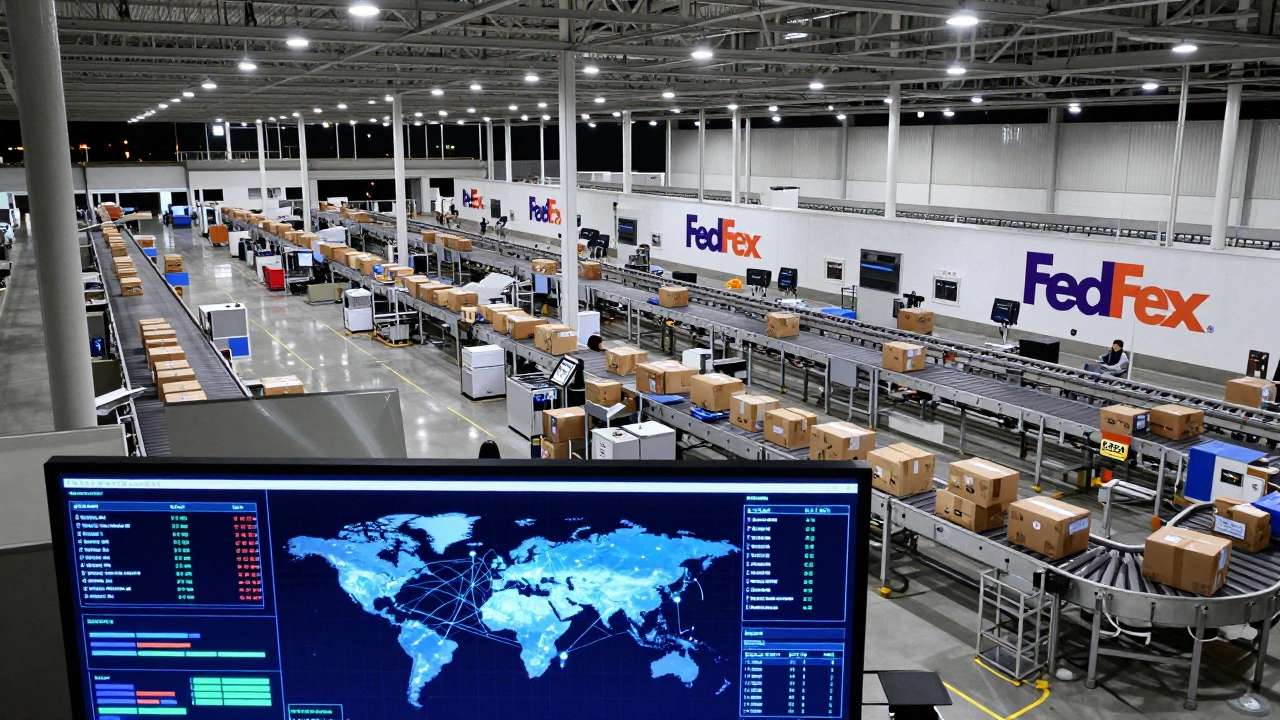
At the heart of their operation is a system that handles route optimization. This isn't just about finding the shortest distance between two points. It involves calculating traffic patterns, weather conditions, driver break times, vehicle capacity, and even the specific time windows requested by customers. FedEx engineers write code that processes billions of data points daily to adjust routes in real-time. If a road closes due to an accident, the system recalculates the path for hundreds of drivers within seconds.
This internal capability is supported by FedEx SenseAware, a service that provides real-time tracking data. While primarily used for high-value shipments, the underlying telemetry feeds into the broader routing intelligence, helping the company predict delays before they happen.
Partnerships with Tech Giants: IBM and Microsoft
While FedEx builds its own core logic, they don't do it in isolation. They partner with some of the biggest names in technology to handle the heavy lifting of data storage, artificial intelligence, and cloud computing.
A significant part of FedEx’s digital transformation involves IBM. FedEx has collaborated with IBM to leverage Watson AI for predictive analytics. This helps them anticipate demand spikes during holidays like Black Friday or Christmas. By predicting where packages will need to go, FedEx can pre-position inventory and optimize long-haul trucking routes before the rush even begins.
Another key player is Microsoft Azure. FedEx migrated much of its cloud infrastructure to Azure. This platform allows them to store and process vast amounts of location data. Azure’s machine learning services help refine the algorithms that determine the most efficient delivery sequences. Think of it as the brain that learns from every delivery made, getting smarter with each iteration.
The Driver’s View: Handheld Devices and Mobile Apps
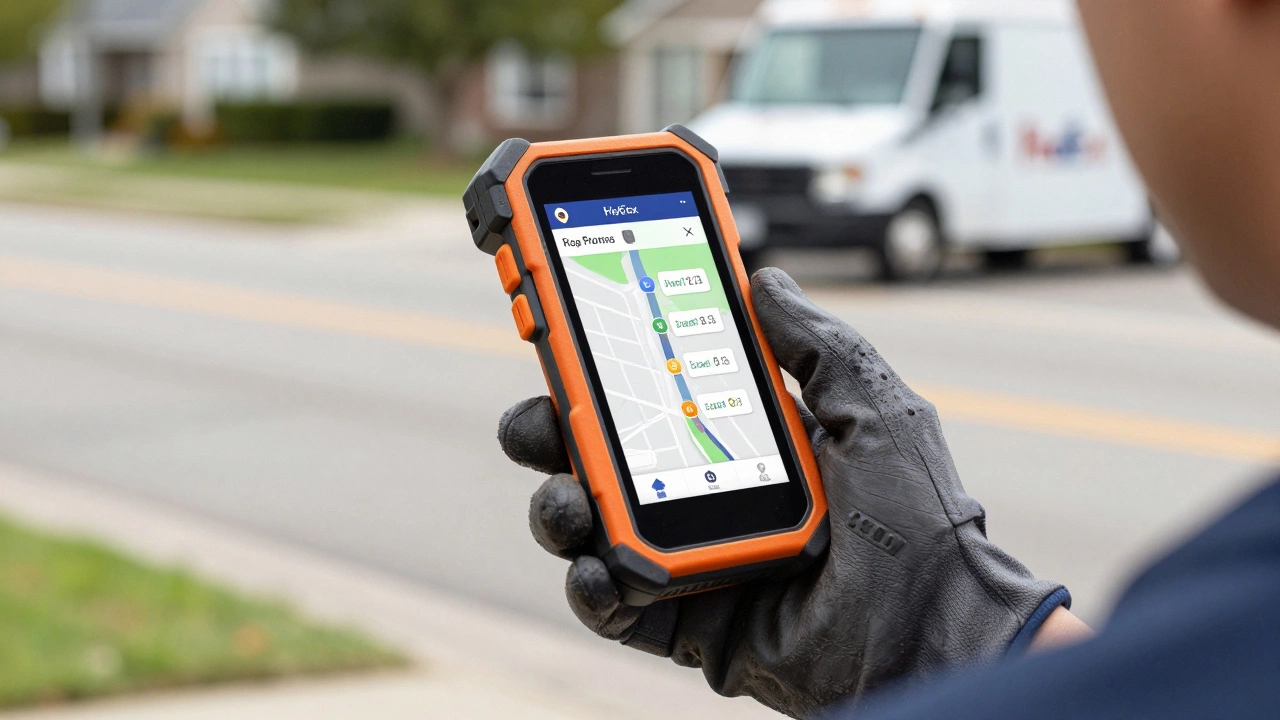
If you’ve had a FedEx driver at your door, you’ve seen the hardware side of this software stack. Drivers use ruggedized handheld scanners, often running customized versions of Android. These devices run applications that provide turn-by-turn navigation, but they are far more powerful than standard GPS apps.
The app tells the driver exactly which order to unload packages from the truck. It optimizes the walking path inside the building if multiple deliveries are needed. It captures proof of delivery, including signatures and photos. All this data is instantly synced back to the central servers, updating the customer’s tracking page in real-time.
For the actual driving directions, these devices integrate with mapping data providers. While FedEx has its own map data for efficiency, they likely utilize foundational geographic data from providers like HERE Technologies or similar enterprise-grade mapping services. This ensures accuracy in rural areas or new developments where consumer maps might lag behind.
FedEx Delivery Manager: The Customer-Facing Tool
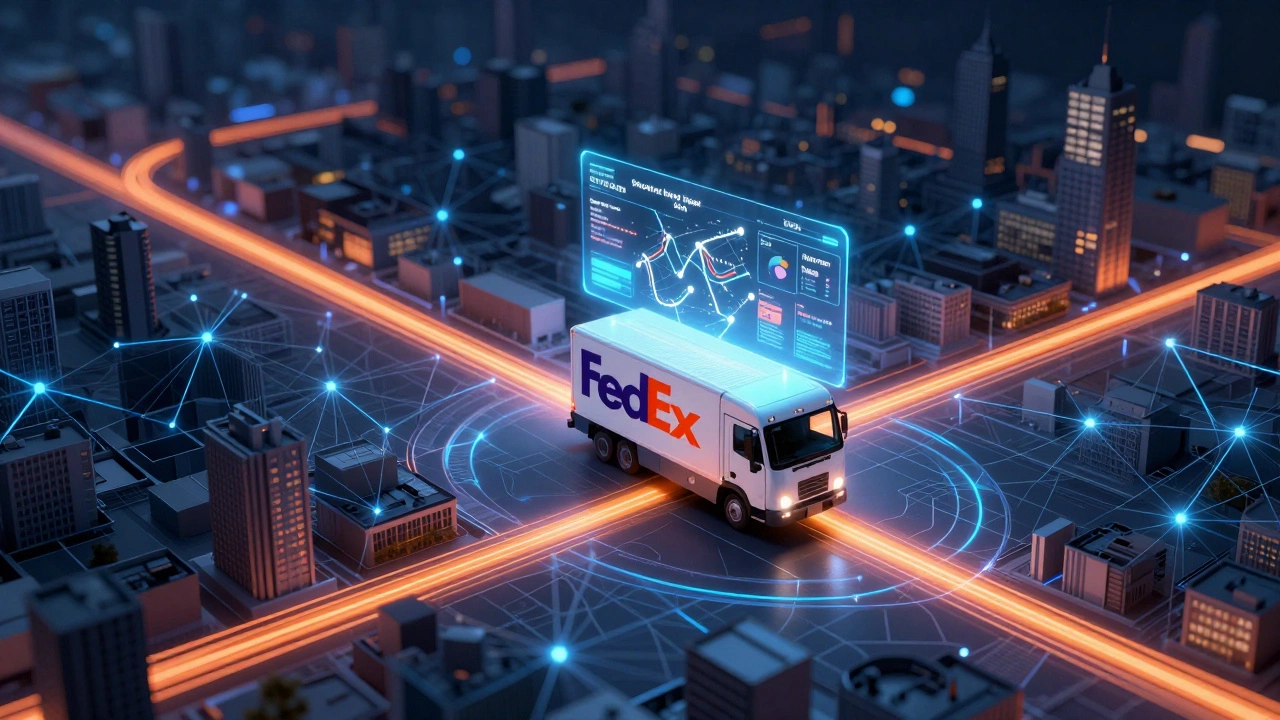
Not all routing software is hidden from view. FedEx offers FedEx Delivery Manager (FDM) directly to consumers and businesses. This free online tool allows users to control their deliveries. You can reschedule a delivery, redirect a package to a hold location, or leave specific instructions for the driver.
From a technical standpoint, FDM connects the customer’s preferences to the driver’s route plan. If you request a Saturday delivery instead of Friday, the system flags your package, adjusts the sortation process at the hub, and updates the driver’s list. This integration is crucial for modern logistics, where customer choice drives operational complexity.
Comparison: FedEx vs. Competitors’ Tech Stacks
| Company | Primary Routing Approach | Key Tech Partners | Customer Control Tool |
|---|---|---|---|
| FedEx | Proprietary algorithms + Cloud AI | IBM, Microsoft Azure | FedEx Delivery Manager |
| UPS | ORION (On-Road Integrated Optimization and Navigation) | Oracle, SAP | My Choice |
| Amazon Logistics | In-house AI/ML models | AWS (Internal) | Amazon Key / Hub Counter |
| DHL | Resilience360 + Custom Tools | SAP, Siemens | DHL On Demand Delivery |
The Role of Artificial Intelligence in Last-Mile Delivery
The future of routing is already here, driven by Artificial Intelligence (AI). FedEx uses AI to solve the "traveling salesman problem" on a global scale. This mathematical challenge asks for the shortest possible route that visits a set of cities and returns to the origin. In logistics, "cities" are individual addresses, and there are thousands of them per driver per day.
Traditional algorithms struggle with dynamic changes. AI models, however, can adapt. They learn from historical data-knowing that a certain neighborhood always has slow loading zones or that a specific highway jams up at 4 PM on Fridays. This predictive capability saves fuel, reduces wear on vehicles, and ensures faster deliveries.
Moreover, AI helps in Last Mile Delivery optimization. The last mile is the most expensive part of shipping. By clustering deliveries geographically and timing them precisely, FedEx minimizes empty miles and maximizes drops per hour.
Why Off-the-Shelf Software Isn't Enough
You might wonder why FedEx doesn't just use Google Maps or Waze. While these are excellent for individual drivers, they lack the enterprise features needed for mass logistics. They don’t account for vehicle height restrictions, weight limits, or multi-stop sequencing efficiently. They also don’t integrate with warehouse management systems to tell the sorter which bin to pull from.
Enterprise logistics software needs to be bidirectional. It must send instructions to the driver and receive real-time feedback. Consumer apps are mostly one-way: they give you directions but don’t care if you’re carrying 500 pounds of freight. FedEx’s custom solution bridges this gap, creating a closed loop of information that keeps the entire network synchronized.
Challenges and Future Innovations
Despite advanced tech, challenges remain. Urban congestion, changing regulations on emissions, and labor shortages force constant innovation. FedEx is exploring electric vehicles and autonomous drones, which require entirely new types of routing software. Drones, for instance, need 3D navigation paths and airspace coordination, adding layers of complexity beyond ground-based routing.
Additionally, sustainability is a major driver. FedEx aims to reduce carbon emissions significantly by 2040. Their software now factors in fuel efficiency, prioritizing routes that burn less diesel. This means sometimes taking a slightly longer route if it avoids stop-and-go traffic, which is harder on engines and wallets.
Does FedEx use Google Maps for routing?
No, FedEx does not rely on standard Google Maps for its core logistics operations. While Google Maps is great for personal navigation, FedEx uses proprietary algorithms and enterprise-grade mapping data integrated into their custom handheld devices. These systems handle multi-stop optimization, vehicle constraints, and real-time fleet management, which consumer maps cannot do.
What is FedEx ORION?
Actually, ORION (On-Road Integrated Optimization and Navigation) is UPS’s proprietary routing system, not FedEx’s. FedEx has its own unnamed internal suite of algorithms and tools, often referred to broadly as their delivery management systems. Confusion arises because both companies invest heavily in similar AI-driven route optimization technologies.
Can I see the route my FedEx package takes?
You can track your package’s progress via FedEx.com or the FedEx app, but you won’t see the exact street-by-street route the driver takes. The detailed routing is internal operational data. However, you can see major milestones like departure from facilities, arrival at local hubs, and out-for-delivery status.
How does FedEx optimize for fuel efficiency?
FedEx uses AI to analyze traffic patterns and road conditions to choose routes that minimize idling and stop-and-go driving. Their software also considers vehicle load balance to ensure trucks aren't overweight, which wastes fuel. Additionally, they are integrating electric vehicles into their fleet, requiring software adjustments for charging station stops.
Is FedEx Delivery Manager free?
Yes, FedEx Delivery Manager is a free service for customers. It allows you to manage your deliveries, change addresses, and set preferences. While basic controls are free, some advanced redirection options may incur fees depending on the service type and destination.